
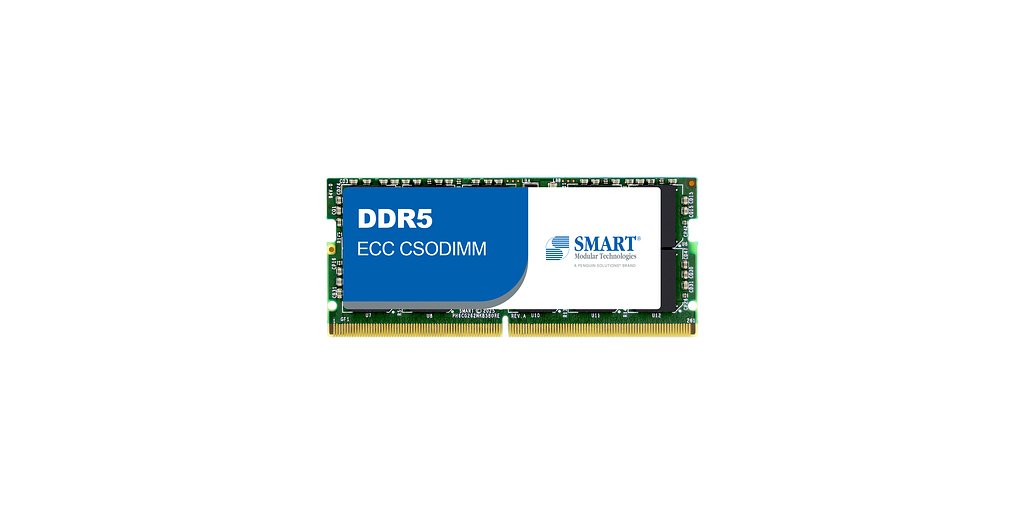
- 64GB capacity: The new SMART 64GB DDR5-6400 ECC CSODIMM memory module offers high-capacity storage for handling massive AI models. - Operating range: The module functions reliably from -40°C to +85°C, making it suitable for extreme environments. - Speed: The module operates at 6400 MT/s, ensuring high-speed data processing.
Experts agree that this specialized memory module is critical for building resilient, trustworthy digital infrastructure, particularly in industrial, telecom, and public safety applications where reliability and data integrity are non-negotiable.
The Unseen Engine of Trust: Why a Tiny Chip Matters for Our Future
FREMONT, CA – December 09, 2025 – In the relentless march of digital transformation, we often focus on the visible interfaces: the apps, the AI assistants, the seamless online services. Yet, the integrity of this entire ecosystem rests on an unseen foundation of hardware. A recent announcement from Penguin Solutions, a key player in high-performance computing infrastructure, highlights this perfectly. The release of its SMART 64GB DDR5-6400 ECC CSODIMM memory module may sound like a string of technical jargon, but it represents a crucial advancement in building the trustworthy digital backbone our society increasingly depends on.
This isn't just about making computers faster; it's about making our critical infrastructure more resilient, reliable, and capable of operating where it matters most—at the turbulent edge where technology meets the physical world.
More Than Just Memory: The Foundation of Digital Integrity
At its core, the new module from Penguin Solutions' SMART Modular Technologies brand is a small, dense stick of memory designed for extreme performance. But its true value lies in a trio of features that directly address the core tenets of digital trust: Error Correction Capability (ECC), industrial-temperature (I-temp) resilience, and a compact, high-speed design.
In standard consumer electronics, a minor memory error might cause a momentary glitch or an application crash—an annoyance, but rarely catastrophic. In the world of industrial control systems, telecom networks, or public safety devices, the stakes are exponentially higher. A single flipped bit could corrupt a command, alter a medical reading, or disrupt a communication link. This is where ECC becomes non-negotiable. By automatically detecting and correcting data errors in real-time, ECC ensures the fundamental integrity of the information being processed. It’s the hardware’s sworn oath to data accuracy, a promise that is essential for any system where trust is paramount.
This promise is further solidified by the module's ability to operate in harsh conditions. The availability of an industrial-temperature (I-temp) version means this memory is engineered to function reliably from -40°C to +85°C. This isn't for your climate-controlled office; it's for systems deployed in smart factories humming with heat-generating machinery, on remote 5G towers exposed to winter freezes and summer heatwaves, or inside ruggedized devices used by first responders. This resilience ensures that performance and reliability do not degrade when the environment becomes challenging, providing a stable foundation for services that cannot afford to fail.
The technical architecture, including the use of a Clock Driver (CKD) to maintain signal integrity at blistering speeds of 6400 MT/s, reinforces this theme. In essence, every specification is geared towards one goal: creating an environment of unwavering operational certainty. As Arthur Sainio, director of Integrated Memory DRAM product marketing at Penguin Solutions, noted, the goal is to give "industrial and networking customers... access to both high-capacity and wide-temperature support in a very compact DDR5 SODIMM design." This isn't just a product feature; it's a foundational requirement for building the next generation of trusted digital services.
Powering the Edge Where Society Operates
The true impact of this technology becomes clear when we look at where it will be deployed. The shift towards edge computing—processing data locally rather than sending it to a distant cloud—is driven by the need for real-time responsiveness and data privacy. This is where Penguin Solutions' new memory module is set to play a pivotal role.
Consider the modern "smart factory." It’s a complex ecosystem of IoT sensors, robotic arms, and AI-powered quality control systems. These components generate and process terabytes of data on the factory floor, making instantaneous decisions to optimize production and prevent accidents. The computing systems driving this automation operate in environments filled with vibrations, dust, and extreme temperature swings. A memory module that combines high capacity (64GB for handling massive AI models), high speed (for real-time analysis), and industrial-grade ruggedness is not a luxury; it's the engine that keeps the entire operation running safely and efficiently.
The same principle applies to the expansion of 5G and telecommunications infrastructure. The promise of 5G isn't just faster movie downloads; it's about enabling a new class of applications, from autonomous vehicles to remote surgery, that demand ultra-low latency and rock-solid reliability. The network hardware that powers these services, often housed in compact, outdoor enclosures, requires components that can deliver peak performance without fail, regardless of the weather. The enhanced bandwidth and reliability of DDR5 memory like this are critical for processing the massive data streams that define 5G networks.
This extends to healthcare and public safety. As AI-powered diagnostic tools move from the data center to mobile clinics and ambulances, the hardware must be both powerful and robust. A portable ultrasound machine using AI to identify anomalies or a first responder's communication device processing real-time video feeds cannot be compromised by environmental stress or data errors. By providing data center-level memory performance in a compact, ruggedized form factor, these components directly enable the delivery of more advanced and reliable services to vulnerable populations, far from the controlled confines of a hospital or command center.
A Calculated Move in a Turbulent Market
The launch of this specialized memory module is also a savvy strategic maneuver within a global semiconductor market currently in turmoil. The explosive demand for AI has created an unprecedented shortage of memory chips, particularly the high-bandwidth memory (HBM) used in data center AI accelerators. Major manufacturers like Samsung, SK Hynix, and Micron are reallocating vast portions of their production capacity to these high-margin components, causing a ripple effect of scarcity and dramatic price hikes across the board, with DDR5 prices surging by over 100% in recent months.
In this chaotic landscape, Penguin Solutions is doubling down on a different segment: the high-value, specialized industrial market. While the giants battle for dominance in the data center, Penguin's SMART Modular brand is cementing its leadership in the less glamorous but equally critical world of rugged, application-specific memory. This is a market where purchase decisions are based less on commodity pricing and more on reliability, long-term support, and the ability to meet stringent operational requirements.
By expanding its portfolio to include a 64GB high-speed, ruggedized DDR5 module, the company is directly addressing a sophisticated customer base of system designers and OEMs who cannot compromise on quality. These customers are building the backbone of tomorrow's industrial, telecom, and defense infrastructure, and they require a supply chain partner who understands their unique challenges. This focus allows Penguin Solutions to carve out a defensible and profitable niche, insulating itself from some of the volatility roiling the broader consumer and data center memory markets.
This strategic positioning underscores a deeper truth about the tech ecosystem. While headline-grabbing AI models consume massive resources, the infrastructure that delivers their insights to the real world relies on these specialized, hardened components. Penguin's move is a bet that as our world becomes more connected and automated, the demand for trustworthy hardware at the edge will only grow, creating a sustainable market for those who can deliver on the promise of resilience. The integrity of our increasingly digital lives depends not just on the brilliance of the software, but on the steadfast reliability of the unseen hardware that powers it, even in the most demanding conditions imaginable.