
- 90% of SOC alert triage handled autonomously by Airrived's platform at a global enterprise.
- 80% reduction in mean time to respond (MTTR) to threats for the same enterprise.
- 90% boost in analyst productivity reported in a Gartner case study.
Experts would likely conclude that Airrived's Agentic OS represents a significant leap forward in governed, autonomous AI for enterprise security, addressing critical trust and scalability challenges in high-stakes environments.
The Trust Layer: How Airrived Makes Autonomous AI Safe for Business
DUBLIN, Calif. – June 17, 2026 – The conversation around enterprise artificial intelligence is undergoing a seismic shift. For years, the focus has been on AI assisting humans through copilots and predictive analytics. Now, the frontier has moved to AI that can act autonomously. This transition from assistance to execution is creating a new class of technology, and a recent Gartner report has spotlighted a key architect of this future: Airrived.
The Dublin-based company was just named a Gartner Emerging Tech AI Vendor for its role in transforming security operations. This isn't a fleeting acknowledgment; it's the latest in a string of accolades, including two previous Gartner Tech Innovator awards, that validate a critical market trend. As enterprises grapple with overwhelming data volumes and a persistent cybersecurity talent gap, the demand for intelligent, autonomous systems has become an urgent operational imperative.
“Being recognized by Gartner validates where the market is heading rather than a destination – from AI experimentation to true autonomous operations at scale – a massive market transformation,” said Anurag Gurtu, Co-Founder and CEO of Airrived. His statement captures the essence of this moment: the era of AI pilots is giving way to the age of the autonomous enterprise.
A New Foundation for Enterprise AI
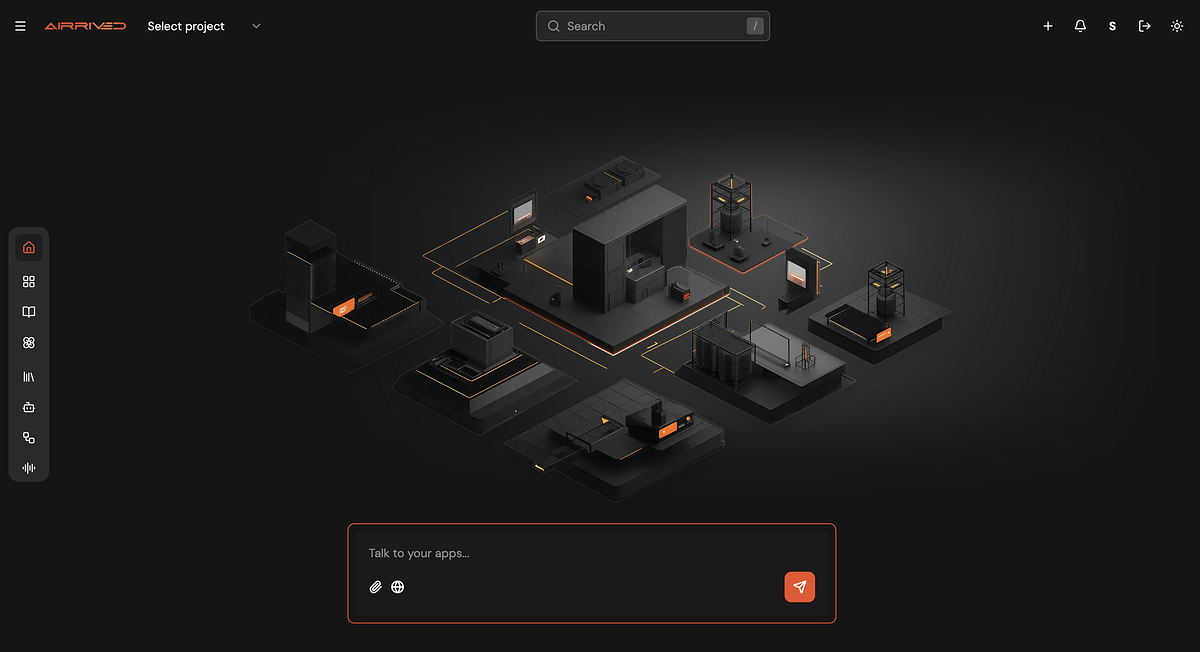
While many vendors are busy creating wrappers for large language models or building slightly more capable copilots, Airrived claims to be constructing something fundamentally different: the Agentic OS. This isn't just another application but a foundational layer designed to let enterprises build, deploy, and, most importantly, govern their own custom AI agents.
The distinction is crucial. An AI assistant might suggest a course of action, but an AI agent built on an Agentic OS is designed to execute a complex, multi-step plan. The system combines fine-tuned domain models, deep reasoning capabilities, and multi-agent orchestration under a single, policy-driven infrastructure. This allows it to move beyond simple automation to tackle goal-oriented workflows across security, IT, and business operations.
At the heart of this is AetherClaw, Airrived’s flagship security capability. It provides a library of prebuilt security agents and the tools to create new ones, all within a framework where governance and trust are not afterthoughts but core design principles. In high-stakes domains like cybersecurity and IT, where a single error can have catastrophic consequences, this focus on building a system that can be trusted to act is the company's primary differentiator. It’s a direct answer to the C-suite’s biggest question about AI: “How can we make it safe?”
From Promise to Production: Validating Autonomy at Scale
The most compelling part of Airrived's story is that its vision is no longer theoretical. The company only emerged from stealth in February 2026, yet its Agentic OS is already running in production at some of the world's most demanding organizations. These are not small-scale tests; they are mission-critical deployments.
A case study detailed in the recent Gartner report provides a stark example of the platform's impact. A global enterprise, struggling with disconnected security tools and manual processes, deployed Airrived's agentic AI platform. The results were transformative: 90% of Security Operations Center (SOC) alert triage was handled autonomously, the mean time to respond (MTTR) to threats plummeted by 80%, and overall analyst productivity soared by 90%. The system unified disparate tools like Splunk and CrowdStrike, allowing AI agents to autonomously triage incidents, gather evidence, and even execute audit questionnaires.
This is just one example. Airrived's technology is also powering secure operations for Qatar's sovereign cloud, running high-volume workflows for a Fortune 150 insurance company, and operating under the strict regulations of a global bank. From major telecom providers to one of the world's largest fast-casual restaurant chains, the platform is proving that governed, scalable agentic intelligence is a present-day reality, not a future capability.
The Human Element in an Autonomous World
The narrative of automation often stokes fears of human replacement. However, the vision Airrived presents—and which its clients are realizing—is one of empowerment. The case study noted that security professionals were not sidelined; they became “creators of AI agents.”
By automating the repetitive, high-volume, and often draining tasks of alert triage and evidence gathering, the Agentic OS frees human experts to focus on what they do best: strategic thinking, complex threat hunting, and proactive risk reduction. Instead of being buried in tickets and alerts, security teams can now architect the very systems that automate their former toil. “It’s about elevating the role of the human, not eliminating it,” an industry analyst familiar with the technology explained. “You’re turning your best people into force-multipliers, allowing their expertise to be scaled across the entire organization through the agents they design and oversee.”
This shift improves operational efficiency and directly addresses the chronic burnout and talent shortages plaguing fields like cybersecurity. It transforms the nature of the work itself, making it more strategic, more creative, and ultimately, more valuable. This is a clear example of how technological change, when implemented thoughtfully, can profoundly improve the lives and careers of the people it affects.
Building the Infrastructure of Trust
The central challenge for the next decade of AI is not capability, but trust. As AI agents become more powerful and autonomous, the need for robust governance, explainability, and control becomes non-negotiable. This is where Airrived is placing its biggest bet.
The Agentic OS is architected with policy-driven controls and auditability at its core, designed to meet the stringent requirements of emerging regulations like the EU AI Act and frameworks like the NIST AI RMF. By providing a unified execution layer with built-in governance, the platform gives organizations the confidence to deploy autonomous systems in regulated and mission-critical environments. It answers the question of who is accountable when an AI acts.
Gartner's report makes it clear that the market is rapidly moving toward multi-agent systems that can orchestrate complex workflows. The question is no longer if agentic AI will transform the enterprise, but who will build the infrastructure that makes it safe and reliable. With its early successes and unwavering focus on production-grade, governed autonomy, Airrived has positioned itself as a definitive answer to that question.