
- 298 Wh/L: Fleetzero's Leviathan™ Battery Energy Storage System achieves a volumetric energy density of 298 Wh/L, double that of competing marine systems.
- $43 million: Recent funding round from investors including Maersk Growth, Founders Fund, and Obvious Ventures.
- 2028: Expected year for mandatory Maritime Autonomous Surface Ships (MASS) Code from the IMO.
Experts would likely conclude that this collaboration represents a significant step toward modernizing U.S. maritime capabilities, combining advanced autonomy, stealth technology, and domestic shipbuilding to address critical defense and commercial shipping needs.
The Triad Forging America's Next Maritime Advantage
HOUSTON, TX – June 02, 2026 – In the quiet corridors of naval strategy and the bustling world of global logistics, a fundamental shift is underway. The era of monolithic, heavily crewed vessels as the sole arbiters of sea power is giving way to a more distributed, resilient, and intelligent model. A new announcement from Houston-based Fleetzero, Louisiana shipbuilder Thoma-Sea Marine Constructors, and Seattle naval architects Glosten is not merely a press release; it is a declaration that this new era is arriving, built on American shores.
The collaboration aims to produce long-duration, autonomous vessels that are both electrified and stealthy. By uniting Fleetzero’s advanced battery and autonomy stack, Glosten’s expertise in low-signature vessel design, and Thoma-Sea’s formidable shipbuilding capacity, this triad of companies is positioning itself to deliver a platform that addresses the most pressing needs of both the U.S. Department of War and the commercial shipping industry. This is a story about performance, but more importantly, it is a story about building permanence into America’s strategic and economic posture on the world’s oceans.
A New Asset for Contested Seas
The strategic calculus of the 21st century is increasingly defined by contested logistics. The ability to move personnel, equipment, and supplies through waters monitored by adversaries is no longer guaranteed. This reality has spurred intense interest within the Pentagon, particularly at the Defense Innovation Unit (DIU), for platforms that can operate persistently, with minimal human intervention and a low probability of detection.
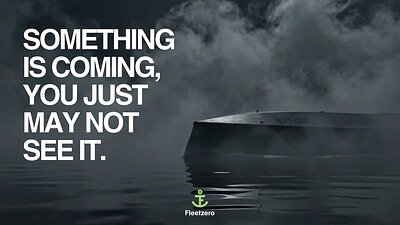
The vessel concept emerging from this partnership directly answers that call. It is a tightly integrated, autonomous diesel-electric vessel engineered for a minimal radar cross-section. Its angular, low-profile design, reminiscent of proven military stealth craft, is not just for aesthetics; it is a core feature. As Glosten's CEO, Morgan Fanberg, noted, this is about designing vessels that are "autonomy-native from the keel up, not retrofitted as an afterthought." This holistic approach allows for the integration of capabilities like silent transit on battery power, specialized beach approach angles for autonomous cargo delivery, and a reduced heat signature—all critical for surviving in contested environments.
The platform aligns squarely with national priorities like the Modular Open Systems Approach (MOSA), ensuring that the technology remains adaptable and upgradeable over its lifespan, avoiding the vendor-lock that has plagued defense procurement for decades. For missions ranging from persistent intelligence, surveillance, and reconnaissance (ISR) to contested resupply, these autonomous vessels represent a force multiplier, allowing commanders to place assets in high-risk areas without endangering crew.
The Power Plant of Permanence
At the heart of this new capability is a breakthrough in energy storage. Long-duration autonomy is impossible without a power source that is dense, reliable, and requires minimal maintenance. This is where Fleetzero's Leviathan™ Battery Energy Storage System becomes the critical enabler. The company claims its Lithium Iron Phosphate (LFP) battery packs achieve a volumetric energy density of 298 Wh/L, reportedly double that of competing marine systems, at a significantly lower cost.
This isn't just an incremental improvement; it is a step-change that unlocks new operational concepts. The high energy density allows for extended missions, including the possibility of trans-oceanic voyages with drastically reduced or zero emissions. Fleetzero’s diesel-electric architecture uses the battery system to optimize efficiency, provide silent running capability, and engineer out complex mechanical parts that are common points of failure—a vital consideration for a vessel designed to operate for long periods without a crew.
"Moving cargo through contested waters is more imperative today than ever before," stated Steven Henderson, CEO of Fleetzero. "By partnering with Thoma-Sea and Glosten, we are pairing our Leviathan™ Energy Storage Systems and Fleetzero's autonomy stack with two of the most capable shipbuilding and design organizations in the country." His statement underscores the core value proposition: combining cutting-edge technology with proven industrial might to deliver a solution at scale.
An American Industrial Renaissance
Technology and strategy are potent, but only when they can be translated into physical reality. The inclusion of Thoma-Sea Marine Constructors in this alliance is perhaps the most critical element for ensuring permanence. A family-owned shipbuilder with a multi-decade history of delivering complex vessels for clients like the U.S. Navy and NOAA, Thoma-Sea represents the industrial backbone of this initiative.
The collaboration is explicitly committed to domestic content, Jones Act compliance, and the 'Buy American' initiative. This is not just a patriotic flourish; it is a strategic necessity. By building these advanced vessels in U.S. shipyards with a domestic supply chain, the partnership helps to revitalize a critical industrial base, create high-skill jobs, and ensure that the nation is not dependent on foreign entities for core national security assets.
"Our yards have been building ships for American operators for decades," said Walter Thomassie, Managing Director of Thoma-Sea. "Partnering with Fleetzero and Glosten allows us to deliver the next generation of autonomous vessels with stealth capabilities ready for the missions our customers face today." This partnership model, leveraging venture-backed technological innovation with the deep experience of established industrial players, provides a blueprint for how the U.S. can compete and win in critical 21st-century industries.
Navigating Uncharted Waters
The journey from today’s announcement to a fleet of autonomous vessels operating globally is not without obstacles. The technology, while promising, must prove its reliability in the unforgiving maritime environment. More significantly, the regulatory and legal frameworks are still catching up to the pace of innovation. The International Maritime Organization (IMO) is working towards a Maritime Autonomous Surface Ships (MASS) Code, but a mandatory framework is not expected until 2028.
Questions of liability, cybersecurity, and interaction with conventionally crewed vessels must be resolved. The development of port infrastructure for charging and autonomous operations will require significant investment. However, the momentum is undeniable. Backed by a recent $43 million funding round from investors including Maersk Growth, Founders Fund, and Obvious Ventures, Fleetzero has the capital to push through these challenges. By integrating technology, design, and manufacturing from the outset, this alliance is better positioned than most to navigate the complex waters ahead, shaping the next era of maritime operations where electrified power, autonomous control, and American shipbuilding operate as a unified industrial force.