
- 3 millijoules of energy per activation: WePower's Gemns™ G300 energy harvester generates over 3 millijoules of energy per switch activation, claimed to be 40 times greater than typical prior kinetic harvesting systems.
- 1 million actuation cycles: The device is tested for over one million actuation cycles, ensuring longevity.
- $141.79 billion: The global smart building market in 2025, highlighting the economic significance of this innovation.
Experts would likely conclude that this battery-free, wireless lighting controller represents a significant advancement in sustainable smart home technology, offering a cost-effective, maintenance-free solution that aligns with both environmental and economic priorities in the IoT and smart building sectors.
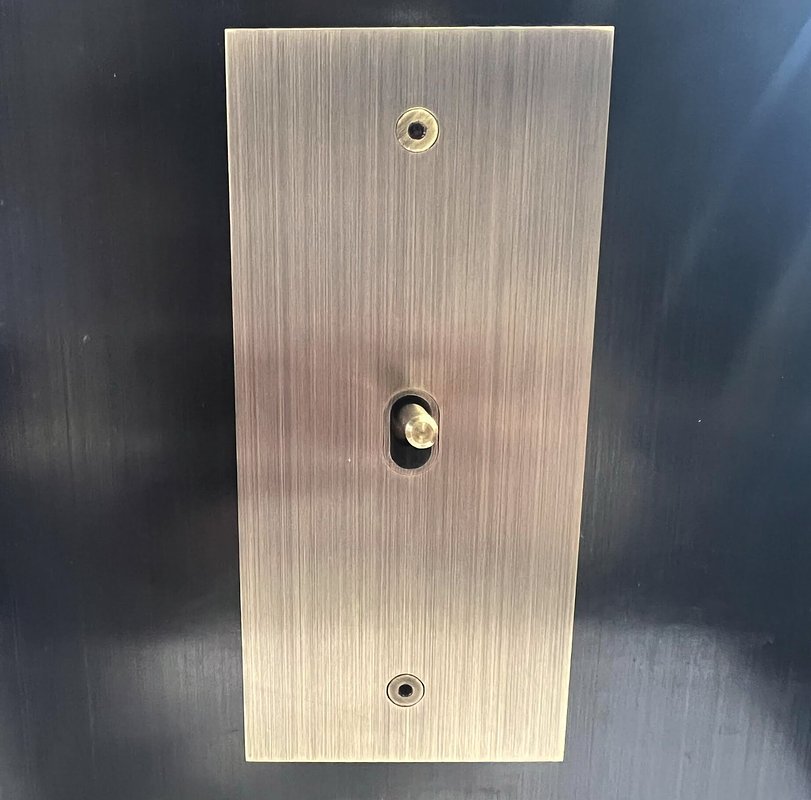
The Switch to Sustainability: The Battery-Free Future of Smart Homes
LAS VEGAS, NV – January 07, 2026 – The floor of CES 2026 is buzzing with the future of consumer technology, but one of the most significant innovations is also one of the most discreet. WePower Technologies, an innovator in energy-harvesting IoT solutions, and Focus SB Ltd, a premium UK manufacturer of architectural wiring, have unveiled a product that promises to solve some of the biggest headaches in the smart home industry: a wireless lighting controller that requires no batteries, no power wiring, and zero ongoing maintenance.
This joint project, showcased at booth 8425, marries WePower's cutting-edge Gemns™ energy harvesting technology with Focus SB's renowned design aesthetics. The result is a sleek light switch that installs directly into a standard in-wall gang box but operates completely wirelessly, powered solely by the kinetic energy of a user's touch. For homeowners, architects, and property managers, it signals a potential paradigm shift—a move toward a truly sustainable, cost-effective, and aesthetically seamless smart environment.
The End of the Battery? A Leap in Sustainable Tech
At the heart of this innovation is WePower's Gemns™ G300 energy harvester. The technology is a marvel of efficiency, converting the simple mechanical action of flipping a switch into a robust electrical pulse. This pulse is powerful enough to send a wireless command to a lighting system using common protocols like Bluetooth, Z-Wave, Thread, or the emerging Matter standard. WePower's patented electromagnetic induction platform claims to generate over 3 millijoules of energy per activation, a figure stated to be more than 40 times greater than typical prior kinetic harvesting systems. This surplus energy ensures a reliable signal transmission with impressive range, overcoming a common limitation of earlier self-powered devices.
The implications for sustainability are profound. Each year, billions of disposable batteries are manufactured, consumed, and discarded, contributing to a growing stream of hazardous electronic waste. By eliminating batteries from the equation, this new controller offers a scalable path toward a more environmentally responsible connected world. The device is designed to last for the life of the building, with WePower's underlying technology tested for over one million actuation cycles.
"Battery replacement and power wiring are two of the biggest hidden costs in modern lighting control," said Larry Richenstein, Founder and CEO of WePower Technologies, in the official announcement. "By combining our Gemns G300 energy harvesting platform with the Focus SB Ltd premium Renaissance, Ambassador and True Edge® design, we're delivering a lighting interface that installs easily, looks exceptional, and operates wirelessly without batteries for the life of the product."
Where High-Tech Meets High Design
While the underlying technology is revolutionary, its integration into a premium product is what sets this collaboration apart. Focus SB Ltd has built its reputation on precision-engineered wiring accessories that are specified for high-end residential, luxury hospitality, and commercial projects worldwide. Their products are known for minimalist aesthetics and uncompromising build quality, making them a favorite among discerning architects and interior designers.
The new battery-free controller is designed to perfectly match the aesthetics of Focus SB’s celebrated Renaissance, Ambassador, and True Edge® ranges. This ensures that adopting cutting-edge smart technology does not require a compromise on design. For designers working on historic building retrofits or minimalist modern spaces, the ability to place a light switch anywhere without the constraint of running new wires is a game-changer. It allows for unparalleled design freedom, preserving architectural integrity while delivering advanced functionality.
This partnership builds on a history of collaboration between the leadership of both companies, rooted in previous work within the premium automotive sector. That shared engineering pedigree is now being applied to the architectural space.
"Focus SB Ltd and Gemns share a long history of developing high-quality, engineered products, and we're proud to extend that collaboration into battery-free wireless technology," noted Ciaran Mitchell, Managing Director at Focus SB Ltd. "This project allows us to combine the refined aesthetics and build quality of our Renaissance, Ambassador and True Edge® ranges with an innovative energy-harvesting approach that removes batteries and wiring, without compromising the user experience."
Redefining the Economics of Smart Buildings
The appeal of this technology extends far beyond individual homes. In the commercial and hospitality sectors, the return on investment is a powerful driver. The global smart building market, estimated at $141.79 billion in 2025, is increasingly focused on reducing operational costs, which has now overtaken sustainability as the top motivator for investment. The WePower and Focus SB solution directly addresses this priority.
Eliminating the need for power wiring dramatically reduces upfront installation costs, cutting down on labor, materials like conduit, and the complexity of retrofitting existing structures. In a large hotel or commercial office building with hundreds or thousands of switches, these savings can be substantial. Furthermore, the maintenance-free design eradicates the significant long-term operational expense and logistical challenge of periodically replacing batteries across a large-scale deployment. This makes a fully smart and centrally controlled lighting system a far more practical and cost-effective proposition for facility managers and property owners.
As businesses and developers look to leverage IoT for energy efficiency—with smart systems capable of cutting lighting-related energy use by 35-70%—solutions that also reduce installation and maintenance overhead become critically important for accelerating adoption.
Beyond the Switch: A Glimpse into a Battery-Free IoT Future
The lighting controller, while significant, is just one application of WePower's broader vision. At CES 2026, the company is also showcasing other battery-free concepts, including a leak detector that has entered precertification with the Z-Wave Alliance and a smart lock concept developed with industrial giant Southco. These demonstrations position WePower's Gemns technology not as a niche solution, but as a versatile platform poised to power a wide array of IoT devices.
While pioneers like EnOcean have long championed energy harvesting, WePower's claims of significantly higher energy output and its strategic partnerships in the premium design space signal a new phase of competition and innovation. The ability to reliably power more complex sensors and ensure robust communication could unlock new applications where previous energy-harvesting solutions fell short.
The collaboration between WePower and Focus SB serves as a powerful proof of concept, demonstrating that sustainability, advanced technology, and luxury design are not mutually exclusive. It shows a future where the connected devices that populate our homes and offices are not only smart but also self-sufficient, finally freeing the Internet of Things from the tyranny of the battery.