
- $25,000 Prize: Eric Polins pledged the entire grand prize to The Art of Elysium charity.
- $200 Million: Colossal Management has raised this amount for charities since 2022 through similar contests.
- 30 Years: Polins has spent three decades as a strategist before entering the art competition.
Experts would likely conclude that Polins' strategic pledge transforms artistic visibility into a powerful narrative, leveraging public engagement for philanthropic impact while prioritizing long-term influence over immediate financial gain.
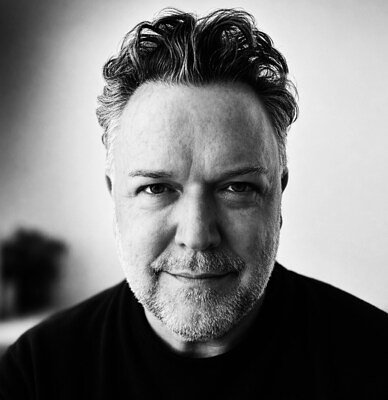
The Strategist's Canvas: An Artist Bets on Visibility Over Prize Money
TAMPA, Fla. – June 02, 2026 – For three decades, Eric Polins has been the man behind the curtain, a strategist shaping the public narratives of corporations, communities, and executives. As the Managing Partner of the marketing firm HCP Associates, his currency has been influence, his canvas the court of public opinion. But behind the scenes, another body of work was quietly accumulating—a deeply personal collection of mixed-media art built from the fragments of memory, music, and mortality.
Now, that private world is becoming public. Polins has entered The People's Artist, a national competition presented by Johnny Depp, placing his intensely personal work under the public spotlight. Yet, in a move that speaks volumes to his background as a strategist, he has already decided what to do with the winnings. He has pledged the entire $25,000 grand prize to The Art of Elysium, the very charity the competition supports. This decision transforms a personal artistic debut into a masterclass on the modern currency of value, where visibility and purpose can far outweigh cash.
The Art of the Pledge
In the 2026 investment landscape, we often speak of the re-emergence of value stocks—assets prized for their intrinsic worth over speculative hype. Polins’ move can be viewed through a similar lens, but for the creative economy. By forgoing the prize money, he is making a calculated bet on a different kind of return: the enduring value of a powerful narrative.
In a competition decided not by a cloistered jury but by public vote, engagement is everything. The pledge is not merely a generous act; it is a strategic one that reframes the entire proposition for voters. They are no longer just supporting an artist; they are participating in a philanthropic act. Every vote cast for Polins is also a vote to fund a nonprofit dedicated to healing through art. This creates a compelling “why behind the buy” for his potential supporters.
"The visibility would allow me to bring this work to larger audiences, galleries, and collectors," Polins stated, articulating his calculus clearly. "I've spent decades building this body of work quietly. At this stage in my life, the opportunity to finally put it into the world without hesitation means more to me than the prize money itself. If supporters help me win, I want the entire $25,000 award to go back to the mission behind the competition." This is not an artist dismissing financial success, but a strategist recognizing that in the long-term, a powerful brand story and a dedicated audience are the most valuable assets of all.
From Boardroom Strategist to Public Artist
The dualism of Polins' life is striking. By day, he navigates the structured world of marketing communications. In his studio, he deconstructs it. His art—a layered mix of illustration, paint, photography, and vintage fragments—is a tangible exploration of the themes that have shaped him, particularly loss. Losing his engineer father at 17 and his illustrator mother just four years ago deeply embedded themes of memory and legacy into his work.
"I think I've tried to live each day like it was my last since losing my dad as a teenager," Polins said. "A lot of my work is about preserving moments, energy, influence, and emotion before they disappear. Art became a way to hold onto things that time eventually tries to erase."
His pieces function as what he calls "time capsules," finished with resin to preserve the delicate interplay of typography, hand-cut imagery, and original line art. Influenced by convention-challengers like Jean-Michel Basquiat and Jim Morrison, his work seeks to do more than just be seen; it asks to be excavated. "Through dense layering, I try to create pieces that reveal more over time, almost like memory itself," he explains. It is the work of a man who has spent a lifetime telling stories for others and is now finally telling his own, using a language far more personal than a press release.
The New Marketplace of Public Philanthropy
Polins' story is unfolding on a stage that represents a significant shift in how art and charity intersect. The People's Artist competition is operated by Colossal Management, a professional fundraising company that has channeled over $200 million to charities since 2022 by hosting similar online, vote-driven contests. This model effectively creates a new marketplace, democratizing patronage by placing the power to anoint an artist—and direct a major donation—directly into the hands of the public.
The beneficiary, The Art of Elysium, is a nonprofit that provides creative arts workshops to individuals facing medical and emotional challenges. By bringing art, music, and film to hospitals, schools, and community centers, the organization embodies the very principle Polins is championing: that creativity is a powerful force for healing and connection. The potential $25,000 donation is not an abstract sum but a direct infusion into a mission that aligns perfectly with the themes of his life's work.
A Legacy of Storytelling
While this public pledge is a new chapter, it is rooted in a long history of community engagement. Through HCP Associates, Polins has provided years of strategic support and creative services to a host of Tampa Bay nonprofits, from the Tampa Theatre to the Gasparilla International Film Festival. Perhaps most telling was his work producing the award-winning documentary "Tibet: The Story of Florida's First Courthouse Facility Dog," which raised awareness for a program supporting abused and neglected children.
That project, like his current artistic endeavor, used the power of narrative to generate compassion and drive positive change. It proves his pledge is not a sudden pivot but a continuation of a lifelong theme. As Polins himself puts it, his work has always been about more than just a transaction.
"Storytelling has always been about more than marketing for me," Polins reflected. "Whether it's helping a nonprofit raise awareness, supporting the arts, preserving an important story through film, or creating something meaningful through my artwork, I've always believed creativity has the power to connect people, honor the human experience, and make a real difference in people's lives."