
- 6,500+ projects completed: Studio Home leverages nearly two decades of experience.
- $21B+ global ADU market: Projected to double to $47B by 2035.
- 3 size variations: 618, 650, and 682 sq. ft. with optional features.
Experts would likely conclude that Studio Home’s standardized ADU model represents a strategic pivot to dominate the growing market by balancing customization with mass-production efficiency.
The Standardized Revolution: Studio Home’s Play for the National ADU Market
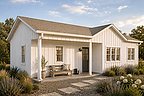
LOUISVILLE, Colo. – June 10, 2026 – On the surface, the announcement from Studio Home of a new accessory dwelling unit (ADU) model seems like a routine product launch. The company, a veteran in the prefabricated construction space, debuted the Laurel—a one-bedroom, one-bathroom unit. But reading the underlying signals, this is far more than an addition to a catalog. The Laurel represents a carefully calibrated strategy to conquer a booming market, a blueprint for how to scale a solution to the national housing crisis by mastering the paradox of modern consumerism: the desire for both personalization and efficiency.
This launch is the first major product move since the company, formerly known as Studio Shed, rebranded and initiated a national franchise expansion. That timing is no coincidence. The Laurel is not just a product; it’s the engine for that expansion. By creating a single, standardized floor plan that can be wrapped in four distinct architectural skins—Traditional, Modern, Farmhouse, and Craftsman—Studio Home is making a calculated bet on a model of mass customization. It’s an approach designed to give homeowners the illusion of bespoke design while retaining the immense production efficiencies that are the core promise of prefab construction.
The Standardization of Style
For nearly two decades, Studio Home has been refining its process. With over 6,500 projects completed, the company has a deep reservoir of data on what homeowners want and what the building process requires. The Laurel is the culmination of that learning. "The Laurel reflects nearly two decades of learning, refining and building for homeowners across the country," said Jeremy Nova, co-founder and creative director, in the company's official release. The key insight here is his follow-up: "The Laurel gives homeowners meaningful design choice without adding complexity to the building process."
This statement reveals the entire strategy. The complexity is being absorbed not by the customer or the on-site builder, but by the factory. By creating a consolidated MEP core—a single, standardized hub for all mechanical, electrical, and plumbing systems—the company can ensure quality control and accelerate timelines, no matter which architectural style a customer chooses. The walls, delivered as a factory-built panelized kit, arrive ready for assembly. This “design-for-manufacturing” approach drastically reduces the variables and potential for error that plague traditional stick-built construction, where every project is a one-off prototype.
By offering three minor size variations (618, 650, and 682 sq. ft.) and a few optional interior features like a pantry, Studio Home provides just enough choice to feel personal. Homeowners can go online, select a style, pick a color, and feel like they are designing their own home. In reality, they are selecting from a brilliantly constrained set of options, allowing the company to streamline its supply chain, manufacturing, and installation processes on a national scale.
Navigating a Red-Hot Market
Studio Home’s strategic pivot comes as the ADU market is experiencing explosive growth. Driven by a persistent housing affordability crisis, a cultural shift towards multigenerational living, and loosening regulations in key states like California and Oregon, the demand for backyard homes is surging. The global ADU market, valued at over $21 billion today, is projected by some analysts to more than double to $47 billion by 2035. This isn't a niche market anymore; it's a significant and growing segment of the housing industry.
This growth has attracted a crowded field of competitors. Companies like Abodu have gained traction with rapid, turnkey installations in California. Villa Homes competes on volume and a wide array of floor plans, while Samara, an offshoot of Airbnb, targets the luxury segment with high-design, high-cost units. In this environment, Studio Home's strategy with the Laurel appears designed to carve out a dominant position in the middle-to-upper tier of the market by offering something its regional or boutique competitors cannot: national consistency and scalable personalization.
While others focus on specific geographies or construction methods, Studio Home is building a platform. Its turnkey support, which includes pre-engineered plans and guidance through the labyrinthine local permitting process, directly addresses one of the biggest friction points for homeowners. By building a vetted network of local general contractors managed through its franchise system, the company aims to deliver a predictable experience from coast to coast.
The Franchise Blueprint for National Scale
The true ambition behind the Laurel launch is revealed when viewed through the lens of Studio Home’s recent national franchise expansion. A standardized product platform is essential for any successful franchise. It ensures that a customer in Oregon has the same quality experience as a customer in Florida. The Laurel, with its fixed internal layout and variable exterior, is the perfect vehicle for this model.
This approach allows franchisees to focus on sales, site preparation, and project management, leaving the precision manufacturing to Studio Home's centralized system. It’s a model that attempts to solve the fundamental challenge of scaling a construction business: maintaining quality and consistency across disparate markets with unique labor pools and regulatory environments. One industry analyst noted, "They are trying to do for housing what McDonald's did for hamburgers: create a predictable, reliable product that can be delivered efficiently anywhere, while still giving you the choice between a Big Mac and a Quarter Pounder."
This strategy signals a profound confidence in their system. The company is betting that the efficiency gains from its panelized prefab system, combined with the market reach of a franchise network, will create a competitive moat that is difficult for smaller, regional builders to cross. It is a move from being simply a builder of structures to becoming a national housing solutions provider.
From Backyard Shed to Mainstream Housing
The evolution from "Studio Shed" to "Studio Home" was more than a name change; it was a declaration of intent. The company is moving beyond simple home offices and art studios to providing genuine housing units that can help alleviate pressure in tight rental markets or provide space for aging parents. The Laurel, as a full one-bedroom home, is the physical manifestation of this elevated ambition.
By systematizing design and construction, Studio Home is making a powerful argument that prefab is no longer the down-market, cookie-cutter option it was once perceived to be. Instead, it is becoming a sophisticated and flexible tool for delivering high-quality housing faster and more predictably than traditional methods. The launch of the Laurel is a clear signal that the company sees a future where the backyard ADU is not an afterthought, but an integral part of the American housing landscape, and it is building the national machine to deliver it.