
- 62% reduction in operational costs per lift with electric reachstackers compared to diesel.
- 50% lower maintenance costs for electric vehicles due to fewer moving parts.
- 30-minute charging capability for electric reachstackers, eliminating operational bottlenecks.
Experts agree that the shift to electric reachstackers in global ports represents a pivotal moment in decarbonization, driven by both economic and environmental imperatives, with long-term operational efficiencies making electrification a strategic necessity.
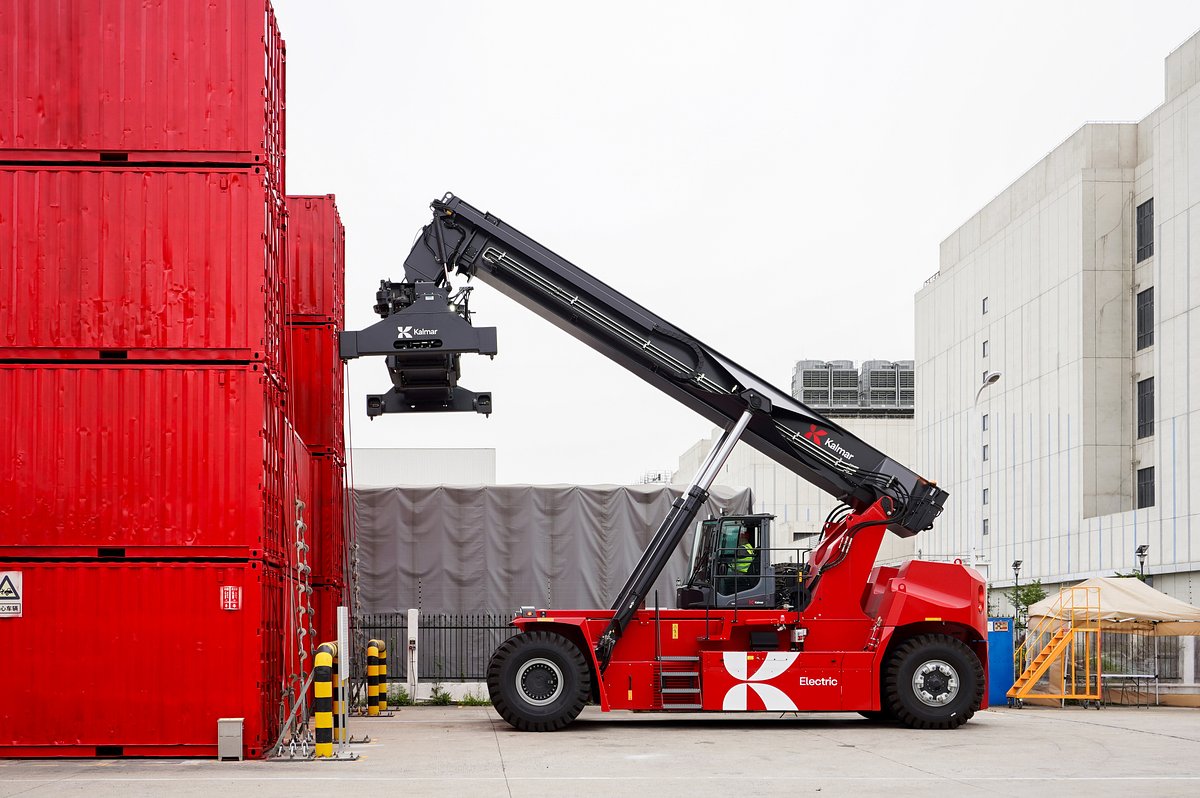
The Silent Revolution: How Electric Workhorses Are Rewiring Global Ports
ROTTERDAM, NETHERLANDS – June 12, 2026 – In the sprawling, complex ecosystem of the Port of Rotterdam, a new order for just two machines might seem insignificant. But the recent agreement between logistics giant C. Steinweg - Handelsveem B.V. and equipment manufacturer Kalmar for two electric reachstackers is a powerful signal of a much larger transformation. It’s a story not just about replacing diesel with batteries, but about how decades of trust and a sophisticated digital backbone are fundamentally rewiring the infrastructure of global trade.
The deal, which extends a partnership that began in the 1980s, sees Steinweg taking delivery of Kalmar’s latest electric giants in early 2027. More than a simple hardware purchase, it represents a deep investment in a sustainable future, illuminating a quiet but powerful revolution happening in ports worldwide.
The Inevitable Electric Tide
For decades, the soundtrack of any major port has been the rumble and roar of diesel engines. But that is changing. Pressures from regulators, investors, and society are forcing terminal operators to confront their carbon footprint. Ports are major sources of localized air pollution and greenhouse gas emissions, and the industry is now in a race to decarbonize.
This shift is not purely altruistic; the economic case for electrification is becoming undeniable. While the upfront investment for electric heavy equipment can be 30% higher than for its diesel counterparts, the long-term operational savings are substantial. Company data from manufacturers like Kalmar suggests that electric vehicles can slash operational costs per lift by up to 62% and maintenance costs by up to 50%, thanks to fewer moving parts and the lower price of electricity compared to diesel fuel. These are not marginal gains; they are figures that can reshape a terminal’s entire financial model.
This economic and environmental calculus is precisely what’s driving decisions at hubs like Rotterdam. The Kalmar-Steinweg order is a microcosm of a port-wide strategy to become cleaner and more efficient. As operators face increasingly stringent ESG (Environmental, Social, and Governance) reporting requirements, investments in green technology are no longer optional—they are a license to operate and a key competitive differentiator.
More Than a Machine: The Anatomy of a Green Giant
The Kalmar electric reachstacker at the heart of this deal is a testament to how far the technology has come. These are not glorified forklifts; they are industrial behemoths capable of lifting and stacking 45-tonne containers with the speed and agility required in a high-throughput terminal. Yet, they do so with zero carbon emissions at the source, dramatically improving air quality and reducing noise for operators and nearby communities.
Beneath the chassis lies a sophisticated ecosystem of technology. Kalmar offers modular Lithium-Ion battery options, allowing terminals to tailor capacity to their specific operational tempo. These batteries are managed by a thermal system that maintains an optimal core temperature, ensuring reliable performance in weather ranging from -30°C to 40°C. With charging options that can replenish a battery in as little as 30 minutes, the old fear of electric vehicles causing operational bottlenecks is fading fast.
Furthermore, the commitment to sustainability extends to the very materials used in construction. Kalmar now offers its electric reachstackers with options like SSAB Zero™ steel—a product made from recycled steel using fossil-free electricity—and emission-reducing counterweights made from unprocessed natural materials. This cradle-to-gate approach to reducing embedded carbon demonstrates a holistic view of sustainability that goes far beyond tailpipe emissions.
Forging the Future on Four Decades of Trust
Technological change, especially in a risk-averse industry like logistics, does not happen in a vacuum. The decision by Steinweg to electrify a critical part of its fleet was built on a foundation of trust established over a 40-year relationship with Kalmar. This partnership began in the 1980s with the supply of heavy diesel forklifts and has evolved alongside the technology.
This long-term collaboration is the invisible enabler of innovation. It allows for open dialogue and a shared understanding of operational realities, de-risking the leap to a new technology platform. Dominic Gruszczynski, Manager of Mobile Assets at Steinweg, underscored this point. “We chose Kalmar based on the high quality of their service and the proven reliability and safety of their products,” he stated. “This decision was heavily influenced by the deep trust built over our four-decade partnership and their active support in transitioning our fleet to electric.”
After experiencing the performance of the electric reachstackers firsthand, Gruszczynski confirmed that Kalmar could meet their demanding operational requirements and support their long-term sustainability vision. This sentiment was echoed by Kalmar’s Sales Manager for Benelux, Maurice Butin Bik. “Our four-decade partnership with Steinweg dates back to the 1980s... Today, we are proud to support their strategic decision to transition their fleet to electric solutions.”
The Invisible Network: Data-Driven Uptime
For the modern terminal operator, the machine is only one part of the equation. The true challenge lies in ensuring that these expensive assets are always running at peak efficiency. This is where the digital backbone becomes critical. The Steinweg deal is not just for two reachstackers; it includes a Kalmar Care service contract and a subscription to MyKalmar INSIGHT, a fleet management and data analytics platform.
This is the intelligent network that truly moves the world. MyKalmar INSIGHT aggregates real-time data from the equipment, giving operators a dashboard view of battery health, charging status, and usage patterns. This data allows for the optimization of charging schedules to avoid grid strain and ensure machines are always ready for the next job. It enables predictive maintenance, flagging potential issues before they cause costly downtime. The Driver Access premium module further integrates the operator into this data ecosystem, empowering them with insights to improve performance.
This holistic approach—combining robust hardware, proactive service, and intelligent software—is what makes the transition to electric feasible at scale. It transforms the reachstacker from a standalone piece of equipment into a connected node in a larger, optimized system. It ensures that the promise of lower operational costs and higher efficiency is actually realized, day in and day out, on the busy terminal floor.
This is the future of port logistics, and it is being built today. As Steinweg already looks toward the next phase of electrifying its heavy forklift fleet, it’s clear that the momentum is accelerating. The silent revolution, powered by batteries, data, and trust, is well underway.