
- $1.2 billion: The global loitering munition market in 2024, projected to more than double by the early 2030s.
- $13 billion: Pentagon's FY2026 budget allocation for autonomous systems, including $1 billion for the Replicator program.
- 2020 Nagorno-Karabakh conflict: IAI’s HAROP drones played a decisive role in dismantling Armenian air defenses.
Experts would likely conclude that this partnership represents a pragmatic and urgent response to the U.S. military's need for battle-proven loitering munitions, bridging critical gaps in autonomous strike capabilities while accelerating domestic production.
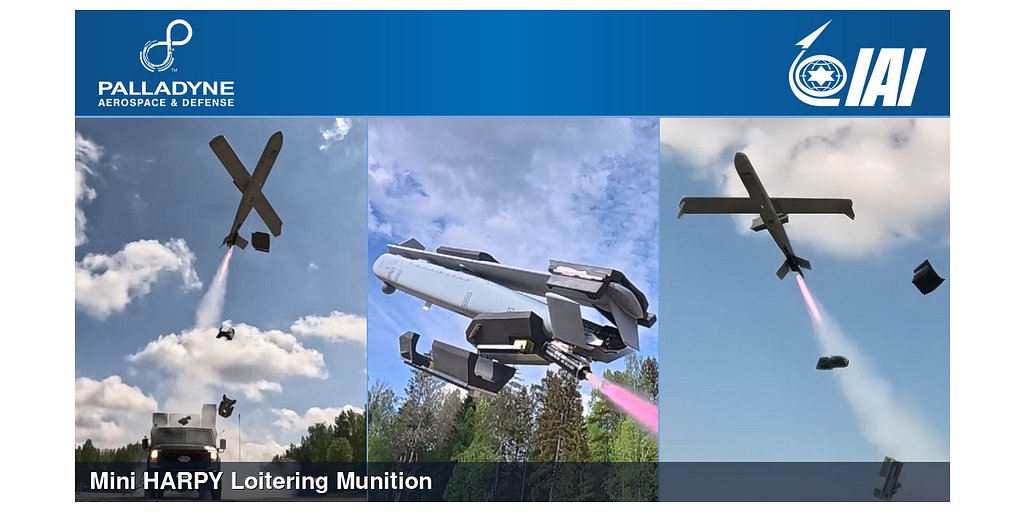
The Shortcut to Supremacy: U.S. Taps Israeli War Tech to Close Drone Gap
SALT LAKE CITY, UT – June 08, 2026
In a move that underscores a dramatic shift in U.S. defense procurement, the Salt Lake City-based technology firm Palladyne AI has announced a landmark partnership with Israel Aerospace Industries (IAI), one of the world's most battle-hardened defense contractors. The deal gives Palladyne exclusive rights to manufacture and sell IAI’s notorious family of loitering munitions—the HARPY, HAROP, and Mini HARPY—to the U.S. Department of War. The announcement is more than a simple business transaction; it is a tacit admission that the American defense industrial base, for all its might, is playing catch-up in a critical domain of modern warfare.
The partnership aims to shortcut the Pentagon’s notoriously slow development cycle by importing, adapting, and domestically producing systems that have already proven their lethality on foreign battlefields. It's a pragmatic, if somewhat humbling, solution to a problem made glaringly apparent by conflicts from Nagorno-Karabakh to Ukraine: the urgent need for cost-effective, autonomous strike systems that can dominate a contested airspace.
A Race for ‘Battle-Proven’ Firepower
Loitering munitions, often grimly dubbed “kamikaze drones,” are a hybrid of a cruise missile and a surveillance drone. They can circle over a battlefield for hours, using advanced sensors to autonomously search for targets, before diving to destroy them with a built-in warhead. This capability has become indispensable for suppressing enemy air defenses (SEAD), a mission critical for achieving air superiority.
The term “battle-proven” is the partnership's core value proposition. IAI’s HAROP drones, for example, were a decisive factor in the 2020 Nagorno-Karabakh conflict, where they were used by Azerbaijani forces to systematically dismantle Armenian air defense networks. The original HARPY system has been in service for decades, designed from the outset as a dedicated radar-killer. This is not theoretical technology; it is hardware with a well-documented combat record.
“The U.S. defense industrial base needs battle-proven loitering munitions capabilities it can field now,” said Ben Wolff, President and CEO of Palladyne AI, in a statement that cuts to the heart of the issue. “IAI's systems have been validated in real-world combat environments for decades.” The message is clear: America cannot afford to wait years for a “clean-sheet development program” when effective tools already exist. By combining IAI’s technology with Palladyne’s U.S.-based manufacturing, Wolff claims they can deliver these capabilities “much faster.”
The global market reflects this urgency. Valued at over $1.2 billion in 2024, the loitering munition sector is projected to more than double by the early 2030s as nations scramble to acquire the technology. For IAI, the partnership is a major victory, opening a direct channel into the world’s largest defense market. “The U.S. is a strategic market for IAI, and this partnership represents a significant step in expanding our long-term presence,” noted Boaz Levy, IAI's Chairman of the Board.
A New Prime on the Block? Palladyne's Calculated Gamble
Palladyne AI is positioning itself as a new kind of defense contractor—a “mid-tier U.S. technology prime” agile enough to outmaneuver legacy giants but with more substance than a typical startup. The company's strategy hinges on vertical integration, combining its own advanced autonomy software with the engineering and manufacturing capacity to bring systems to market.
“We built Palladyne AI to be the kind of partner the Department of War actually needs right now,” stated Admiral Eric T. Olson (Ret.), a board member, highlighting the company’s ambition to bridge the gap between innovation and scaled production. The IAI deal is the first major test of this model. Palladyne will not just be a reseller; it will be responsible for adapting the Israeli systems for U.S. military requirements, integrating its own AI, and manufacturing components on American soil.
This is the new face of the defense industrial base: less about inventing everything from scratch and more about becoming a master integrator of proven, often foreign-born, lethality. While the company touts its vertically integrated platform, the true test will be its ability to scale production to meet the Pentagon's voracious appetite for thousands of autonomous systems, a demand codified in its ambitious “Replicator” initiative. The promise of speed is alluring, but it hinges on Palladyne’s unproven capacity to execute at the scale the U.S. military requires.
Navigating the Pentagon's Procurement Maze
The timing of the partnership is no accident. It aligns perfectly with a massive flow of government funding and several key procurement programs. The Pentagon has allocated over $13 billion to autonomous systems in its FY2026 budget and is spending $1 billion on the Replicator program alone to field thousands of drones by 2025. This deal positions Palladyne to directly compete for a piece of that pie.
Specifically, the HAROP and HARPY systems, with their long-range strike and anti-radiation capabilities, are a natural fit for the U.S. Army's Long-Range Precision Munition (LRPM) competition. That program seeks a weapon to destroy enemy air defenses from over 100 kilometers away, a capability IAI’s systems have already demonstrated in combat. The partnership places Palladyne in direct competition with established U.S. players like AeroVironment, whose Switchblade drones have become ubiquitous, and other firms like Teledyne FLIR and Anduril Industries, all vying for contracts under programs like the Army's LASSO and the Marine Corps' Organic Precision Fires.
The key differentiator, Palladyne and IAI argue, is their specialized focus on the high-end SEAD mission. While smaller tactical drones are plentiful, systems designed to hunt and kill sophisticated enemy radar and missile launchers are a more niche and vital capability. By bringing IAI's expertise into a U.S. production framework, the partnership offers the Pentagon a de-risked and accelerated path to acquiring a weapon it desperately needs to counter near-peer adversaries.
This strategic alignment of proven foreign technology with American manufacturing and urgent domestic demand creates a powerful narrative. It bypasses the “valley of death” where so many promising defense technologies languish, offering a ready-made solution that is both technologically advanced and politically palatable. As warfare becomes increasingly automated, the ability to rapidly integrate, adapt, and deploy intelligent systems may prove to be the most decisive capability of all.