
- NT$50 million prize: Awarded to Susan Solomon for her contributions to sustainable development.
- Ozone recovery: Projected full recovery over mid-latitudes by 2040 and over Antarctica by 2066.
- Climate impact: CO₂ emissions have irreversible effects for over a thousand years.
Experts would likely conclude that Susan Solomon's work exemplifies how rigorous science can drive global policy, heal environmental crises, and underscore the urgent need for preventive climate action.
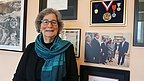
The Scientist Who Mended the Sky and Warned of the Earth's Fever
TAIPEI – June 15, 2026 – In a world grappling with the monumental task of building a sustainable future, we often search for blueprints of success. Today, the Tang Prize Foundation has illuminated one of our most powerful examples by awarding its 2026 Prize in Sustainable Development to American atmospheric chemist Susan Solomon. The honor, one of the world's most prestigious academic awards, recognizes a career that not only provided the scientific key to solving one of our planet’s most terrifying environmental crises—the hole in the ozone layer—but also delivered one of the most sobering and essential warnings about the one we face today.
Professor Solomon’s story is a masterclass in the power of rigorous science to drive global policy and restore public trust. It is a narrative of venturing into the most hostile environments on Earth to uncover a hidden chemical culprit, and of translating that discovery into a global treaty that is actively healing our atmosphere. But it is also a cautionary tale, a second act in which the same brilliant mind revealed the near-permanent consequences of our carbon-based society. Her receipt of the NT$50 million prize is not just a celebration of past achievements; it is a profound acknowledgment of the kind of scientific leadership our complex, modern world desperately needs.
A Blueprint for a Planet in Peril
To understand the magnitude of Susan Solomon's contribution, one must travel back to the 1980s. A mysterious and rapidly growing hole in the ozone layer over Antarctica had stunned the scientific community, sparking global alarm. The leading theories were insufficient, and the world needed answers. In 1986, exactly forty years ago, a young Solomon, then with the National Oceanic and Atmospheric Administration (NOAA), led a daring expedition into the frigid darkness of the Antarctic winter at McMurdo Station.
Her team faced extreme conditions to gather the first direct measurements of atmospheric compounds. But it was her theoretical insight that changed everything. Solomon proposed a novel mechanism: that under the extreme cold of the polar winter, clouds of ice crystals, known as polar stratospheric clouds, were forming in the stratosphere. She hypothesized that the surfaces of these ice crystals acted as super-efficient platforms for chemical reactions, unleashing the full destructive power of chlorine from man-made chlorofluorocarbons (CFCs) to decimate ozone.
It was a brilliant, unifying theory that explained the speed and location of the ozone loss. Her on-the-ground measurements confirmed it. This wasn't just abstract science; it was the smoking gun. Solomon’s findings provided the unshakeable scientific cornerstone for the 1987 Montreal Protocol on Substances that Deplete the Ozone Layer. This landmark treaty, often hailed as the most successful environmental agreement in history, marshalled the world's nations to phase out CFCs. The results have been spectacular. The ozone layer is now measurably healing, with scientists projecting a full recovery over the mid-latitudes by 2040 and over Antarctica by 2066. Millions of cases of skin cancer and cataracts have been averted, and the treaty has even had massive climate co-benefits, averting an estimated 0.5°C of global warming.
The Thousand-Year Echo of Our Emissions
Having played a pivotal role in saving the world from one crisis, Solomon turned her attention to the next. While the ozone problem proved fixable through a targeted ban, her research into carbon dioxide delivered a far more unsettling verdict. In a paradigm-shifting 2009 study, she demonstrated that the climate impacts of CO₂ are, for all practical purposes, irreversible on a timescale of more than a thousand years.
Her work showed that even if humanity were to halt all CO₂ emissions tomorrow, the heat-trapping gas already in the atmosphere would continue to warm the planet, raise sea levels, and alter rainfall patterns for millennia. The oceans, which absorb much of our heat and carbon, have a thermal inertia that commits us to centuries of change. This concept of “irreversible climate change” fundamentally altered the policy conversation. It dismantled the comforting illusion that we could simply develop a technology to “clean up” the carbon later. The message was clear: the only way to avoid a thousand-year legacy of climate disruption is to prevent the emissions in the first place.
This stark warning was a centerpiece of her leadership from 2002 to 2008, when she co-led the production of the Intergovernmental Panel on Climate Change (IPCC)'s Fourth Assessment Report. That report’s definitive statements—that “Warming of the climate system is unequivocal” and that human activity is “very likely” the cause—became the bedrock for a new era of global climate negotiations, directly informing the architecture of the 2015 Paris Agreement.
The Scientist as Stateswoman
Beyond the lab and the polar ice, Solomon has cultivated a legacy as an extraordinary communicator and a bridge between science and society. Few scientists have been so effective at translating complex atmospheric chemistry into the clear, concise language that policymakers can act upon. Colleagues describe her as possessing a rare combination of unimpeachable scientific rigor and a compelling ability to explain its implications. She has testified before the U.S. Congress, briefed international governments, and delivered hundreds of lectures, consistently advocating for policy grounded in evidence.
This role as a trusted intermediary is perhaps her most vital contribution in an age of rampant misinformation. She has shown that the path to public trust is paved with intellectual honesty, rigorous data, and a willingness to engage directly with the systems that shape our world. Her leadership is not just scientific; it is civic. It is fitting, then, that her legacy is literally etched onto the globe. In 1994, in recognition of her pioneering research, Antarctica’s Solomon Glacier and Solomon Saddle were named in her honor—a permanent tribute on the continent where she made her first world-changing discovery.
The Currency of Hope: Recognizing Science for Humanity
Professor Solomon’s award places her in the esteemed company of past Tang Prize laureates like Dr. Gro Harlem Brundtland, the godmother of sustainable development, and Dr. Jane Goodall, a tireless advocate for conservation. The prize, established by Taiwanese philanthropist Dr. Samuel Yin, was designed to honor work that addresses the critical needs of the 21st century. By selecting Solomon, the foundation has highlighted the indispensable role of fundamental science in navigating our greatest challenges.
The prize comes with a research grant of NT$10 million (approximately US$320,000), a component designed to amplify the laureate's impact. This transforms the award from a simple retrospective honor into a forward-looking investment in the very work it celebrates. In a world where scientific funding can be precarious, such awards provide crucial resources and inspiration, sending a powerful message about the kind of work society values. By recognizing a career that has so profoundly integrated scientific discovery with public policy and global well-being, the Tang Prize reinforces the vital link between knowledge and action that is essential for the sustainable development of human society.