
- China's dominance: Controls over 60% of global rare earth mining and 85% of refining capacity.
- Sarfartoq deposit: Contains 25-40% neodymium and praseodymium (Nd-Pr) of total rare earth oxides, among the highest globally.
- Historical drilling: Over 35,800 meters of drilling data, including 2023 infill program yet to be publicly analyzed.
Experts would likely conclude that Greenland's Sarfartoq project represents a strategic opportunity to diversify Western supply chains away from China, though its success hinges on navigating Arctic operational challenges and stringent regulatory requirements.
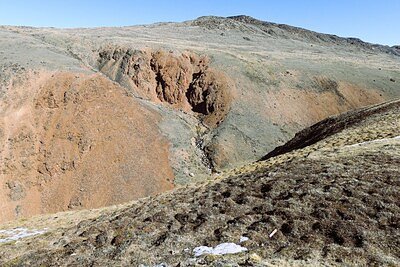
The Sarfartoq Gambit: Greenland's Key Role in the Critical Minerals Race
CHARLOTTE, NC – June 04, 2026 – In a move that underscores the escalating global race for critical minerals, Greenland Mines Ltd. (Nasdaq: GRML) is wasting no time advancing its newly acquired Sarfartoq rare earths project in southwest Greenland. Just weeks after signing a definitive agreement to acquire the asset, the company’s operations team was on the ground, signaling a clear intent to fast-track development. This rapid execution is more than just corporate efficiency; it represents a calculated play in the high-stakes geopolitical chess match over the resources that will power the 21st-century economy.
Sarfartoq is not just another mining prospect. It is a deposit rich in neodymium and praseodymium (Nd-Pr), the indispensable elements in the high-performance permanent magnets required for electric vehicles, wind turbines, and advanced defense systems. By reviving a project with a deep history of technical work and adding new, unanalyzed data to the equation, Greenland Mines is positioning itself to potentially reset the market’s understanding of the project's scale and, in doing so, offer the West a tangible path toward supply chain diversification away from China.
A Strategic Prize in the Arctic
The strategic importance of the Sarfartoq project cannot be overstated. For decades, China has cultivated a near-monopoly on the rare earths market, currently controlling over 60% of global mining and a staggering 85% of the refining capacity. This dominance gives Beijing immense geopolitical leverage, a fact not lost on Western governments.
In response, both the United States and the European Union have launched ambitious initiatives to secure their own supplies. The EU's Critical Raw Materials Act, adopted in 2024, sets aggressive targets for domestic extraction and processing, while the US launched "Project Vault" in February 2026, a $12 billion fund for a strategic mineral reserve. The Sarfartoq project, with its location in a stable, North Atlantic territory, fits perfectly into this strategic realignment. It represents a potential cornerstone for a new, secure North Atlantic Critical Minerals Corridor.
Demand fundamentals create a powerful tailwind. The global push for decarbonization is fueling an insatiable appetite for Nd-Pr. The market is projected to remain in a supply deficit for the second consecutive year in 2026, with Nd-Pr alloy prices experiencing dramatic gains. This market pressure, combined with the geopolitical imperative, transforms the icy expanse of Greenland into one of the world's most critical resource frontiers.
Unlocking Sarfartoq's Hidden Potential
While the geopolitical context provides the motive, it is the project's geology and untapped data that provide the opportunity. Greenland Mines is acquiring an asset with more than 15 years of technical work, including over 35,800 meters of historical drilling. Crucially, this includes a 2023 infill drill program whose data has never been publicly disclosed or incorporated into economic models.
The company's first order of business is to have this new data validated by an independent consultancy. The goal is to update a Preliminary Economic Assessment (PEA) that dates back to 2011. The original PEA was based on market prices that are a fraction of today's values. A modernized assessment, incorporating new resource estimates and current market dynamics, is expected to paint a far more compelling economic picture.
Furthermore, the 2011 study did not fully account for other valuable elements present in the system. Greenland Mines believes there is significant potential to add by-product credits from niobium—a critical metal for high-strength alloys—as well as high-value heavy rare earths like terbium and dysprosium. With an exceptional concentration of Nd-Pr making up 25-40% of the total rare earth oxides—one of the highest ratios globally—any enhancement to the project's overall value proposition could be substantial.
Navigating the Greenlandic Gauntlet
Developing a project in the Arctic is a formidable challenge, but Greenland Mines is inheriting a significant head start. The Sarfartoq site comes with well-maintained infrastructure, including a fully equipped camp for 30 personnel and two diamond drill rigs stored on-site. This allows the company to bypass logistical hurdles that can delay Arctic projects by years.
Hans Jensen, Country Manager for Greenland Mines, commented on the state of readiness: "The existing camp, drill rigs and logistics setup are some of the most well‑organized field assets I have seen in Greenland. That gives us real confidence that we can get 'boots on the ground' quickly and move the Project forward without losing seasons."
However, operational efficiency is only part of the equation. Greenland, while eager for the economic diversification and jobs that mining can bring, maintains a rigorous regulatory framework. The 2024 Mining Act mandates that all activities adhere to the highest international standards for environmental protection and social sustainability. Companies must complete multi-year environmental and social impact assessments before an exploitation license is even considered. Greenland Mines has already engaged environmental consultants to continue baseline studies, demonstrating a commitment to navigating this process methodically.
A Vertically Integrated Vision
Perhaps the most compelling aspect of this deal is the strategic partnership that underpins it. The seller, Neo Performance Materials, is not simply exiting the project. Instead, it is converting its ownership into a strategic shareholding in Greenland Mines and, critically, retaining offtake rights for up to 60% of future production. This is not a simple hand-off; it is the formation of a powerful alliance.
This structure creates a direct link between a Greenlandic source of Nd-Pr-rich material and Neo's established rare earth processing and magnet manufacturing facilities in Europe. It is the blueprint for the resilient, non-Chinese, mine-to-magnet supply chain that Western policymakers have been seeking. As Jensen noted, "This is not just a project hand-off; it is a continuation of a long-term collaboration."
As Greenland Mines works to secure final government approvals and begins the detailed work of technically de-risking and updating the Sarfartoq project, the industry will be watching closely. The company's swift and strategic moves in the Arctic are a clear signal that the global resource map is being redrawn, with Greenland emerging as a pivotal piece on the board.