
- RaaS Market Growth: Projected to soar from $1.8 billion in 2023 to $4.0 billion by 2028.
- Formic's Expansion: New 53,000-square-foot facility, five times larger than previous headquarters.
- Production Hours: Formic's fleet has surpassed 650,000 production hours, the largest independent robotic fleet in the U.S.
Experts would likely conclude that Formic's 'Robots-as-a-Service' model is democratizing automation, enabling small and mid-sized manufacturers to compete by shifting automation from a capital expense to a predictable operating expense.
The Robot Landlords: How Formic is Reshaping American Manufacturing
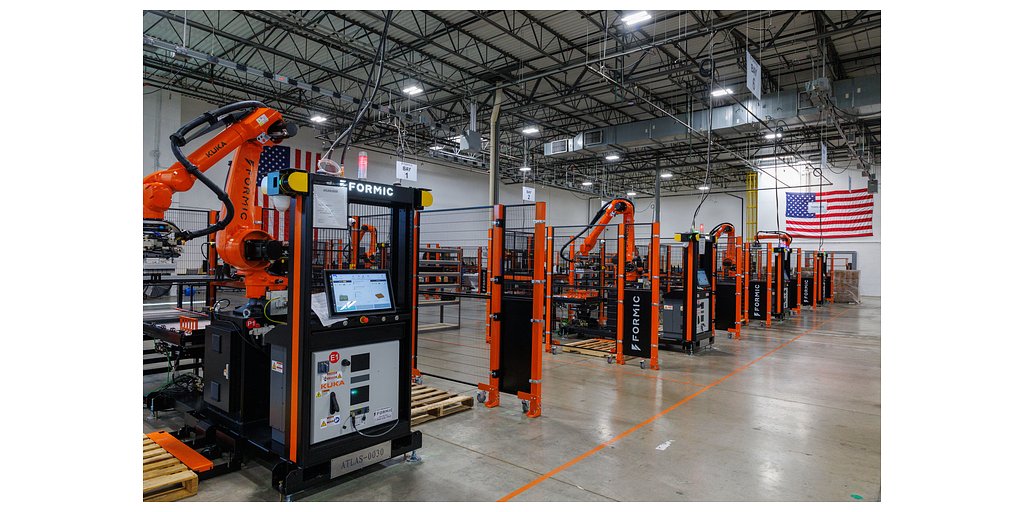
BOLINGBROOK, IL – June 17, 2026 – On the surface, the grand opening of a 53,000-square-foot warehouse in a Chicago suburb might seem like a standard business expansion. But the recent unveiling of Formic's new headquarters, complete with a ribbon-cutting ceremony performed by a robotic arm, is a story that goes far beyond real estate. It’s a physical manifestation of a profound shift in American manufacturing, where access to cutting-edge automation is no longer the exclusive domain of corporate giants.
Founded in 2020, Formic has grown at a blistering pace, and this new facility—five times the size of its previous one—is the engine room for its next phase. The company isn’t selling robots; it’s selling outcomes. By offering “Robots-as-a-Service” (RaaS), it’s tackling the biggest hurdle for the small and mid-sized manufacturers that form the backbone of the U.S. economy: prohibitive upfront cost.
The New Economics of Automation
For decades, the path to automation was a one-way street paved with massive capital expenditure. A manufacturer would spend hundreds of thousands, if not millions, on robotic systems, then face the complex and costly challenges of integration, programming, and maintenance. This model effectively locked out smaller players, who operate on thinner margins and can’t risk such a significant investment. This has left them vulnerable, especially when facing persistent labor shortages. As of late 2024, nearly one in five U.S. manufacturing plants still cited insufficient labor as a key reason for not operating at full capacity.
Formic’s model flips this script entirely. Instead of buying a robot, a manufacturer signs a contract for a service. For a flat monthly rate, Formic designs, installs, monitors, and maintains the robotic systems. The key metric isn't ownership; it's output. Formic guarantees production performance, shifting the financial and operational risk from the customer to itself. It’s a move that democratizes technology, turning automation from a capital expense into a predictable operating expense, much like a utility bill.
“This space exists because the demand is real, the pipeline is growing, and we need the room to meet it,” said Danijel Lolic, COO of Formic, during the opening event. His statement is backed by hard numbers. The RaaS market, valued at $1.8 billion in 2023, is projected to soar to $4.0 billion by 2028. Formic, having reportedly grown its revenue 300% in 2024 and raised significant venture capital, is positioning itself to capture a large slice of this burgeoning market by focusing on the historically underserved SME segment.
An Edge Sharpened by Data
While the financial model is compelling, the secret sauce is hidden in the data. The company recently surpassed 650,000 production hours across its fleet—the largest independent robotic fleet in the United States. In the world of Formic, these hours are more than a measure of uptime; they are the fuel for its artificial intelligence. This massive dataset trains Cortex and Core, Formic's proprietary AI models that govern everything from initial system design to real-time operational optimization.
This creates a powerful feedback loop. Every new robot deployed adds more data, making the AI smarter, the deployments faster, and the operations more efficient. It’s a compounding advantage that competitors find difficult to replicate. This AI-driven approach is what allows Formic to confidently expand into far more complex tasks than when it started.
“When we started, we had one core application and a clear conviction that the Robots-as-a-Service model could change manufacturing,” Lolic explained. “What you see on this floor today is proof that the conviction was right and the model works.”
From Pallets to Precision Parts
The proof is in the expanding menu of applications. Formic built its reputation by solving a chronic headache for food and consumer goods companies: palletizing. Automating the repetitive, physically demanding task of stacking boxes on pallets at the end of a production line provided a clear and immediate return on investment. But the new Bolingbrook facility showcases a much broader ambition.
Attendees at the grand opening saw systems for case packing and, for the first time publicly, pallet wrapping. Most significantly, Formic is now tackling machine tending. This involves robots loading and unloading raw materials from CNC machines—a critical process for manufacturers of metal components for the aerospace, automotive, and industrial sectors. These are precisely the types of shops that have long needed automation to compete but have been stymied by capital constraints and a lack of in-house robotics expertise.
“Machine tending alone represents a massive expansion of who we can serve,” said Shawn Fitzgerald, Formic’s CRO. “We're talking about metal components manufacturers, the shops making parts for aerospace and automotive, who have not been able to automate... Now they can unlock more production hours than ever before to get the job done without requiring that huge upfront cost.”
A New Hub in America's Manufacturing Heartland
Choosing the Chicagoland area for this major expansion was no accident. The Midwest remains the dominant corridor for industrial automation in North America, boasting a dense concentration of manufacturing across diverse sectors and a deep well of engineering talent. The presence of Bolingbrook Mayor Mary Alexander-Basta at the ribbon-cutting signals a welcome partnership between local government and the high-tech industry that is reshaping the region’s economic future.
This growth isn't just about robots replacing people; it's a strategic response to a workforce in transition. Automation is filling roles that companies struggle to staff, allowing human workers to move to higher-value positions in oversight, maintenance, and quality control. By making manufacturers more productive and competitive, this wave of accessible automation helps secure the health of the entire industrial ecosystem.
As Formic prepares to open another new facility in Oakland, California, this August, the message is clear. The story isn't just about one company's growth, but about the re-tooling of American industry. By acting as robot landlords, Formic and others in the RaaS space are providing the tools for a manufacturing renaissance, one subscription at a time.