
- $10,000 reward offered by Alley Cat Allies for information leading to conviction in animal cruelty case
- 5x higher likelihood of violent crimes against humans for individuals with a history of animal abuse
- Swift arrest achieved in a prior similar case with the same reward strategy
Experts agree that strategic investments by non-profits in animal cruelty cases can accelerate justice and mitigate broader public safety risks, leveraging private capital to address gaps in public resources.
The Price of Safety: A Non-Profit's Strategic Bet on Justice in San Antonio
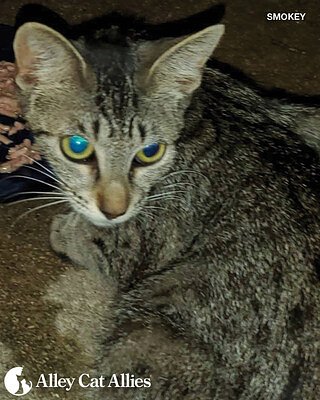
SAN ANTONIO, TX – December 05, 2025 – On the surface, the story is a grimly familiar local news brief. In late November, a brown tabby cat named Smokey was found on Spring Terrace Drive in San Antonio, an orange blowgun dart lodged in her back. She survived, but the deliberate act of cruelty sent a shockwave through the community. What elevates this incident from a local crime blotter entry to a case study in modern strategic problem-solving is the response it triggered. Alley Cat Allies, a global non-profit, immediately stepped in, offering a $10,000 reward for information leading to the perpetrator's conviction.
This isn't just charity; it's a calculated strategic investment. In a world where public resources are perpetually strained, the deployment of private capital by non-governmental organizations (NGOs) to accelerate justice represents an innovative and increasingly vital model of public-private partnership. The $10,000 reward is not a donation; it is seed capital for a specific outcome: a conviction. For an organization with a mission to protect animals, this expenditure is a direct investment in fulfilling its core objective, with a measurable return on investment.
The efficacy of this strategy was proven just weeks earlier in the same city. In November, Alley Cat Allies offered a similar reward in the case of a man caught on video strangling a kitten. The San Antonio Police Department confirmed that the reward directly led to a swift arrest. This prior success provides a compelling proof-of-concept, demonstrating that a relatively small financial incentive can break through investigative logjams, mobilize citizen vigilance, and produce results that might otherwise take months or never materialize at all. As Coryn Julien, an officer at Alley Cat Allies, noted, "We recently issued a reward that led to a swift arrest in another San Antonio cruelty case, and we are hoping for similar success now."
Unmasking a Deeper Risk: The Link to Broader Violence
The strategic importance of this intervention becomes clearer when the incident is viewed not as an isolated act, but as a data point in a much larger and more disturbing trend. The caregiver for Smokey reported finding a similar dart weeks before the attack, suggesting a pattern of behavior, not a random impulse. This, combined with the recent kitten strangulation case, paints a picture of a serious public safety issue brewing in the community.
Decades of criminological and psychological research have established a definitive correlation known as "The Link"—a well-documented connection between cruelty to animals and violence toward humans. The FBI considers animal cruelty a Group A felony for data-tracking purposes, placing it in the same category as homicide and arson, and profilers regularly use a history of animal abuse as a key indicator for identifying serial offenders. Landmark studies have shown that individuals who abuse animals are up to five times more likely to commit violent crimes against people.
From an investment and community management perspective, this transforms the issue from animal welfare into a matter of fundamental risk assessment. Acts of severe animal cruelty are not merely symptoms of a troubled individual; they are red flags signaling a potential for escalating violence that can threaten the safety of an entire neighborhood or city. When a perpetrator is targeting animals with a weapon like a blowgun, it indicates a level of premeditation and detachment that is a significant concern for law enforcement and residents alike. Addressing these acts swiftly is not just about seeking justice for an animal; it is a proactive measure to mitigate a potential future threat to human life and community stability, which are the bedrock of any secure real estate or commercial investment.
A New Model for Urban Safety and Governance
The collaboration between Alley Cat Allies and the San Antonio Police Department highlights a powerful hybrid model for maintaining urban safety. While law enforcement agencies are bound by budgets and procedural constraints, private organizations can operate with greater agility. By offering a substantial financial reward, the non-profit provides a critical tool that the police department can leverage in its public appeals, effectively crowdsourcing the intelligence-gathering process.
This partnership operates within a robust legal framework. Texas law, under a statute known as "Loco's Law," classifies severe animal cruelty as a felony, punishable by up to two years in jail and a $10,000 fine. More egregious acts can even be charged as a third-degree felony, carrying a sentence of up to ten years in prison. The existence of these stringent penalties ensures that if a suspect is identified, the justice system has the authority to impose a sentence that reflects the severity of the crime. The private reward serves as the catalyst to activate this public legal machinery.
This model offers a blueprint for how other social and safety issues can be tackled. In an era of municipal budget cuts, NGOs are no longer just advocacy groups; they are becoming strategic partners to government, using their capital and supporter base to fill gaps and enhance the effectiveness of public services. This symbiotic relationship creates a force multiplier, achieving outcomes that neither the public nor the private sector could easily accomplish alone. For companies and investors evaluating a city's long-term viability, the presence of such effective, cross-sector coalitions can be a strong positive indicator of a resilient and well-managed community.
Ultimately, the story of Smokey the cat is about more than just one animal's survival. It is a microcosm of the evolving landscape of public safety and corporate responsibility. The strategic deployment of capital by an organization like Alley Cat Allies demonstrates how targeted, mission-driven investments can yield significant societal dividends, reinforcing the idea that the health and safety of a community are indivisible. Ensuring a city is safe for its most vulnerable residents—human and animal alike—is not a peripheral concern but a core component of creating a stable and prosperous environment for business and life to attract long-term investment.