
- 30+ years in business: Plumb Care Plumbing has over three decades of experience in Lynchburg, Virginia.
- 125 years of combined team experience: The company boasts extensive institutional knowledge in handling aging infrastructure.
- Aging homes: Many Lynchburg homes have outdated plumbing systems, complicating repairs.
Experts would likely conclude that this case study exemplifies how local service businesses are leveraging innovative 'edvertising' strategies to address the growing market demand driven by aging infrastructure, effectively bridging the gap between expertise and consumer trust.
The Pipes of Progress: A Plumber, 'Edvertising,' and Infrastructure
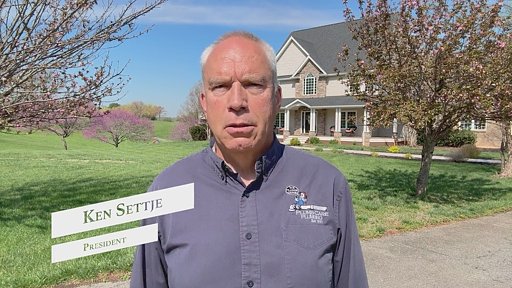
LYNCHBURG, VA – June 16, 2026 – On its face, a press release that crossed my desk this week seemed unremarkable. HelloNation, a self-described “Good News Network,” published an article featuring Ken Settje, the president of Plumb Care Plumbing Inc., explaining the various factors that influence plumbing costs for homeowners in Lynchburg, Virginia. It’s practical, consumer-focused advice: emergency calls cost more, complex jobs require more labor, and older homes present unique challenges. It’s the kind of information that, while useful, rarely signals a broader market shift.
Yet, digging into the layers reveals a fascinating microcosm of modern progress. This single piece of local content is a nexus point where two powerful forces converge: the evolution of marketing into what HelloNation calls “edvertising,” and the ever-present, economically potent challenge of America’s aging infrastructure. What a local plumber is doing in Virginia tells us a great deal about how expertise is being packaged and sold, and the foundational issues driving that demand.
The 'Edvertising' Effect
The HelloNation article is a textbook example of a burgeoning media strategy. The platform’s “edvertising” model blurs the line between editorial content and paid promotion by positioning a business owner as a trusted expert. Instead of a banner ad shouting “Call Plumb Care!”, the company gains authority by providing genuinely helpful information. For a local service business, where trust is the primary currency, this is exponentially more powerful than traditional advertising.
My research confirms that Plumb Care Plumbing is a well-established local entity, with over three decades in business and a portfolio of local “Best Of” awards. The company has a strong digital footprint and a high rating on the Better Business Bureau. This isn't a fly-by-night operation; it's a legacy business adapting to a new marketing landscape. The partnership with HelloNation is a strategic move to leverage that deep-seated expertise. The content produced isn’t just an article; it’s a digital asset, amplified by a press release distributed nationally via PR Newswire and syndicated on financial news sites. This is a sophisticated play to dominate local search results and build a moat of credibility.
This model represents a quiet but significant ripple in the value chain of local services. The primary challenge for any skilled trade is not just performing the work, but communicating its value and complexity to a customer who may only see a leaky faucet. By sponsoring educational content, Settje isn't just selling a service; he's shaping the customer's understanding of the problem. This pre-education justifies higher costs for complex jobs, builds trust before a technician ever steps foot in the home, and differentiates Plumb Care from competitors who might offer a lower, but less comprehensive, bid.
The Market Hiding Behind the Walls
This innovative marketing strategy doesn't exist in a vacuum. It is aimed directly at a massive, and growing, market opportunity: the decay of our built environment. The press release pointedly notes that “Many Lynchburg homes are older and may contain aging pipes, outdated plumbing components, or mineral buildup that complicates repairs.” This single line is the key to understanding the entire equation.
Lynchburg, like countless cities across the country, has a significant stock of older homes. These properties present plumbing challenges that go far beyond simple clogs. Technicians may encounter corroded galvanized steel pipes, failing clay sewer lines infiltrated by tree roots, or entire systems that don't meet modern building codes. These aren't simple repairs; they are forensic investigations that require deep institutional knowledge. A plumber in a new suburban development faces a fundamentally different set of problems than one in a historic city.
This is where the true value of a company like Plumb Care—with its self-proclaimed 125 years of combined team experience—becomes apparent. The premium pricing associated with emergency calls or complex jobs isn't arbitrary; it reflects the cost of maintaining a team with the specialized knowledge required to diagnose and solve problems in aging, unpredictable systems. The national skilled labor shortage in the trades further amplifies the value of such experienced teams.
This creates a powerful symbiosis. The physical reality of aging infrastructure creates a demand for high-level expertise. The “edvertising” model provides the perfect vehicle to communicate that expertise and capture that demand. The content helps homeowners self-diagnose the potential complexity of their situation, priming them to understand why a “simple” leak in their 80-year-old home might require more than a five-minute fix.
The New Anatomy of Local Trust
What we are witnessing is the re-architecting of the value chain for local expertise. The old model was linear and relied heavily on word-of-mouth or the Yellow Pages. Today, the path from a homeowner's problem to a company's solution is a complex digital dance.
It begins with a problem—a slow drain, a cold shower. The first step is no longer a phone call but a Google search. This is where the 'edvertising' content from HelloNation does its work, offering answers and simultaneously introducing Plumb Care as the authoritative source. The next step is verification, where the homeowner cross-references online reviews, checks BBB ratings, and looks for signals of legitimacy—the very digital breadcrumbs Plumb Care and its marketing partners have strategically laid.
By the time the call is made, the customer is not just a lead; they are an informed, pre-qualified buyer who has already bought into the company's expertise. HelloNation has effectively created a new market niche for itself, acting as a paid-for trust broker between expert businesses and information-hungry consumers. This is a far cry from the interruptive model of old media. It is an integrated system where content, reputation, and service delivery are inextricably linked.
This case in Lynchburg is more than a story about a plumber. It's a blueprint for how tangible, hands-on industries are navigating the intangible world of digital communication. The most successful players are no longer just masters of their craft; they are becoming masters of the narrative, strategically explaining the 'why' behind their work to build a resilient and profitable business on the aging foundations of our cities.