
- $50 billion: The global litigation finance market is projected to exceed this amount within the next decade, with Asia-Pacific as the fastest-growing region.
- S$5 million: The minimum capital requirement for funders in Singapore, ensuring institutional-grade participation.
- June 3-4, 2026: Date of LITFINCON Asia 2026, the inaugural summit for the litigation finance industry in Asia.
Experts agree that Asia, particularly Singapore and Hong Kong, is emerging as a strategic hub for litigation finance, driven by proactive regulatory frameworks and rising demand for sophisticated financing solutions in cross-border disputes.
The New Gavel: How Global Capital is Reshaping Justice in Asia
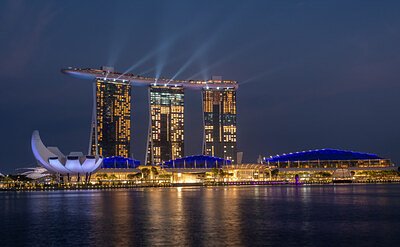
SINGAPORE – May 18, 2026 – Next month, the gleaming towers of Marina Bay Sands will host more than just tourists and high-rollers. From June 3-4, a different kind of high-stakes player will convene for LITFINCON Asia 2026: the global architects of litigation finance. This inaugural Asian summit for the industry isn't just another conference; it's a signal flare indicating a profound shift in the machinery of global commerce and law. As institutional capital, private credit, and sovereign funds search for new, uncorrelated returns, they are turning legal disputes themselves into a structured, investable asset class. And their new frontier is Asia.
The event, organized by Houston-based alternative investment firm Siltstone Capital, brings together the ecosystem that now powers complex legal battles: funders, insurers, institutional investors, and top-tier law firms. They are gathering to discuss the pipelines of capital and strategy that are transforming commercial disputes, intellectual property enforcement, and cross-border arbitration from costly burdens into monetizable assets. At its core, this is a story about the industrialization of justice, and Singapore is positioning itself as the system's central hub in the Eastern Hemisphere.
The Asian Window Opens
For decades, the concept of a third party funding a lawsuit for profit was barred in many jurisdictions by archaic common law doctrines. But as the cost and complexity of commercial litigation have soared, the logic of external financing has become undeniable. While Western markets like the U.S. and UK have mature, multi-billion-dollar litigation finance industries, they are also becoming more crowded and, in some cases, more regulated. This has created a pivotal opportunity for Asia.
Singapore and Hong Kong, in particular, have systematically engineered their legal and regulatory frameworks to attract this burgeoning industry. Recognizing the economic potential, Singapore’s government began a deliberate liberalization process, first legalizing third-party funding for international arbitration in 2017. It has since expanded the scope to include domestic arbitration and proceedings in the Singapore International Commercial Court (SICC). The framework is professionalized, requiring funders to hold at least S$5 million in capital, a move designed to attract serious, institutional-grade players rather than speculative opportunists.
This proactive stance is a core part of the region’s appeal. "The window in Asia is open right now," said Jim Batson, CIO of Legal Finance at Siltstone Capital, in a statement ahead of the conference. "Singapore and Hong Kong have built the infrastructure. The deal flow is there. Institutional capital is looking for a home." His assertion points to a calculated strategy: as cross-border commercial arbitration filings at regional centers like SIAC (Singapore International Arbitration Centre) and HKIAC (Hong Kong International Arbitration Centre) continue to rise, the demand for sophisticated financing solutions grows in lockstep. The region is not just passively receiving capital; it is actively building the rails for it to run on.
From Niche Practice to Institutional Asset Class
The most significant transition underway is the evolution of litigation finance from a niche service for cash-strapped plaintiffs to a mainstream component of institutional investment portfolios. The global market is projected by some analysts to exceed $50 billion within the next decade, with Asia-Pacific pegged as the fastest-growing region. The allure for investors is powerful: legal outcomes are largely uncorrelated with traditional stock and bond market cycles, offering true diversification and the potential for high, asymmetric returns.
This institutionalization is evidenced by the conference's attendees and sponsors. The Diamond Sponsor, HOZU Capital, bills itself as Asia’s premier litigation funder, specializing in complex, high-value disputes connected to the region. It is joined by global giants like Omni Bridgeway, a publicly-listed pioneer in the field, and Deminor, a leading European funder with an established presence in Hong Kong. Their participation underscores that this is no longer a cottage industry. It is a global financial system with increasingly sophisticated products.
This influx of capital is reshaping corporate strategy. General counsels are no longer just legal defenders; they are becoming portfolio managers, using litigation finance to move legal costs off-balance-sheet, pursue meritorious claims that would otherwise be too expensive, and turn legal departments from cost centers into potential revenue generators. The conversation at LITFINCON will reflect this new reality, with panels dedicated to cross-border capital formation and structured risk transfer, topics more commonly associated with investment banking than with the courtroom.
Deconstructing the Deal: The New Financial Engineering of Law
A glance at the LITFINCON Asia agenda reveals the sheer breadth of this new asset class. The discussions are not about simple, one-off case funding but about a complex portfolio of financial instruments built around legal risk.
One of the most compelling areas is intellectual property. A dedicated panel will examine IP as a global asset class, focusing on enforcement trends and monetization strategies. In a world where a company’s value is increasingly tied to intangible assets like patents and trademarks, the ability to finance costly, cross-jurisdictional enforcement campaigns is a game-changer. This is particularly relevant in Asia, where disputes over IP in technology and manufacturing are a significant source of deal flow for funders.
The system's maturity is also reflected in the growing role of insurance and secondary markets. Panels on risk transfer will explore how insurance products like judgment preservation insurance can de-risk investments, while discussions on secondary markets will focus on how funders can sell stakes in their case portfolios to other investors, creating liquidity in a traditionally illiquid asset. This financial engineering allows capital to flow more efficiently, enabling funders to take on larger and more complex portfolios of cases.
International arbitration remains the bedrock of the industry's growth in Asia. With Singapore and Hong Kong serving as globally-respected neutral venues for resolving cross-border disputes, the legal framework permitting third-party funding for arbitration has created a perfect storm of opportunity. Funders are providing the capital necessary for parties to see these often lengthy and expensive proceedings through to enforcement, ensuring that a valid arbitral award doesn't fail simply due to a lack of funds to pursue it across borders.