
- Lead times for critical components: 16-to-24 weeks in 2026, down from peak crisis but still far from pre-pandemic efficiency.
- Counterfeit component incidents: 25% year-over-year increase reported in 2024.
- UniBetter's smart warehousing and testing center: 2,000-square-meter facility with CNAS accreditation.
Experts would likely conclude that independent distributors have become critical strategic partners in the global tech supply chain, offering agility, quality assurance, and resilience that traditional channels struggle to match in an era of persistent scarcity and geopolitical uncertainty.
The New Gatekeepers: How Independent Distributors Are Saving Global Tech
SHENZHEN, China – June 02, 2026 – The global supply chain for electronic components, the microscopic lifeblood of our modern world, is no longer a predictable system of linear orders and deliveries. It has become a high-stakes chessboard of geopolitical tension, unpredictable shortages, and the ever-present threat of counterfeit parts. For the original equipment manufacturers (OEMs) and electronics manufacturing services (EMS) providers building everything from AI servers to life-saving medical devices, navigating this landscape is a daily battle.
In this volatile environment, a recent press release from Shenzhen-based UniBetter, highlighting a watch list of top independent electronic component distributors for 2026, is more than just corporate marketing. It’s a signal of a profound shift in the architecture of global manufacturing. Once viewed as secondary players or simple brokers, independent distributors are emerging as indispensable strategic partners, providing the agility, quality assurance, and resilience that traditional supply lines often lack.
A Market of Perpetual Scarcity
The post-pandemic dream of a swift return to supply chain normalcy has proven to be just that—a dream. While the broad, headline-grabbing shortages of 2022 have subsided, they have been replaced by a more complex and persistent state of scarcity. In 2026, lead times for critical components like microcontrollers (MCUs), power management ICs (PMICs), and automotive-grade passives still hover in the 16-to-24-week range. This is a significant improvement from the peak crisis, yet it remains a far cry from the just-in-time efficiency of the past.
Driving this new reality is an insatiable, and uneven, demand. The explosion in artificial intelligence is creating unprecedented needs for not just high-end processors, but a vast ecosystem of supporting components—high-density power management, specialized connectors, and memory chips. The global DRAM supply shortage, for instance, is now expected to persist into 2027. Add to this the relentless digitization of industrial controls, the electrification of the automotive sector, and the build-out of new energy infrastructure, and it becomes clear why specific component families are under constant pressure.
This landscape of perpetual scarcity is compounded by two other specters: obsolescence and counterfeiting. As component lifecycles shorten, manufacturers of long-life industrial, medical, and military equipment are left scrambling for end-of-life (EOL) parts. Simultaneously, the risk of counterfeit components entering the supply chain remains alarmingly high, with some industry sources reporting a 25% year-over-year increase in incidents in 2024. A fake component in a consumer gadget is an inconvenience; in a pacemaker or an airplane’s avionics, it’s a catastrophe.
From Brokers to Strategic Partners
It is within this crucible of risk and scarcity that the role of the independent distributor has been forged anew. The seven companies highlighted in UniBetter’s watch list—including UniBetter itself, alongside established players like Smith and innovators like Sourceability—represent a new class of highly sophisticated, quality-obsessed organizations.
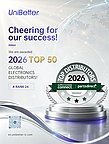
This is a far cry from the old stereotype of a simple broker. The new gatekeepers of the component world are defined by their deep investment in quality assurance and their ability to provide verifiable trust in an untrustworthy market. UniBetter, for example, which secured the No. 24 spot on Supply Chain Connect's 2026 Top 50 Global Electronics Distributors list, details a quality system that would be the envy of a high-tech manufacturer. Its certifications are a case in point. While ISO 9001 is a baseline for quality management, its adherence to AS6081 is a far more telling indicator. This standard is specifically designed for independent distributors, providing a rigorous framework for avoiding, detecting, and mitigating the risk of fraudulent electronic parts.
Furthermore, holding a certification like ISO 13485 demonstrates the capability to meet the stringent quality demands of the medical device industry. This isn't just about sourcing a part; it's about guaranteeing a level of quality and traceability that can withstand the highest regulatory scrutiny. This commitment is physically manifested in facilities like UniBetter’s 2,000-square-meter smart warehousing and testing center, which holds CNAS accreditation—the Chinese equivalent to the international standard for laboratory competence. Membership in organizations like ERAI (Electronic Resellers Association International) further embeds these firms in a global network dedicated to tracking and reporting counterfeit incidents, turning a reactive problem into a proactive defense.
A Buyer's Guide to Trust in a Post-Trust World
For a procurement manager under pressure to fill a bill of materials (BOM) for a critical product line, the criteria for choosing a partner have fundamentally changed. The UniBetter list implicitly serves as a buyer's guide for this new era, emphasizing certifications, in-house testing, and traceability.
What does this mean in practice? It means looking beyond the price and asking if a distributor has in-house capabilities for X-ray analysis to inspect internal structures without destroying the component. Can they perform decapsulation—a destructive test that removes a chip's packaging to expose the internal die for microscopic verification against a known good part? These are not abstract technical details; they are the front lines in the war against counterfeits.
This new breed of distributor, which includes firms like the long-established Smith (ranked No. 9 globally) and the fast-growing NewPower Worldwide, operates on a model of transparency and verification. They understand that their primary product is not merely the component itself, but the confidence that the component is authentic, will perform to specification, and is handled with the care necessary to prevent damage, as verified by standards like ANSI/ESD S20.20 for electrostatic discharge control.
These independent firms leverage vast global networks—UniBetter alone cites over 7,000 partners—to do what authorized channels often cannot: find a specific, hard-to-source component from a vetted supplier in another part of the world and get it to a production line before it shuts down. They provide the agility needed to navigate not just market shortages, but geopolitical disruptions and trade policies that have become a fixed, rather than temporary, feature of the global economic landscape. In this context, the choice of a distribution partner is no longer a simple procurement decision; it is a core component of a company's strategic risk management.