
- 60% increase in continuous power output with Acetolyte™ electrolyte
- 2,550 W/kg continuous power delivery (up from 1,550 W/kg)
- 2,400 deep-discharge cycles for industrial-grade longevity
Experts would likely conclude that this strategic licensing partnership represents a pivotal shift in battery innovation, combining breakthrough material science with agile business models to accelerate high-power applications across industries.
The New Engine of Innovation: Licensing Supercharges Battery Performance
DUSSELDORF, Germany – June 02, 2026 – A quiet announcement from German battery specialist EAS Batteries and Japanese chemical giant Asahi Kasei marks what may be one of the most significant strategic shifts in the battery industry this decade. While the headline news is the commercial launch of a new ultra-high-power battery cell, the real story lies beneath the surface—in the chemical composition of its electrolyte and the innovative business model bringing it to market. This partnership isn't just about building a better battery; it's a new blueprint for how foundational technology is developed and scaled in an era of intense global competition.
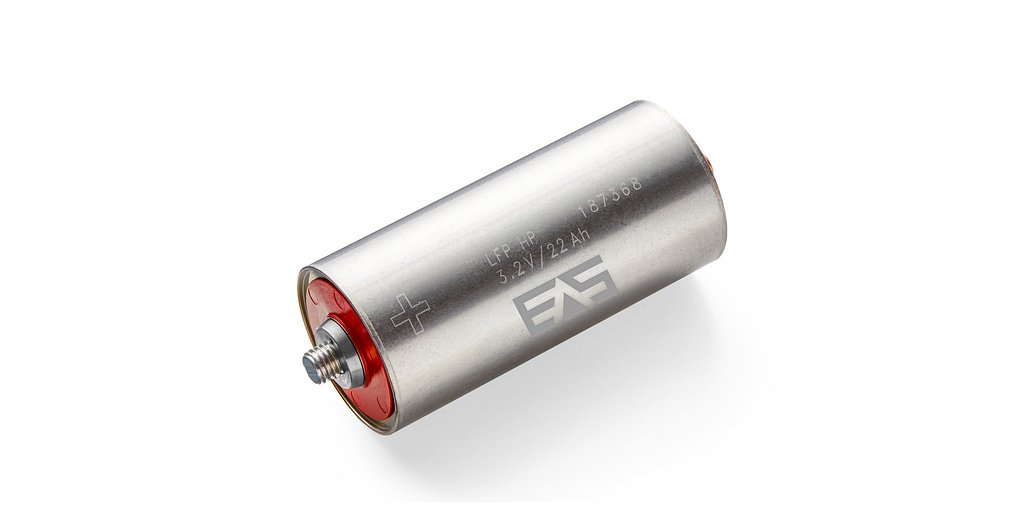
EAS Batteries has officially begun sales of its UHP601300 LFP 22 cell, a large-format cylindrical battery that, thanks to Asahi Kasei's Acetolyte™ electrolyte, delivers a staggering 60% increase in continuous power output compared to its predecessors. This isn't an incremental improvement. It's a leap that signals a new phase where material science, unlocked by strategic licensing, becomes the primary engine of progress.
The Chemical Engine: What Makes Acetolyte™ a Game-Changer?
The heart of this breakthrough is Asahi Kasei's Acetolyte™, a novel electrolyte formulation based on acetonitrile. For decades, the lithium-ion world has been dominated by carbonate-based electrolytes. While effective, they have inherent limitations, particularly in power delivery and performance at temperature extremes. Acetolyte™ shatters these constraints.
Its key advantage is exceptionally high ionic conductivity, which dramatically reduces the cell's internal resistance. In practical terms, this allows electricity to flow more freely, enabling the battery to discharge immense power without the thermal penalties that plague conventional designs. The new EAS cell can deliver a continuous 2,550 watts per kilogram (W/kg), up from 1,550 W/kg using a standard electrolyte. Under a two-second pulse, it reaches 3,760 W/kg. This is the difference between a steady flow and a torrent of power, available on demand.
Furthermore, this chemical innovation addresses one of the Achilles' heels of battery performance: temperature. Acetolyte™ enables stronger output at low temperatures, where other batteries become sluggish, and offers improved durability at high temperatures. This resilience, combined with the inherent safety of the Lithium Iron Phosphate (LFP) chemistry EAS employs, creates an exceptionally robust power source. The cell also maintains a long life, rated for 2,400 deep-discharge cycles, making it suitable for industrial applications where longevity is paramount.
A New Blueprint for Speed and Scale
While the technology is impressive, the business strategy behind it is truly disruptive. This collaboration is a flagship example of Asahi Kasei's "Technology-value Business Creation" (TBC) initiative—a plan to monetize the company's vast portfolio of intangible assets, including patents and process know-how, through licensing.
Instead of entering the brutally competitive and capital-intensive world of battery manufacturing, a field dominated by giga-scale players like CATL and BYD, Asahi Kasei is pursuing a more agile, asset-light path. By licensing its advanced electrolyte to a specialized partner like EAS Batteries, it achieves rapid market entry and validation. The timeline is telling: the license agreement was signed in November 2025, and serial production began just four months later in March 2026.
“The short time from signing our license agreement...to the start of serial production...reflects the focused and highly collaborative efforts between EAS Batteries and Asahi Kasei,” noted Osamu Matsuzaki, a Senior Executive Officer at Asahi Kasei. “Together, we have translated advanced electrolyte technology into a commercially viable high-power cell within just a few months.”
This model challenges the prevailing wisdom that vertical integration is the only path to victory in the battery race. It suggests a future where symbiotic partnerships between material science innovators and manufacturing specialists can outmaneuver monolithic giants through speed and focus.
Powering the Heavy-Duty Revolution
The immediate impact of this ultra-high-power cell will be felt far beyond the passenger electric vehicle market. While much of the industry is focused on energy density for range, EAS and Asahi Kasei are targeting sectors where power density—the ability to deliver massive energy in short bursts—is the critical metric.
These are the engines that power our world: the heavy-duty, non-road mobile machinery (NRMM) used in construction and mining, marine propulsion systems, and railway applications. Electrifying this equipment has been a persistent challenge, as the power demands of hydraulic systems and heavy-lift operations far exceed the capabilities of conventional batteries. The new EAS cell, with its ability to handle high C-rates (discharging its entire capacity in minutes), is tailor-made for these punishing duty cycles. It opens the door to electrifying machinery that was previously thought to be the exclusive domain of diesel engines.
“The successful commercialisation of our new cell featuring Asahi Kasei’s Acetolyte™ marks another important milestone in our strategic partnership,” said EAS' Managing Director Michael Deutmeyer, highlighting the joint effort to accelerate “innovation from concept to market readiness.” The technology is now being evaluated by customers in aerospace, aviation, and maritime industries, promising to accelerate decarbonization in the economy's most power-hungry corners.
The Next Frontier: Cracking the 46xx Code
The ambition of this partnership does not end with specialty industrial applications. The two companies are already advancing their collaboration to a prize with far greater scale: the 46-series cylindrical cell format. Popularized by Tesla's 4680 cell, this larger format is seen by many as the future of automotive battery packs, promising lower costs, simplified manufacturing, and better structural integration.
Asahi Kasei and EAS are developing a 46xxx cell featuring Acetolyte™, with prototypes already available for testing in low-voltage EV applications. By combining the manufacturing and structural advantages of the 46xx format with the power and temperature performance of Acetolyte™, they could create a compelling package for a wide range of vehicles. Crucially, their plan extends beyond their own production. The partners have agreed to sublicense their combined technologies—the cell design and the electrolyte—to global OEMs and other battery manufacturers. This is the ultimate expression of the licensing strategy: creating a technology platform that can be adopted across the industry, enabling Asahi Kasei and EAS to become essential technology providers for the next generation of electric mobility.