
- $70 billion: Projected U.S. AI inference market value by 2035, up from under $3 billion in 2025.
- Denver Hub: SuperX's first U.S. AI Inference Cloud Hub, powered by NVIDIA's top-tier accelerator technologies.
- Invitation-only: Access to the platform is currently restricted, highlighting exclusivity in the AI infrastructure race.
Experts would likely conclude that SuperX's U.S. entry marks a critical phase in the AI infrastructure race, where specialized cloud providers are poised to challenge tech giants by offering optimized, high-performance solutions for AI inference.
The New Digital Gold Rush: A Global AI Firm's US Entry Signals Power Shift
DENVER, CO – June 04, 2026 – Amid the soaring rhetoric of an artificial intelligence revolution, a quieter, more foundational battle is being waged in the anonymous, climate-controlled data centers that now form the bedrock of our digital world. The latest salvo was fired this week in Denver, where Singapore-based SuperX AI Technology Limited officially launched its first U.S. AI Inference Cloud Hub. While the press release speaks of milestones and market expansion, the move signals something far more profound: the next phase of the global AI arms race has begun, and it’s a battle for infrastructure.
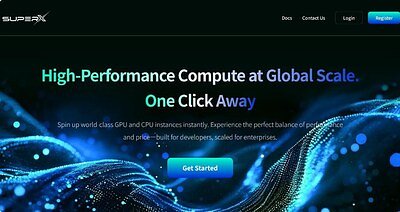
The announcement itself is straightforward. SuperX (NASDAQ: SUPX), a company that positions itself as a "full-stack AI infrastructure solutions provider," has planted its flag in North America. The Denver Hub, powered by top-tier NVIDIA accelerator technologies, is purpose-built for AI inference—the critical, real-time process of running a trained AI model to generate a result, whether it’s answering a query, identifying an object in an image, or generating a line of code. The company boasts of "strong pre-launch customer demand," a claim that, for once, rings true in an industry drowning in hype. The thirst for this specialized computing power is real, and it is ravenous.
The Insatiable Thirst for Inference
For years, the AI narrative has been dominated by "training"—the colossal, energy-intensive process of teaching models like ChatGPT on vast oceans of data. But training is a one-time (or infrequent) capital expense. The real, ongoing operational challenge—and the burgeoning multi-billion dollar market—is in "inference." This is the moment an AI model is put to work, and success is measured in milliseconds and cents per query.
The scale of this new demand is staggering. Industry analysts project the U.S. AI inference market, valued at under $3 billion in 2025, to skyrocket to over $70 billion by 2035. This exponential growth is creating a chasm that general-purpose cloud providers are struggling to fill. Enterprises are discovering that the same cloud servers running their payroll software are often ill-suited for the unique demands of low-latency AI. A one-second delay in loading a webpage is an annoyance; in a self-driving car’s object recognition system, it’s a catastrophe.
This is the gap that specialized players like SuperX are racing to fill. Their Denver Hub isn't just a collection of servers; it's a finely tuned machine built for one purpose. By pairing cutting-edge hardware, such as NVIDIA’s sought-after H100 or even the next-generation Blackwell B200 GPUs, with proprietary software for "GPU resource orchestration," these hubs promise to deliver performance and cost-efficiency that hyperscalers can't easily match. As SuperX's Chief Technology Officer, Kenny Sng, noted in the announcement, "The AI industry is entering a new phase where success is increasingly defined by the ability to operate AI services reliably and efficiently at scale." He’s not wrong. The race is no longer just about having the smartest model, but about having the fastest, most efficient engine to run it.
A Global Player Plants its Flag
SuperX's move into Denver is more than a simple business expansion; it's a calculated geopolitical and economic maneuver. Headquartered in Singapore, the company is one of several international firms eyeing the lucrative North American market, the epicenter of AI development. But entering this arena means stepping into a gladiatorial contest.
The competitive landscape is brutal. On one side are the tech titans—Amazon, Google, and Microsoft—who leverage their immense scale and existing enterprise relationships to bundle AI services. Amazon’s custom-designed Inferentia chips and Google’s Tensor Processing Units (TPUs) represent a formidable, vertically integrated challenge. On the other side are venture-backed American darlings like CoreWeave and Lambda Labs, specialized GPU cloud providers that have seen explosive growth by securing large allocations of NVIDIA’s most powerful chips and catering directly to the AI-native crowd.
SuperX is betting that its "full-stack" model—offering everything from its own server designs and liquid cooling solutions to the cloud software that manages it all—can carve out a defensible niche. It’s a bold strategy. By controlling more of the technology stack, the company aims to deliver a level of performance and optimization that others piecing together third-party components cannot. The Denver Hub is the testbed for this hypothesis. If SuperX can prove its value here, against the world's toughest competitors, it validates its model for global expansion. This isn’t just about serving U.S. customers; it’s about proving its mettle on the world’s biggest stage.
Denver's Emerging AI Clout
The choice of Denver is itself a strategic tell. Far from the traditional tech hubs of Silicon Valley and Seattle, the Mile High City offers a compelling mix of reliable power infrastructure, a central location providing low-latency connectivity to both coasts, and a burgeoning tech ecosystem. Data centers are the heavy industry of the 21st century, and their placement is a matter of cold, hard logistics. SuperX's investment is a vote of confidence that Denver is becoming a critical node in the nation's digital backbone.
For the region, the arrival of such a high-tech facility promises more than just a handful of direct jobs. It acts as an anchor for innovation. Local startups and established enterprises in sectors from aerospace to biotech can now, in theory, access world-class AI infrastructure without having to route their data to server farms on the coasts. It lowers the barrier to entry for building the next generation of AI-powered applications, potentially fueling a new wave of economic development. But this shiny new infrastructure also comes with hidden costs, placing new demands on the region's power grid and water resources—a side of the equation often left out of triumphant press releases.
The launch of SuperX's Denver hub is a microcosm of a much larger story. It highlights a fundamental shift in the tech industry, where the abstract promise of AI is finally meeting the concrete reality of its physical requirements. The platform is currently available through an "invitation-only onboarding program," a quiet reminder that in this new gold rush, not everyone gets a pickaxe. Access to this kind of specialized, high-performance infrastructure is rapidly becoming a key determinant of success, separating the AI haves from the have-nots. As companies like SuperX build out the essential plumbing of the AI era, we are forced to ask not only how it works, but who it will work for.