
- ISO/IEC 42001 Certification: Cedars Digital becomes first to achieve this AI governance standard.
- AI as Infrastructure: Trust in AI now critical for competitiveness, likened to utilities like electricity.
- Sustainability Impact: Certified AI ensures reliable carbon accounting data for decarbonization efforts.
Experts agree that AI governance is becoming the new competitive differentiator, shifting focus from raw technological capability to verifiable trust and accountability.
The New Currency of AI: Why Governance Is Redefining Global Competition
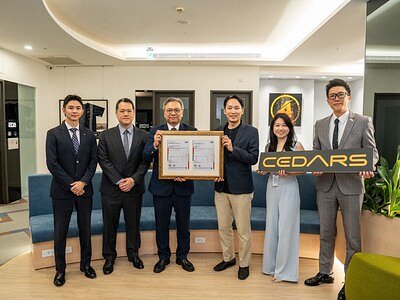
SINGAPORE – June 26, 2026 – This week, Cedars Digital, a Singapore-based technology firm operating at the intersection of artificial intelligence and corporate sustainability, announced it had achieved ISO/IEC 42001 certification. On the surface, it’s a niche accomplishment for a specialized company. But look closer, and you’ll see the announcement isn’t just a press release—it’s a flare, signaling a fundamental transformation in the engines of our global economy. The era of reckless AI adoption is ending. The era of AI governance has begun.
For years, the race was simply to deploy AI. The mantra was to move fast, break things, and accumulate data. Competitive advantage was measured in algorithms and processing power. That gold rush is now giving way to a new, more sober reality. As AI becomes embedded in everything from supply chain logistics to critical infrastructure, a new question has emerged: can we trust it? This question is reshaping the landscape, shifting the source of competitive advantage from mere technological capability to demonstrable, verifiable governance.
From Adoption to Accountability
The certification achieved by Cedars Digital, with advisory from Deloitte and issuance by SGS, is for the world's first international standard for an Artificial Intelligence Management System (AIMS). ISO/IEC 42001 is not a lightweight checklist; it is a comprehensive framework that forces an organization to systematically manage the risks and responsibilities of deploying AI. It demands a structured approach to the entire AI lifecycle, from data sourcing and model training to deployment, monitoring, and eventual retirement.
This standardizes what has until now been a chaotic and fragmented approach to AI ethics. It provides a common language and a set of auditable controls for addressing thorny issues like algorithmic bias, data privacy, transparency, and system security. By adopting this framework, a company is making a public declaration that its use of AI is not a lawless black box. It is a managed, risk-assessed, and accountable part of its business operations.
“As AI becomes an essential infrastructure for businesses, trust will become the defining factor of competitiveness,” said Torrent Chin, CEO of Cedars Digital, in a statement. His choice of words is telling. By framing AI as “infrastructure,” he correctly identifies its evolution from a novel tool to a foundational utility, as critical as electricity or the internet. And like any utility, its value is predicated on reliability and safety.
The involvement of firms like Deloitte in an advisory capacity and SGS as a certification body underscores this maturation. What was once the domain of data scientists and software engineers is now a primary concern for risk managers, compliance officers, and the C-suite. Establishing AI governance is no longer a theoretical exercise but a critical business process, requiring the same rigor as financial auditing or information security management.
Trusting the Data That Drives Decarbonization
Nowhere is this need for trust more acute than in the field where Cedars Digital operates: sustainability. The company’s flagship platform, CarbonM2, helps enterprises manage their carbon accounting, a task of staggering complexity. Calculating a company's carbon footprint involves tracking emissions across vast, global supply chains, analyzing product lifecycles, and synthesizing thousands of disparate data points. AI is an indispensable tool for making this process efficient and insightful.
But if the AI is flawed, the entire premise of data-driven sustainability collapses. If an algorithm used to calculate a product's carbon footprint is biased, or trained on incomplete data, the resulting numbers are not just wrong—they are dangerously misleading. They can lead to misallocated resources, failed climate targets, and accusations of “greenwashing.”
This is why Cedars Digital’s move is so significant. It directly addresses the integrity of the data that underpins the green transition. “Enterprises today require not only trustworthy carbon data, but also trustworthy AI,” noted Salmon Sim, the company’s COO. The ISO/IEC 42001 certification acts as a guarantee. It is, as Sim put it, a “promise…that the use of AI technology behind our solutions is governed properly, without compromise.”
This promise is backed by the standard’s specific requirements. Annex A of ISO/IEC 42001 provides a catalog of controls for managing the AI system lifecycle, including those for ensuring data quality, documenting data provenance, and assessing potential negative impacts. By implementing these controls, a company like Cedars Digital can provide its clients—and their stakeholders—with a higher degree of confidence that the sustainability insights being generated are both accurate and reliable.
A Proactive Play in a Shifting Regulatory World
Cedars Digital’s certification is also a masterclass in strategic foresight. While technologists have been building AI, regulators have been building rules. Frameworks like the EU AI Act and the NIST AI Risk Management Framework in the U.S. are creating a complex and binding web of global regulations. Companies that fail to anticipate this new legal reality risk being caught flat-footed, facing fines, reputational damage, and loss of market access.
Adopting a global standard like ISO/IEC 42001 is a proactive strategy to navigate this emerging regulatory maze. The standard was designed with these impending regulations in mind, providing a practical blueprint for compliance. As Frank Chen, a Director at Deloitte, noted, the standard provides a “common governance framework for responsible innovation” at a time when expectations on governance and risk management are rising sharply.
By getting certified now, Cedars Digital is not only mitigating future compliance risks but also turning governance into a competitive weapon. It can enter new markets, particularly in heavily regulated jurisdictions like Europe, with a clear and credible answer to the question of AI safety and responsibility. This proactive stance demonstrates a level of maturity that will increasingly separate the market leaders from the laggards.
The message is clear: for any company integrating AI into its core products or operations, the time for treating governance as an afterthought is over. The work being done by Cedars Digital, SGS, and Deloitte is not just about one company or one standard. It is a blueprint for how to build resilient, responsible, and competitive businesses in an age defined by artificial intelligence. The structural shift is underway, and the rules of global competition are being rewritten not by code alone, but by the discipline of governance.