
- 10 physical locations in just 4 years since founding
- $45 million in venture capital backing
- 30 showrooms planned by the end of 2027
Experts would likely conclude that Ernesta represents a strategic shift toward personalized retail, blending digital efficiency with physical experiential shopping to meet evolving consumer demands for customization and convenience.
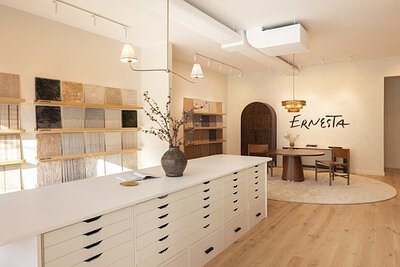
The New Blueprint for Retail: Ernesta Weaves Customization into Fairfax
FAIRFAX, VA – June 29, 2026 – On the surface, the opening of a new home goods store in Northern Virginia might seem like a routine event. Yet, the arrival of Ernesta, a custom rug brand, in Fairfax’s upscale Mosaic District signifies something more profound. It’s a tangible data point in the ongoing evolution of retail, a case study in how modern companies are building systems that challenge the very foundations of mass-market consumerism. By blending venture-backed ambition with a solution to a deceptively simple problem—the ill-fitting rug—this company is weaving a new narrative for how we furnish our homes and what we expect from the businesses that serve us.
Founded in 2022 by several co-founders of the fitness giant Peloton, Ernesta has expanded with a velocity that mirrors its tech-world origins. The Fairfax showroom, which opened its doors today, is the brand’s tenth physical location in just four years. This aggressive push into brick-and-mortar, backed by over $45 million in venture capital, isn't a retreat from the digital world but an extension of it, creating a new kind of community hub centered on personalized design.
Beyond the Standard Size
The core of Ernesta’s appeal lies in its solution to a common homeowner frustration: the standard-sized rug. For decades, consumers have been forced to design their rooms around predetermined dimensions, often leading to awkward layouts. The company’s model flips this script, offering rugs—from wool to natural fibers—customized down to the inch. This seemingly small innovation is, according to numerous customer testimonials, a “game changer.”
The brand promises a streamlined, tech-enabled experience. Customers can consult with designers, order large physical samples to test in their homes, and finalize their purchase online or in-store. The company advertises delivery in “as little as two weeks,” a timeline that aims to shatter the long lead times typically associated with custom furnishings. While real-world delivery can sometimes stretch to four or five weeks depending on the complexity of the order, the promise itself signals a fundamental shift in production logistics. This isn't just about selling a product; it's about delivering a highly efficient, personalized service system.
This system extends to the final mile with white-glove delivery and installation, a premium touch that reinforces the brand’s “designer-quality” positioning. While some discerning critics note the construction may not rival the highest-end, hand-knotted artisanal pieces, the consensus is that the brand delivers exceptional value, quality, and durability for its price point, effectively democratizing access to custom design.
The Venture-Fueled Race to Redefine Retail
Ernesta's rapid growth is a masterclass in modern, venture-fueled brand building. Securing a $25 million Series A round in 2022 followed by a $20 million Series B in early 2026, the company has the financial firepower to pursue an ambitious national rollout. The goal, according to company statements, is to become the “defining brand” in the multi-billion dollar U.S. rug market and to operate 30 showrooms by the end of 2027.
This strategy is emblematic of a broader trend where successful direct-to-consumer (DTC) brands recognize the limits of a purely online presence. For a tactile product like a rug, an experiential showroom is not just a point of sale but a crucial tool for customer acquisition and brand building. It allows the company to control its narrative, offer a high-touch consulting experience, and build community with both homeowners and professional interior designers. The reported profitability of the company as of 2026 suggests this hybrid omnichannel model is not just scalable, but sustainable.
The company’s expansion into the Washington, D.C. metro area, first in Bethesda and now in Fairfax, is a calculated move to capture a market of affluent, design-conscious consumers. As Chief Sales Officer Jennifer Parker noted, “Building upon our Washington, D.C. metro presence… this new space will give homeowners and designers in Northern Virginia a dedicated place to explore custom rugs, collaborate with our team, and create pieces that are uniquely suited to the way they live.”
A Natural Fit: Why the Mosaic District Matters
The choice of the Mosaic District is itself a strategic pillar. Far from a traditional mall, the district is a curated, mixed-use environment designed to be a destination. Its blend of high-end retail, diverse dining, and community events creates a commercial ecosystem that attracts the exact demographic Ernesta targets: consumers who value quality, experience, and design. For a brand like Ernesta, the location is not just a backdrop; it is part of the product.
Placing a showroom here allows the company to benefit from the foot traffic of like-minded consumers and the proximity of other design-focused businesses. This symbiotic relationship is the hallmark of modern place-making, where the collective strength of curated tenants creates an appeal greater than the sum of its parts. It demonstrates a deep understanding that in today's economy, commerce is intertwined with community and experience.
Weaving a Personalized Future
Ultimately, the story of Ernesta’s expansion is a reflection of a powerful societal shift. We are moving away from an era of mass production and toward a future of mass personalization. Consumers increasingly see their homes as a primary form of self-expression and are seeking products that align with their unique tastes and needs. The global market for personalized home decor, valued at over $165 billion in 2025, is projected to more than double by 2036, confirming that this is not a fleeting trend but a durable transformation in consumer behavior.
By building a business model around customization, technology, and a sophisticated omnichannel experience, Ernesta has positioned itself at the forefront of this movement. It is addressing a latent market need with a system designed for the modern consumer—one who expects convenience, demands quality, and values a personal touch. The new Fairfax showroom is more than just a place to buy a rug; it is a physical manifestation of a new blueprint for retail, one that places the individual, and the uniqueness of their home, at the very center of the design.