
- €30 million: Contract value from the German Cyber Agency for Zander Labs' neuroadaptive AI technology.
- Zero calibration: Zander Labs' AI decodes mental states instantly across users without individual calibration.
- Privacy-by-design: Raw EEG data is processed locally on the device, never transmitted to the cloud.
Experts would likely conclude that Zander Labs' passive brain-computer interface (pBCI) technology represents a significant advancement in human-AI collaboration, offering real-time cognitive adaptation with strong ethical safeguards, though its success will depend on overcoming societal concerns about mental privacy and cognitive surveillance.
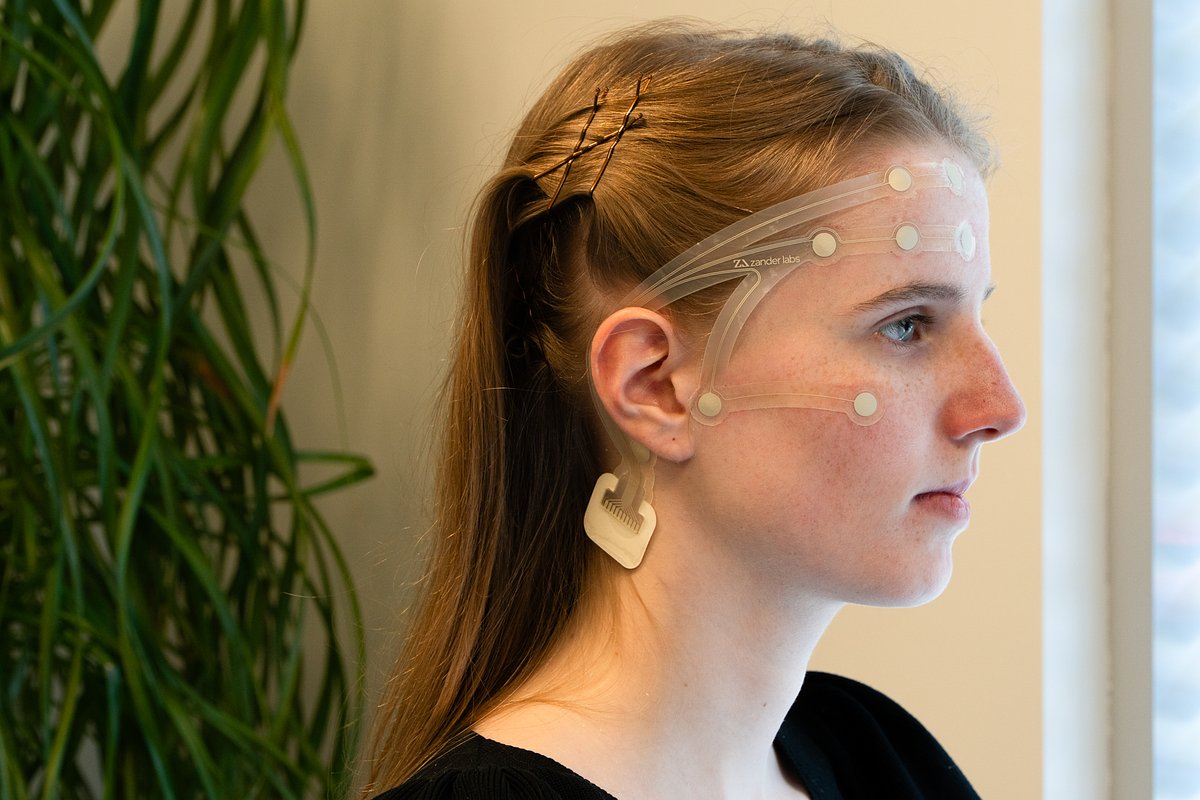
The Mind Reader Arrives: Zander Labs Brings Brain-Sensing AI to the US
SAN FRANCISCO, CA – March 12, 2026 – A Dutch-German neurotechnology firm is making a strategic entry into the United States, bringing with it a technology that operates at the very frontier of human-computer interaction: an AI platform that can interpret a user's mental state without them having to think about it.
Zander Labs, a company born from European research collaborations, has announced its expansion into the U.S. market. It aims to partner with West Coast tech firms in sectors from defense to healthcare to integrate its passive brain-computer interface (pBCI) technology. Unlike active BCIs, which require conscious thought to issue commands—like those being developed by Neuralink or Blackrock Neurotech—Zander Labs' platform works silently in the background, creating what it calls a “neuroadaptive” system. This technology promises to build a world where machines understand our cognitive workload, focus, and even when we've made an error, adapting their behavior in real time to create a safer and more intuitive partnership.
The Silent Revolution in AI Collaboration
At the heart of Zander Labs' offering is a fundamental shift in how we communicate with machines. The concept of passive BCI, pioneered by the company's co-founder Prof. Dr. Thorsten O. Zander, moves beyond the explicit commands of a keyboard or mouse. Instead, it creates an implicit communication channel by monitoring spontaneous brain activity.
The company has developed its own proprietary hardware and software to achieve this. Its mobile “Zypher EEG Suite” utilizes lightweight, next-generation sensors designed for comfortable, long-term wear. These sensors feed data into the SAMANAI® software platform, the core of the neuroadaptive system. This is where the company claims its most significant breakthrough lies: the use of “universal classifiers.”
Traditionally, EEG-based systems require a lengthy and tedious individual calibration process to learn the unique patterns of a user's brain. Zander Labs asserts its AI, trained on thousands of EEG datasets, can decode mental states like cognitive load or error recognition instantly across different users with zero calibration. This “plug-and-play” capability could dramatically lower the barrier to entry for deploying brain-sensing technology in real-world environments, from an aircraft cockpit to a surgeon's operating theater.
Potential applications are vast. In transportation, a car's assistance system could detect a driver's flagging attention and suggest a break or limit incoming notifications. In complex industrial settings, a system could recognize an operator's high cognitive workload and simplify the interface to reduce the chance of mistakes. The company is already a key partner in NAFAS (Neuroadaptivity for Autonomous Systems), a major project funded by the German government's cybersecurity agency, to develop prototypes that allow users to guide machines and teach AI new skills directly through this implicit neural link.
An American Ambition in a High-Stakes Field
Zander Labs' U.S. expansion is a calculated move in the burgeoning and highly competitive neurotechnology race. By targeting the Bay Area, the company is positioning itself at the epicenter of AI innovation, seeking partners to embed its technology as a foundational component in other platforms.
“Our technology is not an end product but a building block,” stated Jonathan Zwaan, CEO of Zander Labs, in the company’s announcement. “We want to work with partners who share our belief that the future of AI and technology is neuroadaptive. The U.S. market offers a tremendous opportunity to integrate our neuroadaptive AI technology into new, innovative solutions.”
This strategy sets it apart from more consumer-facing BCI companies. While others focus on creating standalone devices, Zander Labs aims to become the underlying intelligence layer that makes other systems smarter and more human-aware. The company's credibility is bolstered by a significant contract from the German Cyber Agency, reportedly worth over €30 million, which serves as a powerful validation of its technological capabilities and its potential in high-stakes sectors like defense and security.
Its success will depend on its ability to demonstrate clear advantages over other human-computer interaction technologies and to carve out a niche. While invasive BCIs from competitors promise direct neural control for medical purposes, Zander Labs' non-invasive, passive approach is geared toward augmenting the capabilities of healthy users in professional environments where safety and efficiency are paramount.
The Neuro-Ethical Frontier
The arrival of technology that can interpret subconscious mental states inevitably opens a Pandora's box of ethical and privacy concerns. The idea of an employer monitoring an employee's focus or a system inferring a user's stress levels raises profound questions about mental privacy, autonomy, and the potential for cognitive surveillance.
Zander Labs appears keenly aware of these challenges and has built its platform on a “privacy-by-design” architecture. A critical feature of its Zypher hardware is that all raw EEG data is processed directly on the device itself. Only the final classification—the interpretation of a mental state like “high workload”—is transmitted, and the raw brainwave data never leaves the user's hardware or gets sent to the cloud. This local processing model is designed to give users full control over their most sensitive personal data.
By adhering to the stringent ethical frameworks and AI regulations of the European Union, the company is preemptively addressing the concerns that will undoubtedly shape the regulatory landscape in the U.S. Public perception will be a major hurdle; overcoming the dystopian fear of “mind-reading” technology will require extreme transparency and a clear demonstration of user benefit and control.
The company’s expansion into the U.S. will therefore be a crucial test case, not only for its business model but for the societal acceptance of neuroadaptive technology as a whole. As humans and AI systems become increasingly intertwined, the responsible integration of technologies that bridge the cognitive gap will be one of the defining challenges of the coming decade. Zander Labs' American journey is not just about market share; it's about navigating the delicate line between a technologically enhanced future and the sanctity of the human mind.