
- 34% increase in global bookings for trips lasting four days or less (Trip.com Group, 2026)
- 30% jump in last-minute international bookings for trips under five days
- Over half of short-trip bookings made by working adults aged 25-49
Experts agree that the rise of micro-vacations reflects a broader shift in work culture, prioritization of mental well-being, and technological advancements enabling more frequent, shorter travel experiences.
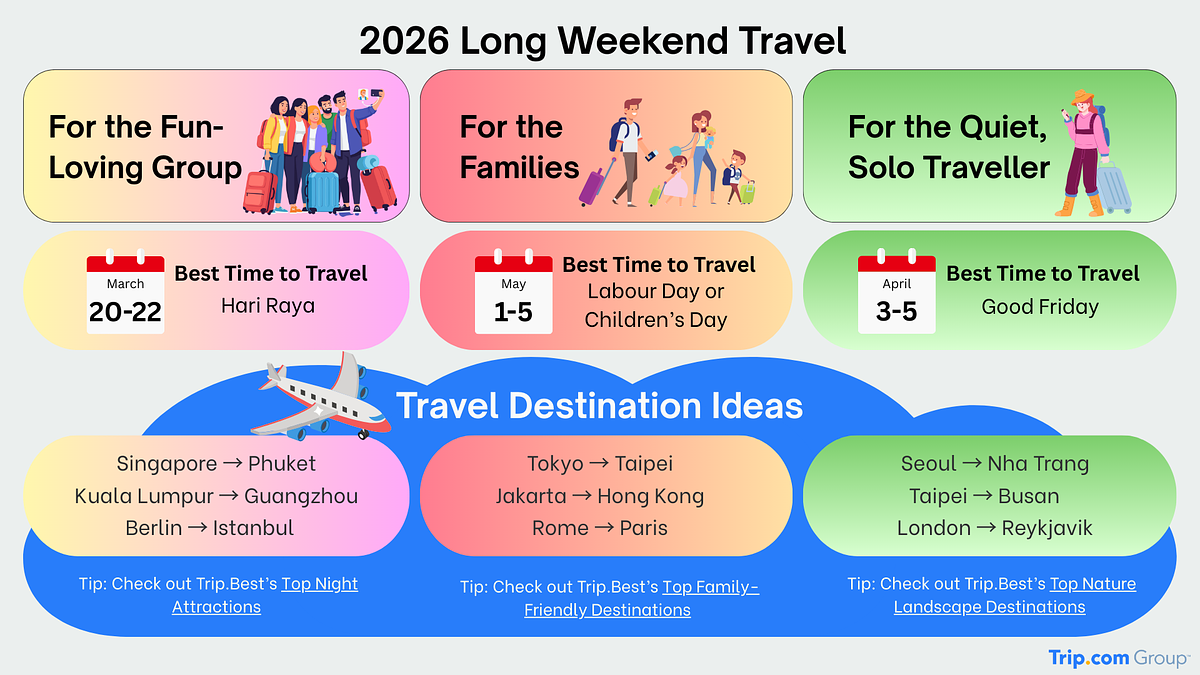
The Micro-Vacation Boom: How Long Weekends Are Redefining Travel
SINGAPORE – January 22, 2026 – The traditional two-week vacation is facing a formidable competitor: the long weekend. A fundamental shift in travel behavior is underway, as workers across the globe increasingly trade extended annual holidays for more frequent, shorter, and highly curated getaways. This trend, dubbed the rise of the "micro-vacation," is reshaping the tourism industry, from how trips are planned to which destinations are prospering.
New data from global travel service provider Trip.com Group reveals a more than 34% year-on-year increase in global bookings for trips lasting four days or less. The report highlights that this surge is not a niche phenomenon but a mainstream movement, predominantly driven by working adults between the ages of 25 and 49, who constitute over half of these short-trip bookings. While the trend is global, growth has been particularly explosive in Europe.
This data is corroborated by wider industry analysis. Independent market research shows a consistent pattern of decreasing average trip lengths, while other reports note a nearly 30% jump in last-minute international bookings, with the vast majority of these trips lasting fewer than five days. The era of cramming a year's worth of travel into a single block of time appears to be giving way to a more agile, continuous approach to leisure.
The New Psychology of Time Off
The pivot to shorter, more frequent breaks is rooted in profound changes to modern work culture and personal priorities. The widespread adoption of hybrid and remote work models has blurred the lines between the office and home, granting professionals unprecedented flexibility. This newfound autonomy allows them to strategically tack personal travel onto weekends, often requiring only one or two days of annual leave to create a substantial four-day escape.
Beyond simple logistics, there's a growing emphasis on mental well-being and combating burnout. Rather than waiting for a single, distant vacation, travelers are using these bite-sized breaks as regular pressure-release valves. Industry analysts note a consumer shift towards prioritizing travel as a form of self-care, a way to punctually recharge without the significant commitment and planning required for a longer journey.
This trend also reflects evolving economic realities. While travel remains a high priority for consumers despite inflationary pressures, many are adopting a more strategic, value-driven approach. Shorter trips are inherently more budget-friendly, allowing individuals to explore new places more often. This has given rise to the "budget-luxury" traveler, who might save on airfare for a short-haul flight but splurge on a premium hotel or a unique dining experience, maximizing the impact of their limited time away.
Technology as the Great Enabler
This rapid acceleration of the micro-vacation trend would be impossible without the powerful technology platforms that have eliminated the friction of travel planning. The days of spending weeks poring over guidebooks for a four-day trip are over. In their place are sophisticated, AI-driven tools that can generate complex itineraries in minutes.
Trip.com Group points to its own Trip.Planner as a key example. The platform promises to create a personalized itinerary—complete with flights, hotels, and attraction recommendations tailored to preferences like "solo travel" or "adventurous"—in under a minute. This level of efficiency is critical for the spontaneous nature of weekend getaways.
This technological push is an industry-wide imperative. Major competitors like Booking Holdings are aggressively pursuing a "connected trip" strategy, aiming to create a seamless, all-in-one ecosystem for booking flights, accommodations, and in-destination experiences. Recent data shows that over half of all active travelers now use technology for travel planning, with a significant portion turning specifically to AI chatbots and automated tools for research and booking. These platforms are no longer just booking engines; they are becoming AI-native demand platforms, capable of inspiring, planning, and executing a trip from a single interface.
Destinations on Demand: The Economic Ripple Effect
The shift towards short-haul travel is creating clear winners and losers among global destinations. Cities with excellent flight connectivity, robust public transport, and a high density of attractions are thriving. In Asia, perennial favorites like Bangkok, Hong Kong, Seoul, and Taipei continue to dominate the short-trip market. In Europe, travelers gravitate towards cultural powerhouses such as Barcelona, Lisbon, London, and Paris for their quick escapes.
Domestic travel is also experiencing a renaissance, particularly in large countries where internal flights can feel like international journeys. In China, Thailand, and the Philippines, cities like Chengdu, Bangkok, and Caticlan have become top-booked domestic destinations for long weekend travel.
A particularly powerful driver of this trend is entertainment tourism. Global audiences are proving more than willing to fly in and out of a city just to see their favorite artists perform. K-pop concerts, such as tours by Blackpink and SEVENTEEN, have become major travel events, drawing fans from across Asia for weekend trips. Similarly, regional music tours are prompting significant cross-border travel among fans in neighboring countries.
This new travel rhythm requires a strategic pivot from tourism boards and local businesses. Instead of marketing for week-long stays, they must now focus on capturing the attention of the weekend traveler. This means highlighting easily accessible attractions, promoting weekend-specific events, and ensuring a smooth visitor experience from arrival to departure. For hotels, airlines, and tour operators, success now depends on agility, competitive pricing for short durations, and the ability to offer high-impact experiences in a compressed timeframe.
Topics & Related
Generative AI
Large Language Models
Automation
Remote & Hybrid Work
Software & SaaS
AI & Machine Learning
Fintech
Hotels & Resorts
Airlines
Product Launch
Related Company Pulse