
- 99% Reduction in Approved Factoring Transactions: Maryland's reforms led to a 99% drop in approved factoring transactions, from 1,800 to just six in the year after the law took effect.
- 60%+ Effective Annual Interest Rates: Some factoring deals carry exorbitant rates, with recipients sometimes receiving as little as 35 cents for every dollar of future payments they sign away.
Experts agree that Maryland's targeted reforms, including local venue requirements, enhanced judicial scrutiny, and mandatory independent advice, provide a proven model for protecting structured settlement recipients from predatory factoring practices.
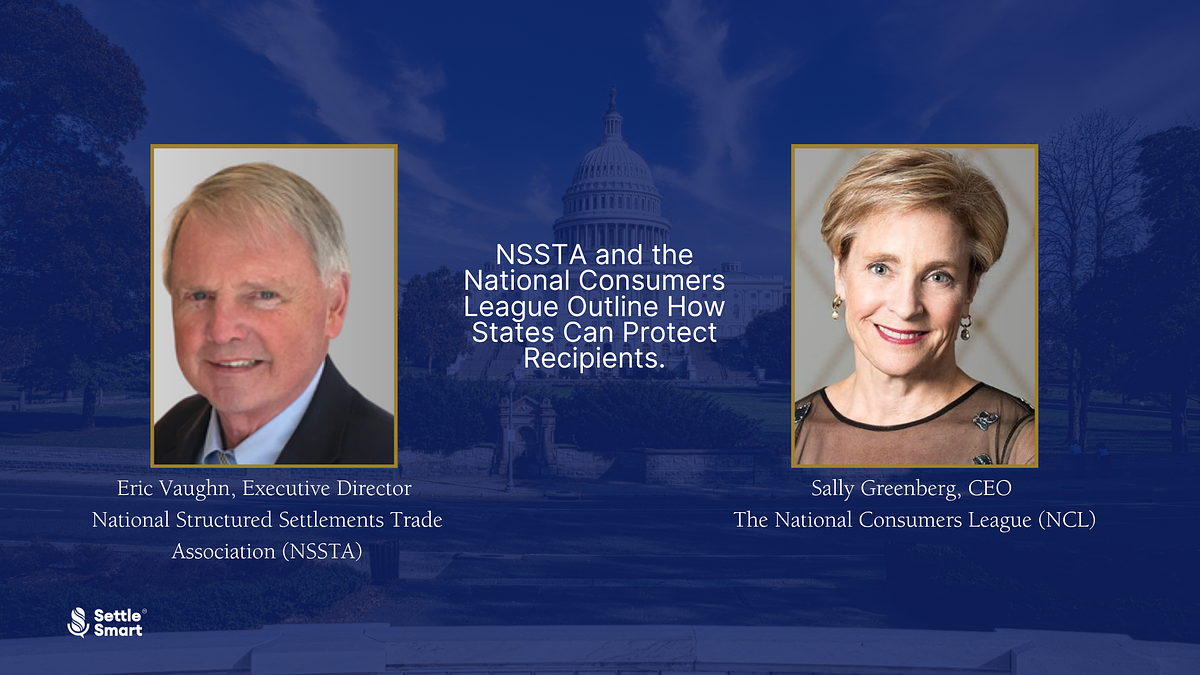
The Maryland Blueprint: A 99% Fix for Predatory Financial Deals
WASHINGTON, DC – June 02, 2026 – The often-obscure world of structured settlement factoring was recently thrust into the national spotlight, courtesy of HBO's “Last Week Tonight with John Oliver.” The segment painted a damning portrait of an industry profiting from the financial vulnerability of injury victims. In the wake of this high-profile critique, a powerful coalition is highlighting a proven policy solution, arguing that the time for nationwide reform is now.
The National Structured Settlements Trade Association (NSSTA) and the National Consumers League (NCL), an unlikely pairing of an industry group and a consumer watchdog, are pointing to a model that has already demonstrated staggering success. Their joint call to action, detailed in a recent podcast, urges state legislators and attorneys general across the country to look to Maryland, where a set of targeted reforms effectively dismantled the predatory factoring market overnight.
A Blueprint for Protection: The Maryland Success Story
Before 2016, Maryland was a fertile ground for factoring companies, which purchase the future payment rights of structured settlement recipients at a steep discount. State courts were processing approximately 1,800 such transactions annually. These settlements, designed to provide long-term, tax-free financial security to people who have suffered serious personal injuries or the loss of a family member, were being liquidated for pennies on the dollar.
Everything changed with the passage of House Bill 124. Championed by then-Maryland Attorney General Brian Frosh, the legislation, which took effect on October 1, 2016, was not a blanket prohibition. Instead, it was a series of precise, structural guardrails designed to rebalance the scales between sophisticated financial firms and often-desperate individuals. The reforms mandated three critical changes:
- Local Venue Requirement: Factoring petitions must now be heard in the recipient's home county court. This eliminated the industry practice of “forum shopping,” where companies would file cases in jurisdictions known for lax oversight, sometimes flying recipients across the country for perfunctory hearings.
- Enhanced Judicial Scrutiny: The law armed judges with a clear mandate. They are required to conduct specific questioning about the recipient’s financial situation, their understanding of the deal, and any prior transactions. The court must find that the transfer is unequivocally in the recipient's “best interest” and that they have received independent professional advice.
- Mandatory Independent Advice: The law emphasizes that a judge must confirm the recipient has consulted with a qualified professional, such as a lawyer or financial advisor, who has no affiliation with the factoring company. This ensures the recipient receives unbiased counsel on the long-term consequences of the sale.
The results were immediate and dramatic. In the year after the law took effect, the number of approved factoring transactions in Maryland plummeted from 1,800 to just six—a reduction of more than 99 percent.
“If you put the proper restrictions and protections in place, people with a structured settlement — who often do not understand these financial transactions — will not give away all their future payments for pennies,” said Sally Greenberg, CEO of The National Consumers League. “That is what Maryland accomplished, and it can be done in every state.”
An Industry Built on Vulnerability
The effectiveness of Maryland’s law starkly illuminates the business model it disrupted. Factoring companies offer immediate cash, an alluring proposition for anyone facing a financial emergency. But that liquidity comes at an enormous cost. Research and reporting, including Oliver's segment, show that discount rates can be exorbitant, with some deals carrying effective annual interest rates exceeding 60%. Recipients may receive as little as 35 cents for every dollar of future payments they sign away.
The industry’s customer acquisition strategy has long been a source of concern for consumer advocates. Companies employ researchers to scour public court records, creating databases of settlement recipients to target with aggressive marketing. Particularly troubling is the practice of tracking minors who are beneficiaries of large settlements, only to solicit them the moment they turn eighteen. Stories abound of companies using high-pressure tactics, including “wining and dining” and providing cash advances to create a sense of obligation before a deal is even approved.
Court approval, designed as the ultimate consumer protection, often proved to be a weak defense. With hearings lasting as little as three to seven minutes and recipients sometimes coached by the factoring firms on what to say, judges frequently lacked the time and information to meaningfully intervene. The Maryland model directly addresses these systemic weaknesses, ensuring the court closest to the recipient has the tools and mandate to perform genuine oversight.
A National Movement for Reform
The decade-long collaboration between NSSTA and NCL demonstrates a shared understanding that predatory factoring undermines the very purpose of structured settlements. By providing a secure income stream, these arrangements are meant to prevent a catastrophically injured person from becoming destitute. The factoring industry, at its worst, reverses that benefit.
“Structured settlements are designed to protect people through the most difficult chapter of their lives,” explained Eric Vaughn, Executive Director of NSSTA. “The guardrails we are calling for do not change that arrangement. They make sure that if a recipient is approached to sell those payments, the court that hears the petition is the one closest to the recipient, the judge has the information needed to ask the right questions, and the recipient has the time and the independent advice to make a real decision.”
The call for reform is no longer confined to Maryland. The blueprint is being actively replicated across the nation, gaining significant legislative traction. In 2023, Ohio enacted House Bill 202 and Oregon passed Senate Bill 914, both incorporating key protections like local venue requirements and stricter judicial review. Similar measures are being advanced in California, building on the foundation of earlier reforms supported by the NSSTA-NCL partnership in Virginia, the District of Columbia, and the Carolinas.
With public awareness heightened and a clear, replicable legislative solution on the table, the disparate efforts to protect settlement recipients are coalescing into a formidable national movement. The central question is no longer whether these predatory practices can be stopped, but how quickly other states will choose to adopt the proven blueprint.