
- 100+ remote-access scarless thyroid surgeries performed at Zydus Hospital, Ahmedabad
- 42 million people in India affected by thyroid disorders
- 9% of the population has thyroid nodules, with higher prevalence in women (12%)
Experts agree that the TOETVA procedure represents a significant advancement in thyroid surgery, offering a safe, minimally invasive alternative with no visible scars, transforming patient care and positioning India as a leader in medical innovation.
The Invisible Cut: A New Era for Thyroid Surgery in India
AHMEDABAD, India – May 11, 2026 – For the millions of people diagnosed with thyroid nodules, the prospect of surgery has long been a double-edged sword. While necessary for health, the traditional procedure left an indelible mark: a visible scar on the neck, a permanent reminder of the operation. Now, a revolutionary surgical approach is changing that narrative, and a hospital in Gujarat is leading the charge. Zydus Hospital, Ahmedabad, has announced a major milestone, having successfully performed over 100 remote-access scarless thyroid surgeries, establishing itself as a pioneer in advanced thyroid care in the region.
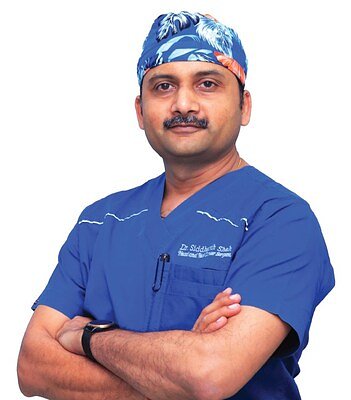
Under the leadership of Dr. Siddharth Shah, a Senior Head & Neck Cancer Surgeon and expert in the field, the hospital has mastered a technique that leaves no visible trace. This achievement isn't just a number; it represents a significant shift in patient care, addressing not only the physical ailment but also the deep-seated psychological apprehension associated with traditional surgery.
The Patient's Dilemma: Beyond the Diagnosis
Thyroid disorders are exceptionally common in India, with an estimated 42 million people affected by various conditions. Nodules—lumps that form within the butterfly-shaped gland at the base of the neck—are a frequent occurrence, found in up to 9% of the population and over 12% of women. While the vast majority, over 85%, are benign and non-cancerous, they can still cause problems, and many patients opt for removal for cosmetic reasons or due to compressive symptoms.
Historically, the only option was a conventional open thyroidectomy, which requires a horizontal incision across the front of the neck. For many patients, the fear of this permanent scar outweighed the concern for the nodule itself, leading to delayed treatment and prolonged anxiety. This cosmetic concern is a powerful factor, driving a long-standing search for better, less invasive alternatives.
A Truly Scarless Solution
Over the years, surgeons developed various remote-access techniques to hide the scar, making incisions in the armpit, the areola, or behind the ear. While these methods avoided a neck scar, they still left marks elsewhere on the body. The procedure being championed at Zydus Hospital represents the next evolutionary step: a truly scarless surgery.
Known technically as Transoral Endoscopic Thyroidectomy Vestibular Approach (TOETVA), the procedure is a marvel of minimally invasive surgery. Instead of cutting through the neck, surgeons make three small incisions inside the patient's mouth, in the space between the lower lip and gums. Through these hidden portals, they insert an endoscope (a tiny camera) and specialized instruments, creating a tunnel down to the thyroid gland. Surgeons can then remove the targeted nodules or the entire gland, all while navigating and preserving critical structures like the nerves that control the voice box.
The benefits for the patient are transformative. "This remote-access thyroid surgery eliminates both the apprehension of surgery and scope of any visible scars," said Dr. Siddharth Shah. He noted that the recovery is remarkably swift and smooth. "Unlike conventional surgeries, no drains are placed postoperatively, and patients can be discharged within 24 hours. It is safe, virtually painless in recovery, and patients can eat within four hours of surgery and return to work the very next day."
Gujarat on the Global Medical Map
This surgical milestone does more than just benefit individual patients; it positions Gujarat as a burgeoning hub for advanced medical innovation. The mastery of a complex procedure like TOETVA showcases a level of clinical expertise and technological adoption that places Zydus Hospital on par with leading institutions worldwide. In a country where medical tourism is a rapidly growing sector—projected to be worth $13 billion by 2026—offering such cutting-edge, patient-centric treatments is a key differentiator.
This advancement aligns perfectly with national initiatives like "Heal in India," which aim to promote the country as a premier destination for high-quality, affordable medical care. By pioneering this technique in Western India, Dr. Shah and his team are not only elevating the standard of care regionally but also contributing to India's reputation as a global healthcare leader. The combination of world-class surgical skill and advanced technology, including the use of robotics like the Da Vinci Xi system at the hospital, creates a powerful draw for patients from across India and beyond.
The Path Forward: Who Benefits and What's Next?
Patient selection for TOETVA is crucial. Currently, the procedure is ideal for patients with benign thyroid tumors and nodules up to a certain size. It is also used for select cases of early-stage thyroid cancer without evidence of spread. Contraindications include prior neck surgery or radiation, which can create scar tissue that makes the delicate procedure more difficult.
Importantly, there appears to be no age barrier for this innovative surgery. Dr. Shah's youngest patient was a 12-year-old girl with a significantly enlarged thyroid nodule, demonstrating the procedure's safety and adaptability even in pediatric cases. This flexibility opens the door for a wide range of patients who prioritize a scar-free outcome.
While the technique has potential complications, such as nerve injury or infection—risks inherent in any surgery—studies show that in the hands of experienced surgeons, the outcomes are comparable to traditional methods, with the unparalleled aesthetic benefit. As more surgeons become trained and long-term data accumulates, the applications for this invisible surgery are likely to expand, further cementing its place as a revolutionary tool in the fight against thyroid disease. This evolution in surgical care underscores a broader shift towards medical treatments that heal not only the body but also preserve the patient's sense of self.