
- 71% of enterprise data migrations fail to stick to the original plan (Natuvion Transformation Study 2026).
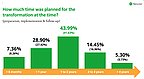
- 44% of large-scale transformations in the U.S. take 1-2 years, during which business environments evolve significantly.
- 39% of U.S. firms favor brownfield approaches, while 17% prefer greenfield—neither inherently built for adaptation.
Experts agree that rigid data migration strategies are inherently flawed in dynamic business environments, emphasizing adaptability and surgical data transition methods as critical to success.
The Illusion of Control: Why 71% of Enterprise Data Migrations Fail to Stick to the Plan
MUNICH, Germany – June 10, 2026 – In the high-stakes world of corporate digital transformation, the initial blueprint is often treated as gospel. A new study, however, suggests it’s more like a first draft destined for the shredder. Research from data transformation specialist Natuvion, conducted with NTT DATA Business Solutions, has delivered a stark reality check to CIOs and boardrooms: 71% of companies are forced to change their data migration strategy mid-project.
This single statistic dismantles the illusion of control that underpins many multi-million-dollar IT overhauls. The report, titled the “Natuvion Transformation Study 2026,” argues that the most common planning mistake isn’t choosing the wrong path, but choosing a path that cannot be changed. The traditional debate between a “greenfield” approach (starting fresh with a new system) and a “brownfield” approach (lifting and shifting existing systems) creates a false sense of security, locking organizations into a rigid strategy that is almost guaranteed to fail.
The Rigidity Trap
The core problem is a fundamental mismatch between static planning and dynamic reality. The study notes that in the United States, 44% of large-scale transformations take between one and two years to complete. In that time, the business does not stand still. Regulatory landscapes evolve, new competitors emerge, business models pivot, and the very data environment being transformed is subject to change. A plan conceived in a boardroom on day one becomes a liability by month twelve.
“When a strategy is too stiff to bend, it breaks,” warns Joanne Lang, CEO of Natuvion Americas. “This leads to slipped timelines, budget hemorrhaging, and stalled innovation. The failure isn't a result of poor execution; it is a result of a decision that was too rigid to account for the ‘moving target’ of modern business.”
This “rigidity trap” is a costly one. Projects that go off the rails don't just consume more capital; they delay the very innovation and efficiency gains that justified the investment in the first place. While the initial choice seems clear-cut—U.S. firms in the study favored brownfield (39%) over greenfield (17%)—neither approach is inherently built for adaptation. When unforeseen legacy complexities, missing data, or new compliance rules inevitably surface, a rigid plan forces a painful choice: plow ahead with a flawed strategy or face a costly and demoralizing restart.
The Adaptability Mandate
If the initial plan is a myth, then what replaces it? The study champions adaptability as the new cornerstone of successful transformation. It’s a shift from rigid methodologies to resilient capabilities. The defining factor, as Lang puts it, “isn't the initial plan. It's the capability to adapt that plan without starting over.”
This is where the concept of a ‘Selective Data Transition’ (SDT) enters the conversation. Rather than a rigid binary choice, this third way offers a hybrid, surgical approach. It allows an organization to migrate critical data and processes while selectively archiving or restructuring others, providing the flexibility to make crucial adjustments as the project unfolds. This isn't merely a compromise; it’s a strategic capability that enables a company to change course without losing momentum.
This thinking aligns with a broader industry megatrend away from discrete IT projects and towards “Continuous Transformation.” In this new paradigm, enterprise systems are not static fortresses but adaptable platforms designed for interoperability and evolution. As a founding member of the SAP S/4HANA Selective Data Transition Engagement Community, Natuvion is at the forefront of embedding this flexibility into some of the world's most complex enterprise environments. The goal is to build systems that can respond to market shifts, not just fulfill a two-year-old project charter.
Data Quality as the Bedrock of Future Value
The implications of this strategic shift extend far beyond the IT department. In an era where artificial intelligence is poised to become the primary engine of value creation, the quality and accessibility of corporate data are paramount. A botched or inflexible data migration can poison the well for years, saddling an organization with inconsistent, siloed, or incomplete data that renders advanced AI and machine learning initiatives useless.
An agile data strategy, therefore, is a prerequisite for a successful AI strategy. The ability to surgically migrate, cleanse, and structure data during a transformation is critical for building the high-quality data foundation that future technologies will demand. Companies that get this right will not only execute their current transformation successfully but will also position themselves to capitalize on the next wave of data-driven innovation. Those that remain stuck in rigid, all-or-nothing migration models risk being locked out of the AI-powered future.
A New Framework for a Moving Target
The study effectively calls for a new strategic framework for leaders overseeing these critical initiatives. It’s less about picking a path and more about building a vehicle that can handle any terrain. The key imperatives are clear:
First, prioritize partners and toolsets that are methodologically agnostic. Choosing a vendor or a platform that only supports one way of working is an unforced error that introduces risk from day one.
Second, if starting with a clean “greenfield” slate, ensure the architecture allows for the surgical migration of essential legacy data and processes as they become relevant. A pristine system that cannot connect to historical reality is a museum, not a business tool.
Third, if migrating an existing “brownfield” system, demand the ability to exclude or restructure data with surgical precision, preventing the transfer of legacy problems into the new environment without breaking the system's core.
As Natuvion CEO Patric Dahse concluded, “Transformation is not a static concept; it is a moving target. The ‘best’ plan isn't the one that looks good on a slide deck today. It's the one that remains viable when reality shifts tomorrow.” In the relentless landscape of 2026, the winners will be those who master the art of the pivot, keeping the lights on and the data moving, no matter what obstacles appear on the road ahead.