
- 30% reduction in engineering time with advanced gripping technologies (International Federation of Robotics).
- Robots learning from human prosthetic data to achieve human-like dexterity.
- Potential automation of delicate tasks in logistics, life sciences, and manufacturing.
Experts would likely conclude that this collaboration represents a significant advancement in robotics, bridging human intuition with machine precision through innovative data-driven learning.
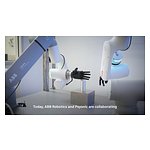
The Human Touch: How Prosthetic Data is Teaching Robots to Feel
SAN DIEGO, CA – June 16, 2026
For years, the promise of automation has been one of tireless precision and superhuman strength. We see it on assembly lines, where robotic arms weld car frames with perfect consistency. But ask one of those same robots to pick a ripe strawberry or handle a delicate piece of glassware, and the illusion shatters. The subtle, intuitive grace of the human hand has remained one of technology's most elusive goals. Now, a groundbreaking collaboration is looking for the solution in an unexpected place: the very technology designed to restore that human touch.
In a move that feels plucked from science fiction, global robotics leader ABB Robotics has partnered with PSYONIC, a California-based bionics company, to teach industrial robots the art of dexterity. Their method is revolutionary. Instead of programming robots with endless lines of code, they are allowing them to learn by feeling—using high-fidelity data generated by people using PSYONIC’s advanced prosthetic hand. It’s a story that’s less about corporate synergy and more about the data that defines one of our most fundamental human abilities.
The Language of Touch
At the heart of this collaboration is the PSYONIC Ability Hand. Originally developed to provide amputees with a new level of functionality, it is the first commercially available bionic hand that gives users touch feedback. Its lightweight, multi-articulating fingers are embedded with pressure sensors that detect contact and grip force. When a user touches an object, the hand sends gentle vibrations back, allowing them to “feel” what they are holding and instinctively adjust their grip. This is the secret ingredient.
“Dexterous manipulation is ultimately a data challenge as much as a hardware challenge,” said Dr. Aadeel Akhtar, Founder and CEO of PSYONIC. This simple statement reframes the entire problem. The challenge isn’t just building a better robot hand; it’s about capturing the rich, complex data stream that our own brains process unconsciously every second. By placing the same Ability Hand on both people and robots, the company can capture an unprecedented dataset on movement, contact, and force as a person performs a task. This human-generated data is then used to train the AI models that power ABB’s GoFa™ collaborative robot, or “cobot.”
This process is a form of “physical AI,” where a machine learns not from abstract simulations but from real-world, physical interaction. The GoFa cobot, known for its industrial-grade precision and repeatability, provides the perfect platform to translate these learned skills into reliable performance. It can execute the subtle variations in finger position and grip force derived from the human data, turning the intuitive art of touch into a replicable science.
Reshaping the Factory Floor
This leap in dexterity isn’t just an academic exercise; it has profound implications for industries struggling with tasks that have long resisted automation. “Human dexterity and the instinctive understanding of how to handle different objects is one of the most difficult things to replicate in industrial-grade robotics, but it’s a fundamental need for truly autonomous and versatile robots,” explained Marc Segura, President of ABB Robotics.
The potential applications span nearly every sector. In logistics and packaging, robots could finally handle the immense variability of grocery items, from a fragile bag of chips to an oddly shaped piece of fruit. In life sciences, they could manage delicate lab equipment and biological samples with a newfound gentleness. In automotive and aerospace, they could perform complex assembly tasks that involve manipulating flexible wires or fitting delicate components into tight spaces—jobs that are currently repetitive, ergonomically challenging, and a common source of worker injury.
By automating these tasks, the collaboration aims to improve productivity, flexibility, and workplace safety. According to the International Federation of Robotics, advanced gripping technologies can already reduce engineering time by up to 30%. By teaching robots to adapt on the fly, this new approach could accelerate that trend dramatically, lowering the barrier to automation for countless small and medium-sized businesses. It positions the partnership at the forefront of a market that has been waiting for robots to move beyond brute force and embrace a more nuanced, intelligent approach to manipulation.
A New Blueprint for Innovation
Perhaps the most compelling part of this story is the journey of the technology itself. PSYONIC was founded not to solve a problem in manufacturing, but to supercharge human ability. Dr. Akhtar’s work began with a desire to create accessible, advanced bionic systems for those who needed them most. The Ability Hand’s speed, strength, and sensory feedback were all designed to restore a sense of wholeness and intuitive control to its user.
That a solution born from a deeply human-centric field like prosthetics now holds the key to a fundamental challenge in industrial automation is a powerful testament to the power of cross-disciplinary innovation. It establishes a new paradigm where technologies developed for human enhancement can be transferred to advance robotics, creating a feedback loop where each field pushes the other forward. The data from human users improves the robot, and the advancements in robotic AI and hardware could, in turn, lead to even more capable and intuitive prosthetic devices in the future.
This synergy between bionics and bots is more than just a clever business strategy; it's a blueprint for how innovation can spring from unexpected intersections. It highlights a path where solving problems for people can unlock solutions for entire industries, creating value that extends far beyond the original intent.
The Bigger Picture: Our Future with Dexterous Machines
As robots begin to learn and move with human-like grace, it forces us to look at the bigger picture. The immediate narrative from the companies involved is one of positive transformation: freeing human workers from dull, dirty, and dangerous jobs to focus on more creative and strategic tasks. By having robots handle ergonomically stressful work, this technology promises safer and more productive workplaces where people and machines collaborate more effectively.
Yet, the advance of such capable automation inevitably raises questions about the future of work and potential job displacement in roles reliant on fine motor skills. Furthermore, the very method of this innovation—using data from human prosthetic use—opens a new frontier of ethical considerations. Who owns this deeply personal biomechanical data? How is the privacy of prosthetic users protected? As we build machines that learn from our physical experiences, ensuring transparency and ethical governance over that data will be paramount to maintaining public trust.
This collaboration between ABB Robotics and PSYONIC is a pivotal moment, marking a significant step toward the long-held vision of truly versatile robots. It blurs the line between human experience and machine intelligence, showing that the path to building smarter robots may involve teaching them not just how to think, but how to feel.