
- 80% energy savings: Manufacturing plastic from recycled resin uses up to 80% less energy than producing it from virgin petroleum.
- 97% energy cost savings: Cortec’s solar power system at its Split facility has achieved energy cost savings as high as 97%.
- 30% post-consumer recycled content: EcoCortec’s VpCI®-126 PCR film already contains 30% post-consumer recycled material.
Experts would likely conclude that EcoCortec’s integrated approach—combining local manufacturing, renewable energy, and a functional circular economy—sets a new industry standard for sustainable supply chains in Europe.
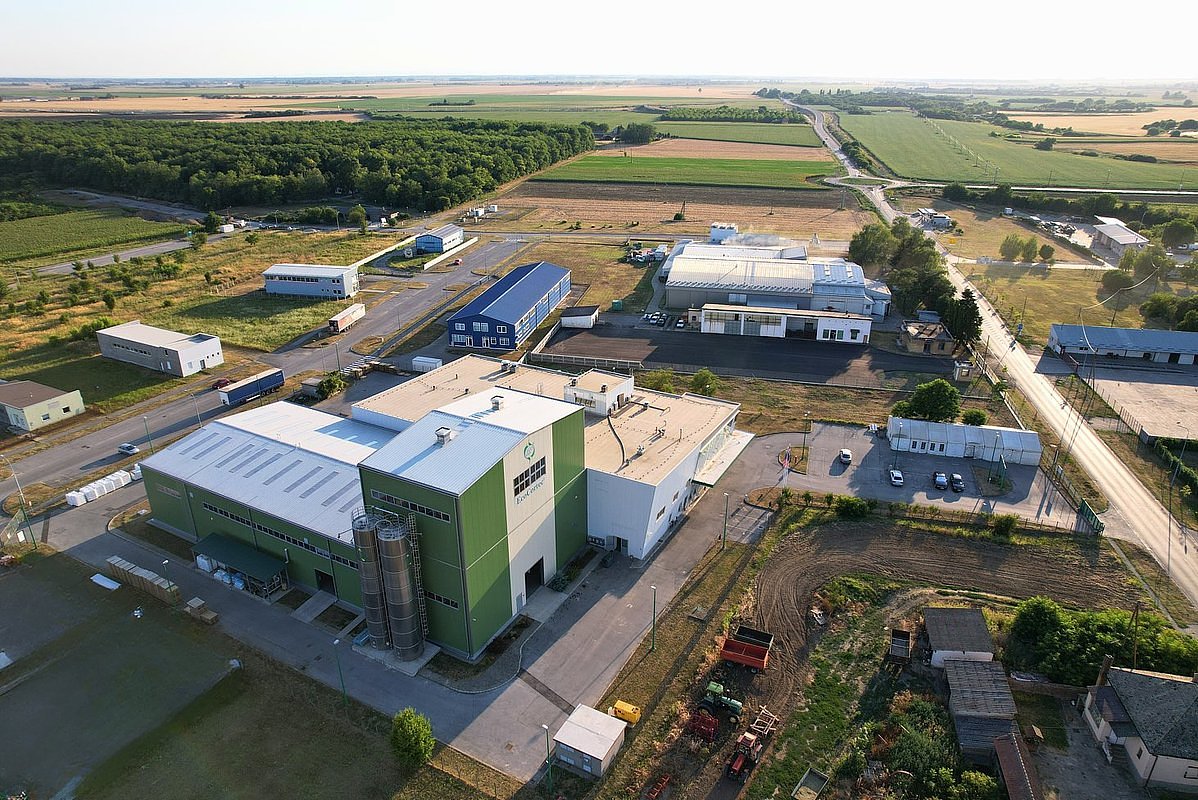
The Green Supply Chain: How One Firm Is Solving Europe's Carbon Problem
BELI MANASTIR, Croatia – June 10, 2026
In the sprawling landscape of European manufacturing, a quiet but profound revolution is underway. As companies grapple with the European Union's ambitious Green Deal and its goal of climate neutrality by 2050, they are confronting a difficult truth: the biggest part of their carbon footprint lies outside their own factory walls. This is the challenge of Scope 3 emissions—the indirect greenhouse gases embedded in every raw material, every transported part, and every piece of packaging in their vast supply chains. For many, it's a problem so complex it feels insurmountable. But here, in a green corner of Croatia, a company is demonstrating that a solution isn't just possible, it's practical and profitable.
EcoCortec®, the European subsidiary of corrosion protection specialist Cortec® Corporation, is tackling the Scope 3 conundrum head-on. By integrating renewable energy generation and a sophisticated closed-loop recycling system directly into its operations, the company is creating a model for a sustainable industrial ecosystem. It’s an approach that moves beyond pledges and press releases, offering its manufacturing clients a tangible way to decarbonize the very materials they use to protect and ship their own products.
The Scope 3 Conundrum
For European industrial giants, the pressure to go green is immense and multifaceted. The EU’s goal to slash carbon emissions by 55% by 2030 is not a distant target but a driver of immediate strategic change. Looming regulations like the Carbon Border Adjustment Mechanism (CBAM), set to begin in 2026, will impose a carbon price on imports, forcing companies to scrutinize the environmental cost of every component they bring into the bloc. Since Scope 3 can account for the vast majority of a manufacturer's total emissions, tackling the supply chain is no longer optional; it's a critical path to compliance and competitiveness.
This is where the traditional model of sourcing specialized materials, like high-performance packaging, from overseas begins to break down. The thousands of carbon-heavy freight miles add directly to a product's environmental ledger. EcoCortec® is positioning itself as the short-route alternative. By manufacturing within the EU and pioneering a system to reclaim and reuse its own products, it offers a compelling value proposition: world-class performance with a fraction of the carbon footprint.
Closing the Loop: A Practical Circular Economy
The centerpiece of EcoCortec’s strategy is a circular economy model that actually works. The company operates a state-of-the-art in-house recycling center that reprocesses plastic waste from both its own production scrap and, crucially, from its customers. This vertical integration allows it to transform what would be landfill waste back into high-performance protective packaging.
A prime example is the award-winning partnership with its German distributor, Jakob Schober GmbH. The system is elegant in its simplicity. When trucks deliver new rolls of VpCI®-126 PCR film—a product already containing 30% post-consumer recycled content—to Schober, they don't return to Croatia empty. Instead, they are loaded with plastic scrap from Schober’s own operations, where they create 3D bags from the film. This “backhauling” process adds virtually zero additional transport emissions to the equation.
Once back at the Beli Manastir plant, the used material is inspected, re-granulated, and lab-tested before being fed back into the production of new films. The energy savings are substantial; research confirms that manufacturing plastic from recycled resin can use up to 80% less energy than producing it from virgin petroleum. This collaboration, which recently earned the German Packaging Award, isn't just a pilot program—it's a functioning, scalable system that makes the concept of a “closed loop” a logistical reality.
Powering Production with the Sun
EcoCortec®’s commitment to sustainability extends to the energy powering its machinery. The facility is the first VCI (Vapor phase Corrosion Inhibitor) film plant in Europe to generate its own electricity from a massive array of solar panels. This investment allows its extrusion lines to run on renewable energy, directly lowering the carbon intensity of every product that leaves the factory.
The move was driven by more than just environmental principle. In a Europe rocked by geopolitical instability and volatile energy prices, energy autonomy has become a key tenet of industrial resilience. By producing its own power, the company hedges against market shocks and gains control over a critical operational cost. This strategy is mirrored at another Cortec® facility, CorteCros®, a logistics and manufacturing hub near the coastal city of Split. Its own solar power system has enabled energy cost savings as high as 97%, demonstrating the powerful economic case for renewable integration.
“Cortec’s operations across Croatia, from the fields of Baranja to the Adriatic coast, operate under a unified green mandate,” says Cortec’s CEO, Croatian-American entrepreneur Boris Miksic. “Together, our facilities provide a sustainable network for European distribution. As a company whose mission is to pioneer circular economy models within the corrosion protection industry, we wanted to make sure that our solutions are not only eco-friendly in their chemistry but also in the way they are manufactured and moved.”
A New Industry Standard or Catching the Wave?
While EcoCortec®’s integrated approach is impressive, it is part of a larger, necessary shift across the industrial packaging sector. An investigation of the competitive landscape reveals that sustainability is no longer a niche concern but a central battleground for market leadership. Competitors like ZERUST® also operate closed-loop recycling programs and offer VCI films with significant post-consumer recycled content. Other major players, including Daubert Cromwell and BRANOpac, are heavily invested in recyclable materials, bio-based products, and resource conservation.
This industry-wide movement suggests that EcoCortec®’s initiatives are less a solitary act of pioneering and more a best-in-class example of a rising tide. The real innovation lies not in any single technology, but in the holistic integration of these solutions—combining local manufacturing, energy independence, and a functional circular economy into a single, cohesive strategy. It is this combination that provides a powerful toolkit for its customers, helping them navigate the complex demands of modern manufacturing.
By turning sustainability goals into operational reality, Cortec® and its European subsidiary are setting a new benchmark. They prove that progress is not about finding a single silver bullet for environmental impact, but about meticulously re-engineering each link in the supply chain. In doing so, they offer a clear vision of a future where industrial production and environmental stewardship are not at odds, but are instead intertwined components of a resilient and competitive European economy.