
- 43% market share: Dreame captured up to 43% of the robotic vacuum market in Germany and Italy.
- 18 countries: The company achieved No. 1 market share for robot vacuums in 18 different countries.
- 60% growth: Dreame reported a 60% year-over-year increase in unit sales.
Experts agree that Dreame's success underscores the importance of cultural intelligence and hyper-localization in building powerful global brands, challenging the traditional one-size-fits-all approach in the tech industry.
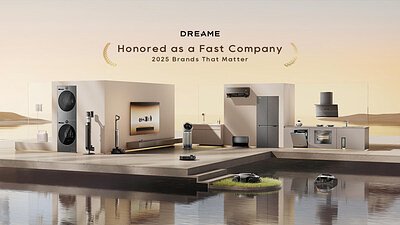
The Global Power of Local: How One Tech Brand Rewrote the Rules
NEW YORK, NY – December 05, 2025
In the world of global business, the prevailing wisdom has long been one of scale and uniformity. A successful product, the thinking goes, should be rolled out across the world with minimal deviation. But as corporations grapple with an increasingly fragmented and discerning global consumer base, this model is showing its cracks. This week, that old playbook was dealt a significant blow when Fast Company named Dreame Technology, a smart home appliance maker, to its prestigious 2025 ‘Brands That Matter’ list. The recognition is not for having the flashiest technology or the biggest marketing budget, but for mastering a strategy that many global giants still struggle with: genuine, deep-seated localization.
The award honors brands that achieve profound cultural resonance and build authentic customer connections. For Dreame, a company founded just eight years ago in 2017, its inclusion alongside household names signals a pivotal shift in what defines a powerful global brand. It suggests that true influence isn't just imposed from the top down; it's built from the ground up, one community at a time.
The Blueprint for Global Resonance
At the heart of Dreame's success is a philosophy it calls “one-country, one-plan.” This stands in stark contrast to the one-size-fits-all approach that has characterized the tech industry’s international expansion for decades. Instead of pushing a uniform product line into over 120 markets, the company has invested heavily in understanding and adapting to the distinct cultural habits and practical needs of each one. This isn't just about translating an app interface; it's about fundamentally rethinking the product itself.
Consider its strategy in Europe, where a strong cultural bond with sustainable living and environmental stewardship is a defining consumer trait. Dreame didn't just sell robot vacuums; it developed smart lawnmowers that blend gardening efficiency with ecological consciousness. The product became more than a tool; it evolved into an icon for an eco-conscious lifestyle, resonating with a core European value.
Across the Atlantic in North America, where homes are more likely to feature extensive carpeting, the company identified a different challenge. Wet-dry vacuums, popular for hard floors, were often useless on carpets. In response, Dreame launched the H15 Pro CarpeFlex, a first-of-its-kind device that allows users to switch between hard floor and carpet cleaning by simply swapping a roller brush. Its specialized composite brush was engineered to deeply loosen embedded debris in carpets, a problem familiar to millions of American households. This targeted innovation solved a real-world problem that larger, less agile competitors had overlooked.
This granular focus extends to software and features. Recognizing that many homes across Europe, North America, and the Middle East have a mix of hard floors and area rugs, Dreame perfected a “mop removal” feature for its robot vacuums. The device intelligently retracts its mopping pads when it detects carpet, preventing the common annoyance of a damp, soiled rug. It’s a small detail, but one that demonstrates a deep understanding of how people actually live in their homes.
From Market Share to Mind Share
This hyper-localized strategy has yielded more than just goodwill; it has produced staggering commercial results. According to data reported by Fast Company, this culturally attuned product design helped Dreame capture up to 43% of the robotic vacuum market in Germany and Italy. The company’s broader claim is even more ambitious: achieving the No. 1 market share for robot vacuums in 18 different countries. This level of market penetration in such a competitive field is a powerful testament to the efficacy of its approach.
The company’s marketing mirrors its product strategy, eschewing generic global campaigns in favor of human-centered stories rooted in local experience. In Germany, for instance, a campaign built around the theme “Reclaim Time for Family” connected the efficiency of its products to the cherished cultural value of family life. This emotional storytelling, combined with a product that delivers on its promise, fueled what the company describes as “remarkable, multi-fold year-over-year growth” on its direct-to-consumer websites in key Western markets.
“For Dreame, technology is not only about solving tasks; it’s about improving experiences and building genuine connections with users,” said Yu Hao, the company's founder and CEO, in a statement accompanying the award. He credited the feedback from 30 million families as the driving force behind the company's innovation. This public commitment to a user-driven feedback loop is central to how Dreame builds not just market share, but mind share—the coveted space a brand occupies in a consumer’s consciousness.
A New Standard for the Smart Home Industry?
Dreame's recognition as a ‘Brand That Matters’ sends a clear message to the fiercely competitive smart home industry, long dominated by players like iRobot, Ecovacs, and Roborock. It suggests that technological superiority alone is no longer enough to win. The future may belong to brands that demonstrate cultural intelligence and a willingness to engage with consumers as partners rather than as targets.
Fast Company’s award criteria underscore this shift, focusing on cultural relevance, ingenuity, and quantifiable business impact. “What unites brands is their dedication and ingenuity in forging authentic audience relationships through work that resonates in culture,” noted Brendan Vaughan, the publication’s editor-in-chief. By honoring Dreame, the publication is effectively endorsing a new model for success in the sector—one based on empathy and adaptation.
Of course, it is a standard practice in the media industry for such award programs to involve application fees, a model that sometimes invites skepticism. However, Fast Company maintains a rigorous editorial review process, and the inclusion of Dreame based on tangible, reported metrics—like its 60% year-over-year increase in unit sales and specific market-share data—lends significant credibility to the honor. The award is less a coronation and more a data-backed acknowledgment of a strategy that is fundamentally working.
The Architecture of Trust
Ultimately, Dreame’s story is about the architecture of trust in a globalized world. By decentralizing its innovation and empowering local insights, the company is building a brand that feels less like a remote, monolithic corporation and more like a responsive local partner. The feedback loop from its millions of users isn't just a marketing line; it appears to be the core of an R&D engine designed to solve diverse, personalized needs.
This philosophy extends to its operational commitments, with the company noting investments in efficiency and “circular initiatives.” This nod to sustainability suggests an understanding that long-term responsibility is a critical component of brand trust in the 21st century. The mission to provide families with “more time, greater comfort, and lasting peace of mind” is achieved not just through clever gadgets, but through a business model that respects the unique fabric of each society it enters.
As other industries watch, Dreame Technology's success offers a powerful lesson on the intersection of power, policy, and impact. It demonstrates that in the modern economy, true power doesn't come from imposing a single vision upon the world, but from having the humility to listen to it, adapt, and reflect its diversity back in the products and stories a company creates.