
- $6.7 billion: The global air ambulance services market value in 2024, projected to more than double by the early 2030s.
- 4.4 million: Annual global deaths from accidents, driving demand for specialized medical transport.
- 60%: Increase in air ambulance transport costs over the last five years.
Experts agree that the growing demand for intercontinental air ambulance services reflects global trends in aging populations, chronic illnesses, and increased travel, necessitating advanced medical and logistical solutions to ensure safe patient transport across borders.
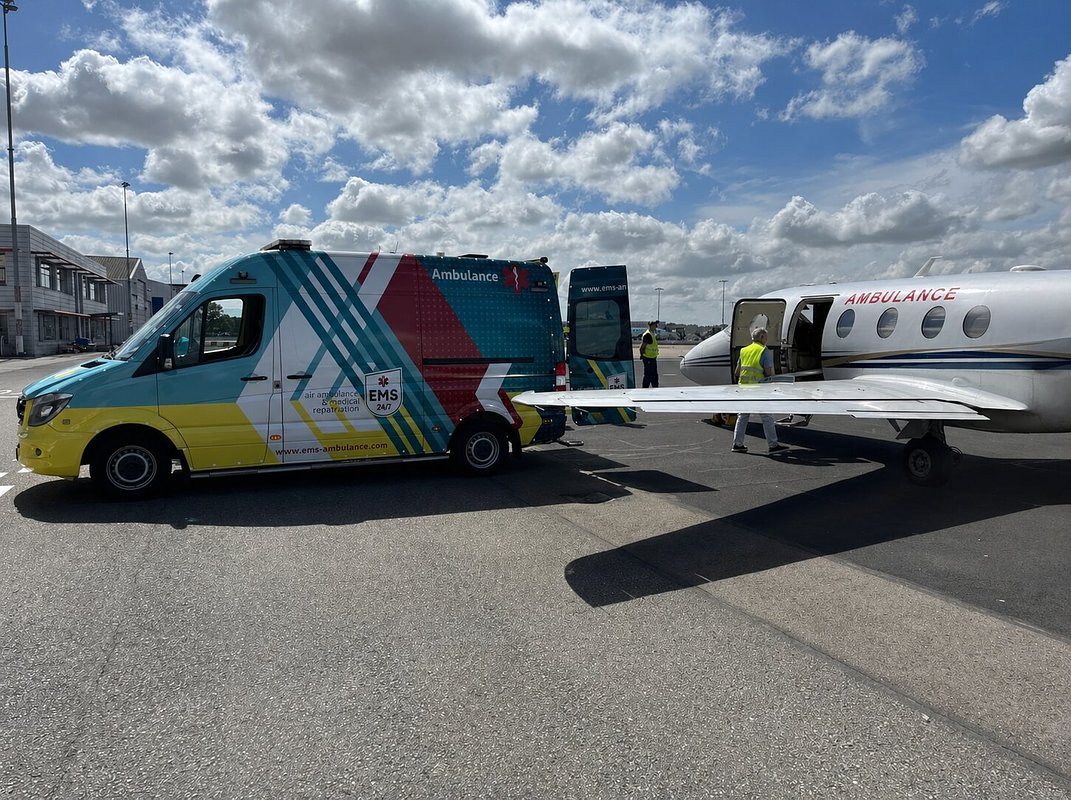
The Flying ICU: Inside the High-Stakes World of Global Medical Rescue
LONDON, May 01, 2026 – A specialized medical jet recently sliced through the skies on a 6,390-kilometer journey from Vilnius, Lithuania, to Boston, Massachusetts. Onboard, it was not a typical flight. This aircraft, operated by EMS Air Ambulance & Medical Repatriation Ltd., was a fully equipped intensive care unit, tasked with the delicate transport of two critically ill patients. One was recovering from a road traffic accident that caused an intracranial hemorrhage; the other, a stroke patient with limited mobility, required full stretcher support.
This nine-hour mission, a seamless orchestration of advanced medicine and complex logistics, is more than just a single event. It is a stark illustration of a rapidly growing and incredibly demanding sector of global healthcare: intercontinental air ambulance services. As the world becomes more interconnected, the need to transport critically ill patients across oceans and continents is surging, pushing the boundaries of what is medically and logistically possible.
The Soaring Demand for Airborne Critical Care
The rising demand for complex medical repatriations is not anecdotal; it's a trend backed by significant market growth. The global air ambulance services market, valued at approximately $6.7 billion in 2024, is on a steep upward trajectory, with some forecasts projecting it to more than double to over $16 billion by the early 2030s. This growth is fueled by a confluence of powerful global shifts.
An aging global population, particularly those over 65, is traveling more than ever, often with pre-existing health conditions. This demographic is a primary driver of demand. Compounding this is the global rise in chronic illnesses like heart disease and stroke, alongside the persistent reality of trauma from accidents, which claims over 4.4 million lives annually worldwide. When these emergencies occur far from home, specialized transport is often the only option.
Furthermore, the post-pandemic era has seen a boom in international tourism and remote work, placing more people in locations where local medical infrastructure may be inadequate for complex emergencies. Patients often require evacuation from countries with subpar healthcare systems to more advanced facilities for specialized treatment, a key factor driving the growth of inter-facility transport, which is expected to be the fastest-growing segment in the industry.
A Hospital in the Sky
Transporting patients with severe neurological or post-trauma conditions, like those on the flight from Lithuania, presents profound medical challenges. The very environment of flight—with its changes in cabin pressure, lower oxygen levels, and constant vibration—can pose a grave risk, potentially exacerbating conditions like intracranial pressure or compromising neurological function.
This is why operators like EMS Air Ambulance have developed the concept of the 'flying ICU.' These are not standard aircraft with a few medical supplies. They are mid-range jets completely reconfigured with the advanced infrastructure of a hospital's intensive care unit. This includes integrated ventilators, multi-parameter ECG monitors, infusion pumps, and advanced life support systems, all powered by the aircraft's robust onboard systems.
Equally critical is the human element. These flights are staffed by highly specialized medical teams, typically consisting of a critical care physician and a flight paramedic or nurse. These professionals possess a unique blend of expertise in emergency medicine, intensive care, and aviation physiology, enabling them to manage complex conditions in a confined, dynamic, and high-stakes environment. Throughout the journey, they provide continuous monitoring and proactive management, ready to intervene at the first sign of a patient's deterioration.
Navigating a Global Maze of Logistics and Red Tape
The medical challenge is only one part of the equation. The logistical complexity of executing an intercontinental medical flight is staggering. The promise of a 'bed-to-bed' service means managing every single step of the journey, a process that begins long before takeoff and ends long after landing.
Coordinating a single flight involves navigating a labyrinth of international regulations. This includes securing overflight and landing permits from every country in the flight path, a process that can be bureaucratic and time-consuming. Medical flights must also clear customs and immigration, requiring meticulous documentation for the patient, the medical crew, and every piece of specialized equipment on board.
Aircraft planning is another critical layer. For a long-haul flight like the one to Boston, this includes scheduling one or more fuel stops, coordinating with ground crews at each location, and ensuring a specialized ground ambulance is waiting on the tarmac at both the departure and arrival airports. Seamless handovers between the ground ambulance, the aircraft, and the receiving hospital are essential to maintain continuity of care.
In such a high-risk industry, quality management is paramount. Certifications like the TÜV ISO 9001:2015, held by EMS Air Ambulance, serve as a crucial differentiator, signaling a provider's commitment to rigorous, standardized processes for safety and operational excellence. This commitment to quality provides a necessary assurance to families and insurance providers entrusting their loved ones to the service.
The High Cost of a Lifeline
This life-saving capability comes at a significant price. The cost of air ambulance transport has reportedly increased by over 60% in the last five years, influenced by the distance flown, the type of aircraft required, the level of medical care needed, and the intricate logistical coordination.
Insurance companies are the primary payers, covering an estimated 68% of all medical repatriations. The growing awareness of these potential costs has led more international travelers to ensure their policies include robust medical evacuation coverage. However, gaps in coverage remain a serious concern. A 2023 analysis showed that private individuals still paid out-of-pocket for nearly a quarter of all repatriations, sometimes facing staggering 'out-of-network' bills when their insurance fell short.
Government agencies also play a role, funding approximately 9% of repatriations for personnel such as diplomats, military members, or citizens covered under specific national assistance programs. As the industry evolves, providers and insurers are increasingly focused on integrating digital health platforms and telemedicine to improve efficiency and manage costs without compromising patient outcomes.
In an era of unprecedented global mobility, these airborne lifelines represent a critical safety net, bridging vast distances to deliver expert care precisely when and where it is needed most.