
- 51% of Canadians still use gas-powered mowers, but 59% find mowing physically demanding.
- 55% of Canadians are ready to switch to easier tools.
- 22% of consumers cite upfront cost as a barrier to battery-powered tools.
Experts would likely conclude that the lawn care industry is undergoing a significant shift from gas-powered to battery-powered tools, driven by consumer demand for convenience, cost savings, and environmental concerns.
The End of the Gas Can: WORX Survey Signals a Power Shift in Lawn Care
TORONTO, ON – June 19, 2026
In the world of corporate strategy, the most potent signals are often not found in earnings calls or boardroom memos, but in the subtle, aggregate shifts of consumer behavior. A new survey commissioned by Positec Group, the manufacturing giant behind the WORX brand, is just such a signal. It paints a clear picture of a Canadian market at a critical inflection point, where the roar of the gas-powered lawn mower is being steadily replaced by the hum of battery-powered ambition. This isn't just about cutting grass; it's about a fundamental realignment of the $30 billion global outdoor power equipment industry.
The data, gathered by The Harris Poll Canada, reveals that while half (51%) of Canadians still use gas-powered mowers, the foundation of that dominance is cracking. A staggering 59% find mowing physically demanding, and 55% are ready to switch tools for an easier experience. This is the 'why' behind the market's movement. The weekly chore is becoming a weekly pain point, and consumers are actively seeking a remedy. The confluence of high fuel prices, environmental awareness, and a tech-driven demand for convenience is creating a perfect storm, and companies positioned for the electric transition are poised to capture the spoils.
The Economics of Exhaustion
For decades, the gas mower was an unquestioned suburban staple. Its market position was secured by a lack of viable alternatives. Today, that monopoly is over. The survey highlights the primary drivers: effort and cost. With 56% of homeowners firing up their lawn tools weekly during peak season, the physical toll is a constant, recurring grievance. This isn't a niche complaint; it's a mainstream market reality.
“Canadians are increasingly looking for ways to save time, reduce effort, and cut ongoing household costs,” noted Phil Fitzpatrick, Vice President and General Manager at Positec Canada, in the company's press release. His statement pinpoints the new value equation for homeowners. It’s no longer just about the quality of the cut, but the total cost of ownership—measured not only in dollars but in time and physical strain.
While the upfront cost of battery equipment remains a barrier for 22% of consumers, the calculus is shifting. The ongoing expense of fuel, oil, and maintenance for gas engines is becoming harder to ignore. A homeowner might spend over $50 annually on fuel and stabilizers, whereas the electricity to charge a mower battery for an entire season can cost less than a single coffee. More importantly, the 'maintenance' of a battery-powered tool is virtually nonexistent—no spark plugs, no air filters, no winterizing rituals. This transition mirrors the one seen in the automotive sector: a higher initial investment is increasingly justified by lower operating costs and superior user experience.
A New Competitive Battlefield
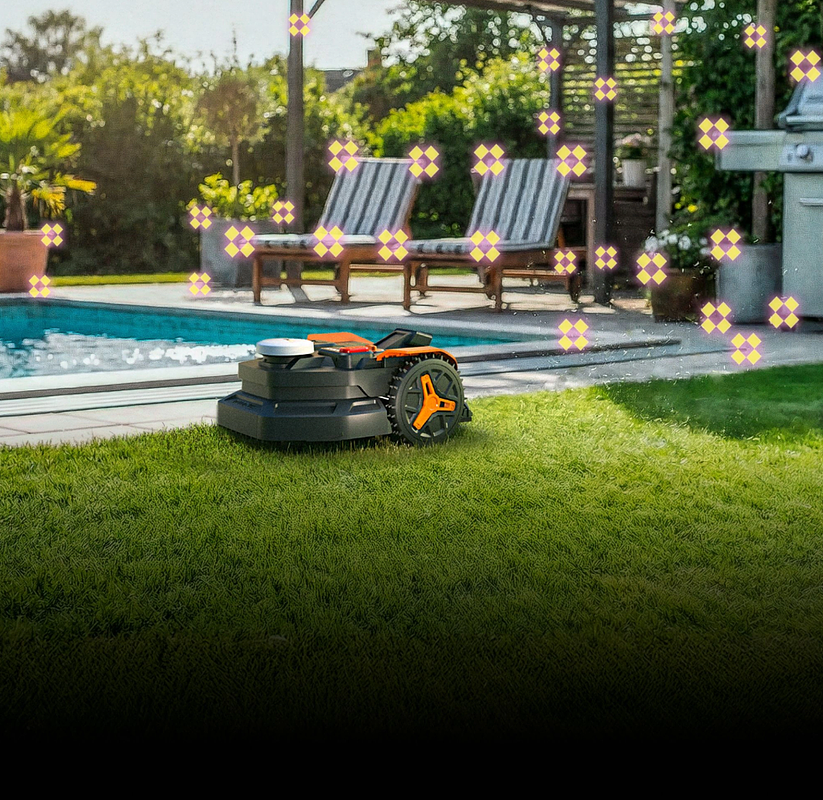
The survey is more than a market snapshot; it's a strategic playbook for Positec and a warning shot to its competitors. By telegraphing these findings, Positec is signaling its deep investment in the battery and robotic space, framing its WORX brand as the solution to the problems it has so clearly quantified. The launch of its Landroid Vision robotic mower, with its cloud-based RTK precision, is a direct play for the homeowner who wants to eliminate the chore of mowing entirely.
This maneuver doesn't happen in a vacuum. The competitive landscape is heating up. Legacy giants like Husqvarna are aggressively expanding their own battery and robotic lines, leveraging their deep dealer networks. Meanwhile, battery-native disruptors like EGO have built a powerful brand reputation on performance that meets or exceeds gas equivalents. In the mass-market channel, Ryobi has masterfully created a sprawling ecosystem where a single battery can power everything from a string trimmer to a drill, creating immense customer loyalty.
In this crowded field, Positec's strategy appears to be one of practical innovation. The survey's finding that 48% of consumers are interested in smart features—but only if they are simple—is telling. It suggests Positec is betting against feature-creep and focusing on technology that directly addresses the core complaints of effort and complexity. This is a savvy move, positioning the WORX brand not as the most powerful or the most technologically complex, but as the most practical and user-friendly choice for a public weary of demanding chores.
The Regulatory Tailwind
Beyond consumer preference, a powerful regulatory tailwind is building that favors electrification. While Canada has not yet seen sweeping federal mandates, the trend is undeniable. Municipalities across the country are implementing noise and time-of-day bylaws that implicitly penalize loud gas-powered equipment. The quiet operation of battery tools makes them a more neighborhood-friendly solution, a soft factor that will gain importance in denser suburban environments.
Furthermore, industry leaders always look to jurisdictions like California, whose Air Resources Board (CARB) has passed regulations to phase out the sale of new gas-powered small off-road engines. Such policies often act as a bellwether for broader international trends. Manufacturers who fail to build a robust electric portfolio are not just ignoring consumer demand; they are risking being regulated out of major markets in the coming decade.
Positec’s stated mission of “zero emission” is, therefore, both a marketing position and a shrewd strategic hedge against future regulation. By aligning its corporate identity with the inevitable green transition, it future-proofs its business and appeals to an increasingly eco-conscious consumer base.
The shift from gas to battery is not a question of 'if' but 'when'. Positec’s survey confirms that for a majority of Canadians, the 'when' is now. The barriers that remain—existing ownership of gas tools (26%), upfront cost (22%), and battery anxiety (16%)—are not insurmountable walls but decaying fences. As battery technology continues to improve and costs decline, these final points of resistance will fall. For companies still investing heavily in the legacy of the internal combustion engine, the quiet hum of their competitors' battery-powered tools is the sound of a market being redefined.