
- $2.9 billion: U.S. Army's FY 2027 budget request for counter-small UAS initiatives
- $100 million: Earmarked for dismounted, soldier-level counter-drone systems
- 2030: Projected year when the C-UAS market will exceed $20 billion
Experts would likely conclude that CoVar's BullsEye system represents a significant advancement in counter-drone technology, offering a cost-effective, scalable solution that leverages existing smartphone infrastructure to enhance soldier readiness and battlefield awareness.
The Drone Hunter in Every Pocket: AI Transforms Soldier Smartphones
DURHAM, NC – June 09, 2026 – On the modern battlefield, the threat often comes not from a tank or a jet, but from a small, commercially available drone. In response, the defense industry has produced an arsenal of complex, often cumbersome counter-drone systems. A recent demonstration, however, suggests a radically different future—one where the most effective drone detector is the smartphone already in a soldier's pocket.
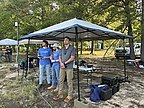
At the U.S. Army's Warden 2026 demonstration, a critical proving ground for next-generation technology, defense AI firm CoVar showcased its BullsEye system. Against a backdrop of live drone swarms, the software successfully detected, tracked, and pinpointed hostile unmanned aircraft systems (UAS) using nothing more than the standard-issue Android and Nett Warrior devices soldiers already carry. This breakthrough signals a potential paradigm shift, moving critical defense capabilities from heavy, dedicated hardware to intelligent, adaptable software.
The Smartphone as a Battlefield Sensor
At its core, BullsEye is a testament to the power of software-defined warfare. Instead of relying on specialized radar or radio frequency (RF) jamming equipment, it transforms a soldier's smartphone into a sophisticated passive sensor node. The system’s AI and machine learning algorithms leverage the device's built-in RGB camera and microphone to identify the visual and acoustic signatures of enemy drones.
This passive approach is a game-changer. Unlike active systems that emit signals to find their targets, a passive system doesn't betray the user's position, allowing for covert detection. "For years, the solution to a new threat was a new box, adding weight and complexity to a soldier's kit," noted a defense technology analyst not affiliated with the company. "What we're seeing here is the decoupling of capability from hardware. The intelligence is in the code, which can be deployed on ubiquitous platforms."
During the two-week Warden 2026 event, CoVar demonstrated BullsEye's flexibility. A single device can provide an operator with the relative bearing of a drone, displaying the track directly on the handset. When multiple soldiers running the software are networked, their devices collaborate, using triangulation to calculate a drone's precise geolocation. This target data is then fed directly into the Android Team Awareness Kit (ATAK), the military's premier situational awareness app, populating a common operating picture for the entire squad.
Redefining Soldier Readiness and Loadout
For the individual soldier, the implications of this technology are profound. The proliferation of battlefield systems has led to a dramatic increase in the weight and complexity of a soldier's loadout, impacting mobility, endurance, and cognitive function. By eliminating the need for a separate counter-UAS device, BullsEye directly addresses the Army's push to lighten the soldier's burden.
"Counter-drone doesn't have to mean one more piece of kit on a Soldier's back," said Dr. Joe Camilo, CoVar's Vice President and Executive Lead of the BullsEye product line, in a statement. "We took the device that's already in their hands and taught it to find, track, and report the threat. At Warden we put that against real drones, in the field, and it delivered."
The integration with the Nett Warrior system—a ruggedized smartphone that serves as a soldier's primary digital hub—is crucial. Soldiers are already trained on this platform for navigation, communication, and intelligence. Adding a powerful drone detection capability as a simple software application dramatically lowers the training barrier and ensures it can be adopted with minimal friction. The ability to see a drone threat appear as an icon on the same ATAK map displaying friendly forces and mission objectives creates a seamless, intuitive user experience that can accelerate decision-making under pressure.
Meeting the Moment: The Army's Agile War on Drones
The success of BullsEye at Warden 2026 comes at a critical time. The widespread use of inexpensive drones in conflicts like the war in Ukraine has exposed a significant vulnerability for conventional forces, prompting an urgent response from the Pentagon. The U.S. Army has made countering small UAS a top priority, with a fiscal year 2027 budget request approaching $2.9 billion for C-sUAS initiatives. A significant portion of this funding, over $100 million, is specifically earmarked for dismounted, soldier-level systems.
Events like Warden 2026 are central to the Army's strategy. They are designed to cut through slow, traditional acquisition cycles by testing emerging technologies from a range of industry partners against realistic threats. The data gathered informs investment decisions and helps fast-track the most promising solutions to the field. CoVar's performance places it squarely in the running for these new acquisition pathways, such as the Joint Interagency Task Force (JIATF) 401 marketplace, which aims to move vetted systems from demonstration to delivery in a matter of months.
This agile approach recognizes that the drone threat is constantly evolving. A software-based solution like BullsEye offers a key advantage: it can be updated rapidly to counter new drone models or tactics. As adversaries adapt, new detection algorithms can be pushed to soldiers' devices via a simple software update, a far more efficient process than designing, manufacturing, and fielding entirely new hardware systems.
A Software-First Disruption in a Hardware-Heavy Market
CoVar's innovation has the potential to significantly disrupt the burgeoning C-UAS market, which is projected to exceed $20 billion by 2030. While large defense contractors offer comprehensive, multi-layered defense systems, BullsEye carves out a unique and vital niche at the tactical edge. By leveraging existing COTS hardware, it offers a highly cost-effective and scalable solution that can be deployed across the force at an unprecedented speed.
This model challenges the traditional defense market's reliance on proprietary, purpose-built hardware. It demonstrates that immense value can be unlocked by developing intelligent software that maximizes the potential of equipment already in the field. As the military continues to embrace open architecture standards and software-defined systems, technologies like BullsEye are poised to become increasingly influential. It represents a broader trend in which the strategic advantage lies not just in having the most advanced physical platforms, but in fielding the most intelligent and adaptable code.