
- Near-perfect retention rate: Elmezzi graduates maintain active research roles, unlike many dual-degree holders. - 80% mortality rate: Mesenteric ischemia, targeted by Dr. Hollis' research, has a devastatingly high fatality rate. - Groundbreaking discoveries: Dr. Bekiaridou's work on Pulmonary Arterial Hypertension reveals new therapeutic pathways via bioelectronic medicine.
Experts would likely conclude that the Elmezzi Graduate School's unique model effectively bridges the gap between clinical practice and scientific research, producing physician-scientists who drive critical medical innovations.
The Doctor-Scientist: How Elmezzi Grads Are Forging Cures from the Lab
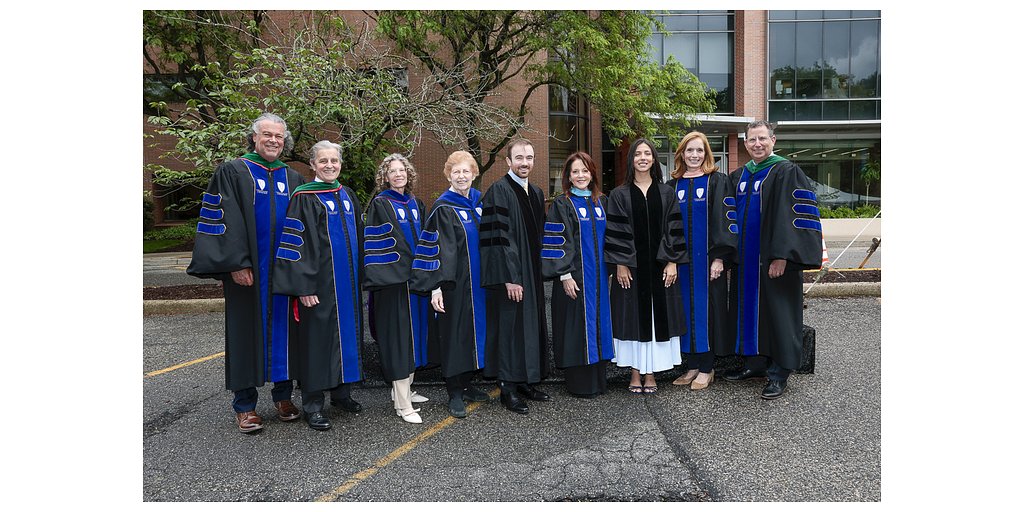
MANHASSET, NY – June 04, 2026 – A quiet ceremony on a late May evening at the Feinstein Institutes for Medical Research marked more than just a graduation; it signified a vital evolution in the fight against human disease. As Dr. Alexandra Bekiaridou and Dr. Russell Hollis received their PhDs from the Elmezzi Graduate School of Molecular Medicine, they joined an elite and crucial cadre of professionals: the physician-scientist. These are the rare individuals who not only treat patients but also possess the deep scientific training to unravel the very mechanisms of their illnesses, forging a direct path from laboratory discovery to life-saving therapy.
The commencement was a celebration of this powerful synthesis. It showcased how a unique educational model, backed by Northwell Health's research powerhouse, is producing a new generation of innovators poised to tackle some of medicine's most intractable problems. The work of the graduates, focused on deadly conditions like Pulmonary Arterial Hypertension and mesenteric ischemia, provides a stunning glimpse into a future where the line between the clinic and the lab all but disappears.
The Physician-Scientist Imperative
In the complex landscape of modern healthcare, there exists a chasm between the rapid pace of scientific discovery and its application in patient care. The physician-scientist is the essential bridge across that divide. The Elmezzi Graduate School, a distinctive three-year PhD program for practicing physicians, was engineered specifically to build this bridge. Unlike traditional, longer MD/PhD tracks, Elmezzi recruits doctors already seasoned by clinical experience and immerses them in world-class research.
"Throughout the history of medicine, physician-scientists have fueled new innovations and discoveries that are essential for a healthier world,” said Kevin J. Tracey, MD, president and CEO of the Feinstein Institutes. “Our Elmezzi graduates are prepared to lead the development of breakthrough therapies and diagnostics.”
The program’s success is striking. While many who earn dual degrees drift away from the laboratory, Elmezzi boasts a near-perfect retention rate of graduates in active research. This is achieved through a model that removes common barriers: tuition is free, and students receive a salary, thanks in large part to a generous endowment from The Thomas and Jeanne Elmezzi Foundation. This allows physicians to step away from lucrative clinical practices to pursue high-risk, high-reward research.
“This year’s Elmezzi commencement is a testament to the Feinstein Institutes’ dedication to producing knowledge to cure disease,” noted Bettie M. Steinberg, PhD, interim dean of the Elmezzi Graduate School. “Our graduates represent the vital next generation of scientists, positioned to transform groundbreaking discoveries from the lab into tangible, life-changing therapies for patients.”
From Bench to Bedside: Targeting Intractable Diseases
The tangible impact of this model is best seen in the groundbreaking research of its latest graduates. Their work isn't theoretical; it targets devastating diseases with fresh, innovative strategies.
Dr. Alexandra Bekiaridou focused her research on Pulmonary Arterial Hypertension (PAH), a progressive and often fatal disease where high blood pressure in the lungs leads to heart failure. While inflammation is a known culprit, existing treatments fall short. Working in the Feinstein Institutes’ Institute of Bioelectronic Medicine, Dr. Bekiaridou explored the nervous system's role in controlling this inflammation. Her research revealed a critical link between the spleen's nerve supply and the migration of damaging immune cells to the lungs. This discovery opens the door to entirely new therapeutic avenues, such as using non-invasive focused ultrasound to modulate the spleen’s nerve activity—a core concept of bioelectronic medicine—to calm the inflammatory storm in PAH patients.
Meanwhile, Dr. Russell Hollis tackled mesenteric ischemia, a catastrophic condition with mortality rates as high as 80%, where blood supply to the intestines is cut off. When blood flow is restored, a flood of toxins from the injured gut can trigger a massive, deadly immune overreaction. Dr. Hollis investigated a peptide called MOP3, developed in the lab of Feinstein’s Chief Scientific Officer Dr. Ping Wang. He found that MOP3 acts as a molecular sponge, scavenging a key inflammatory toxin and reprogramming immune cells to become anti-inflammatory. In essence, it helps the body manage the crisis of reperfusion, preventing a well-intentioned immune response from turning fatal. This peptide could become a critical intervention for a condition where doctors are often in a race against time.
Honoring the Shoulders of Giants
The ceremony also recognized the monumental figures whose work laid the groundwork for today's innovators. Honorary degrees were awarded to Dr. Cori Bargmann of The Rockefeller University and Dr. Tak W. Mak of the Ontario Cancer Institute, two scientists whose fundamental discoveries have reshaped modern biology and medicine.
Dr. Mak’s legacy is woven into the fabric of modern oncology. In 1984, he cloned the human T-cell receptor, the molecular key that allows our immune cells to recognize invaders, including cancer. This singular discovery became the foundational pillar for today’s most revolutionary cancer treatments, including CAR-T therapy, where a patient's own T-cells are engineered to hunt and destroy tumors, and checkpoint inhibitors, which release the brakes on the immune system. His work has translated into FDA-approved drugs and saved countless lives.
Dr. Bargmann’s work, though more foundational, is no less profound. By studying the simple nervous system of a nematode worm, she has uncovered universal principles about how genes and neural circuits shape behavior, from sensory perception to decision-making. Her elegant research provides a roadmap for understanding the vastly more complex human brain, offering critical insights for tackling neurological and psychiatric disorders. By honoring these pioneers, the Feinstein Institutes sent a clear message: today's breakthroughs are built upon a bedrock of persistent, curiosity-driven science.
An Ecosystem for Innovation
The success of the Elmezzi program and its graduates is no accident. It is the product of a carefully cultivated ecosystem designed for translational impact. The Feinstein Institutes, as the research arm of Northwell Health—New York's largest healthcare provider—is not an isolated academic tower. With over 50 labs, 5,000 researchers, and 3,000 ongoing clinical studies, it is deeply integrated into a system that cares for millions of patients.
This integration creates a virtuous cycle. Clinicians on the front lines identify urgent, unmet patient needs. Physician-scientists like Dr. Bekiaridou and Dr. Hollis can then pursue those problems in the lab, with direct access to clinical data and patient populations. Discoveries made in the lab can be rapidly advanced into clinical trials within the same health system. This structure, powered by both institutional vision and crucial philanthropy from partners like the Elmezzi Foundation, is designed to accelerate the journey from a scientific hypothesis to a new standard of care. The recent commencement was not just an academic milestone; it was a demonstration of this powerful engine in action.