
- 11.6 million visitors in the Dominican Republic in 2025, with foreign direct investment topping $5 billion.
- 87% to 92% of Larimar City’s first residential offerings already sold, with deliveries slated for 2026-2028.
- 200% stock surge for CLERHP in the last 12 months, despite historical losses and financial concerns.
Experts view Larimar City as a high-risk, high-reward venture with significant potential for profitability and innovation, but caution that its long-term success hinges on overcoming financial, infrastructural, and governance challenges in the Caribbean.
The Caribbean's Smart City Dream: Inside CLERHP's High-Stakes Punta Cana Bet
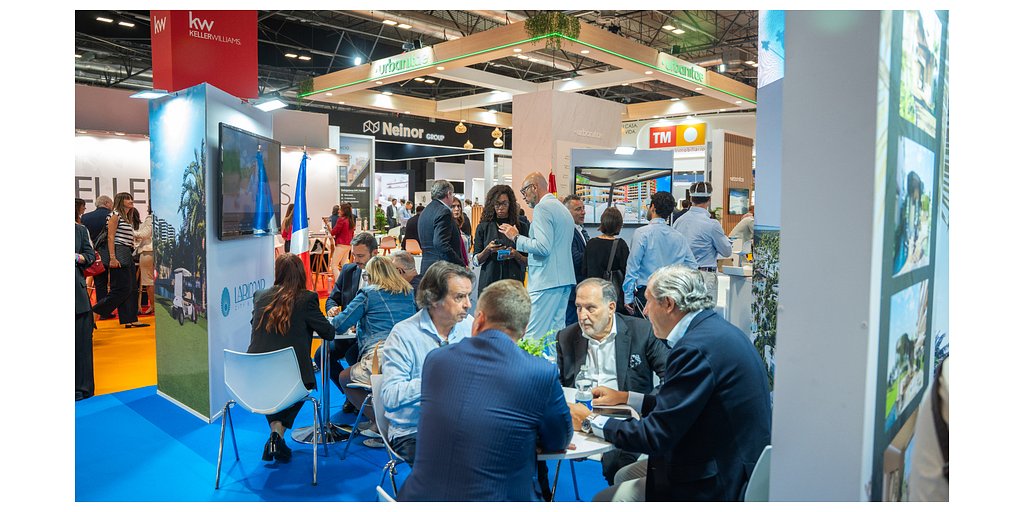
MADRID, SPAIN – May 25, 2026 – Inside the polished halls of Madrid’s SIMA real estate fair, the future was for sale, and it looked like paradise. Visitors lined up to strap on virtual reality headsets, leaving the bustling convention floor for a sun-drenched cliffside in the Dominican Republic. They soared over pristine artificial beaches, glided down a 3-kilometer promenade, and peered into luxury condos with panoramic ocean views. This is Larimar City & Resort, and its developer, Spanish firm CLERHP, was selling more than property; it was selling a digitally rendered dream.
The press release called the event an “outstanding success,” a reinforcement of the project's position as a premier international investment. Executives spoke of security, profitability, and vision. But beyond the VR goggles and bullish statements lies a far more complex story—one of immense ambition, significant risk, and the transformation of a Caribbean coastline into a multi-billion-dollar bet on the future.
The Dominican Gold Rush
Larimar City is not being built in a vacuum. It is the crest of a tidal wave of foreign investment crashing into the Dominican Republic, an economy that has become the fastest-growing in the Caribbean. With a record 11.6 million visitors in 2025 and foreign direct investment topping $5 billion, the country has become a magnet for capital.
This boom is no accident. Favorable government policies, such as the CONFOTUR law offering significant tax breaks to buyers, have created a fertile ground for developers. In Punta Cana, the epicenter of this growth, property values have been climbing steadily, with some luxury segments seeing 10-15% annual growth. It’s a market where condos sell in 45 to 90 days and well-managed properties can generate rental yields between 5% and 9%.
It is within this feverish context that CLERHP’s executives presented their vision. “There is a growing demand for real estate products capable of offering profitability, security, and a long-term vision,” stated Alberto Muñoz, the project's Commercial Director. The company is banking on this demand, reporting that the first residential offerings—Prime Towers, Villas, and Town Houses—are already between 87% and 92% sold, with deliveries slated for 2026 through 2028.
Unpacking the 'Smart City' Vision
The project’s most powerful marketing tool is its designation as the “first smart city in the Caribbean.” The master plan is a checklist of 21st-century urbanist ideals: renewable energy sources, comprehensive waste recycling, wastewater reuse, and sustainable “green mobility.” Over 22,000 homes, six hotels, a university, a hospital, and shopping centers are planned to coexist in a seamlessly integrated, tech-optimized environment.
Yet the term “smart city” can be a slippery one, often meaning more in a marketing deck than on the ground. While CLERHP touts the integration of Information and Communication Technologies (ICTs) to optimize urban management, the specifics remain broad. The vision is ambitious, especially in a region where foundational infrastructure can be a challenge. Across the Caribbean, attempts to launch smart city initiatives have often been hampered by limited financial resources, underdeveloped power grids, and a lack of local governance capacity.
Larimar City, as a private, self-contained development, aims to sidestep these issues by building its own systems from scratch. The on-site cement plant and progress on the main access roads show a commitment to building the physical backbone. But the long-term viability of its advanced technological and environmental systems—the very things that make it “smart”—will be the true test, one that will unfold over its planned development through 2035.
The Company Behind the Curtain
Underpinning the entire venture is CLERHP Estructuras, S.A., a company whose own story is as dramatic as the project it’s building. Publicly listed on the Madrid stock exchange, CLERHP has provided the project with a crucial veneer of institutional credibility. Juan Andrés Romero, the firm’s President and CEO of Larimar, has leveraged this status to assure investors of the project's stability.
Wall Street has responded with explosive enthusiasm. CLERHP’s stock has surged over 200% in the last twelve months, a meteoric rise largely fueled by excitement around Larimar. Yet a closer look at the company’s financials reveals a more nuanced picture. Historically, the company has been loss-making. Some financial analysts have flagged that its debt is not well covered by operating cash flow and have pointed to a pattern of shareholder dilution to raise capital.
This isn't just another project for CLERHP; it represents a fundamental strategic pivot. The company is transforming itself from an engineering and construction services provider into a full-fledged international developer, a move that trades the relative safety of contract work for the high-risk, high-reward world of speculative real estate. The success of Larimar is now inextricably linked to the very survival and valuation of CLERHP itself.
Reality on the Ground
Back in Punta Cana, the project is undeniably taking shape. Recent video updates show the first two towers of the Prime Towers complex rising several stories above their foundations. Excavators are carving out the cliffside for the promised promenade, and work is underway on the first nine holes of a golf course. This is not vaporware; machinery is moving and concrete is being poured.
However, for some, the reality of the investment has been less seamless than the virtual tours. In one documented account, a new investor described a “terribly horrifying” experience, citing a significant financial investment followed by months of silence from unresponsive company representatives. “I was passed around and unable to get answers,” the investor stated, highlighting a frustrating gap between the project’s polished public image and their private customer experience.
As construction machinery continues to reshape the Punta Cana coastline, Larimar City remains a project of immense contrasts: a story of digital ambition set against the gritty reality of construction, of soaring market optimism shadowed by underlying financial risks, and of a utopian vision that is still years away from being fully realized.