
- 18 projects funded: California Credit Union Foundation awarded grants for 18 distinct educational initiatives in Spring 2026.
- $235,000+ invested since 2012: The Teacher Grant program has channeled over $235,000 directly to educators.
- 34,500+ impacted in 2025: The Foundation's grants and sponsorships reached over 34,500 people in 2025.
Experts would likely conclude that micro-grants like these are a strategic and agile solution to bridge critical gaps in school funding, fostering innovative, hands-on learning experiences that traditional budgets often overlook.
The Butterfly Effect: How Micro-Grants Are Hacking School Budgets
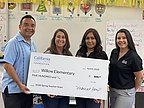
GLENDALE, CA – June 09, 2026 – In a transitional kindergarten classroom at Willow Elementary School in South Gate, students will soon be watching caterpillars transform into butterflies. This isn't just a charming science lesson; it's a hands-on experience in biological systems, funded not by a district budget line, but by a modest grant from a local financial institution. This small-scale intervention, and seventeen others like it, offers a fascinating look at how communities are building resilient new systems to support education where traditional structures fall short.
California Credit Union Foundation just announced its Spring 2026 Teacher Grant recipients, awarding funds for 18 distinct projects across Los Angeles and San Bernardino counties. The initiatives range from Ricardo Williams’s aerial drone workshop at Arroyo Valley High School to Loren Scott’s water rocket experiments at Mark Twain Middle School. On the surface, it’s a feel-good story of corporate philanthropy. But look closer, and you see a sophisticated response to a complex problem: the widening gap between what our schools can afford and what our students need to thrive in a rapidly changing world.
The Anatomy of Modern Learning
The projects funded by the Foundation are not merely supplemental activities; they represent a strategic investment in proven educational methodologies that are often the first to be cut from strained budgets. Take Maria Salazar’s butterfly project at Willow Elementary. It’s a textbook example of Project-Based Learning (PBL), an approach where students gain knowledge and skills by working for an extended period to investigate and respond to an authentic, engaging, and complex question or problem. Instead of memorizing the stages of metamorphosis from a book, these young students will observe, document, and directly participate in the process, fostering deeper understanding and scientific curiosity.
Similarly, the grant for an Aerial Drone Workshop at Arroyo Valley High School isn't just about flying a cool gadget. It’s a direct conduit to STEM careers, teaching principles of physics, engineering, programming, and data analysis. In an economy increasingly reliant on automation and robotics, this kind of practical experience is invaluable. Other grants support programs that build social and emotional infrastructure, like Nicole Walker’s ASL Learning Project at Carlson Home Hospital School, which promotes inclusivity and cognitive development, or Felix Quiñonez’s Anxiety Reducing Program at Glenfeliz Boulevard Elementary, which addresses the critical need for mental health support in schools.
These initiatives align perfectly with modern educational research that emphasizes hands-on, interdisciplinary learning to build critical thinking and problem-solving skills. They are precisely the kind of learning experiences that prepare students for the future, yet they require resources—specialized equipment, materials, and training—that are often deemed non-essential when budgets are tight.
A System Under Strain
To understand why a program like the Teacher Grant initiative is so vital, one must look at the paradoxical system of education funding in California. The state boasts per-student spending figures that are above the national average. However, these numbers mask a more complicated reality. State funding is heavily reliant on volatile income taxes, and when adjusted for the high cost of labor in California, the state’s spending power drops significantly in national rankings.
Furthermore, districts like Los Angeles Unified (LAUSD) and San Bernardino City Unified (SBCUSD) face immense fiscal pressures from rising operational costs, pension obligations, and declining student enrollment, a factor that directly reduces state funding under the Local Control Funding Formula. LAUSD, the nation's second-largest district, is grappling with a substantial deficit. Meanwhile, SBCUSD’s own budget analysis shows that future cost-of-living adjustments to its funding may not keep pace with its rising financial obligations. The result is a system where, despite record state-level investment, local schools are forced to make difficult choices, often sacrificing enrichment and innovation for basic operational needs.
This is the gap that the California Credit Union Foundation is stepping into. Since 2012, its Teacher Grant program has channeled over $235,000 directly to educators, bypassing bureaucratic hurdles to put resources where they are needed most: the classroom. It’s a form of precision funding that addresses specific, identified needs with an agility that large, centralized systems often lack.
The Corporate-Community Interface
This initiative is not an isolated act of charity but a core component of California Credit Union's operational philosophy. The credit union, a member-owned cooperative founded in 1933, operates a philanthropic arm—the Foundation—designed for long-term community empowerment. This structure is a case study in effective corporate social responsibility. The credit union covers 100% of the Foundation's administrative costs, ensuring every dollar donated goes directly into community programs.
"What makes this program so meaningful is the creativity and intention behind each of these projects," said California Credit Union Foundation President Marvel Ford. "From hands-on STEM experiences to programs that build connection and inclusion, these teachers are finding new ways to engage their students and bring learning to life. We're proud to support their ideas and the lasting impact they have in the classroom."
This commitment is systemic. The Foundation’s work is built on four pillars: investing in youth, supporting educators, promoting financial literacy, and honoring service members. In 2025 alone, it funneled $179,000 into grants and sponsorships, impacting over 34,500 people. This model demonstrates how a financial institution can embed itself into the fabric of its community, using its resources and infrastructure not just for financial transactions, but for building social capital and resilience.
By empowering individual teachers, the program taps into a distributed network of innovators who are deeply attuned to their students' needs. It’s a decentralized approach to problem-solving that is both efficient and profoundly impactful. For a teacher with a brilliant idea but no budget, a grant of a few hundred or a thousand dollars can be the catalyst that transforms the educational experience for dozens of students, creating a ripple effect that extends far beyond a single classroom.