
- 137.5 MW: Capacity of Germany's largest battery energy storage system (BESS) in Alfeld.
- $2.2 billion: Projected size of Germany's battery storage market by 2030.
- 41 GW: Anticipated battery capacity needed by Germany by 2037.
Experts agree that advanced analytics are now essential for managing large-scale battery storage systems, ensuring grid stability and maximizing financial returns in Germany's energy transition.
The Brains Behind the Grid: How Analytics Power Germany's Battery Boom
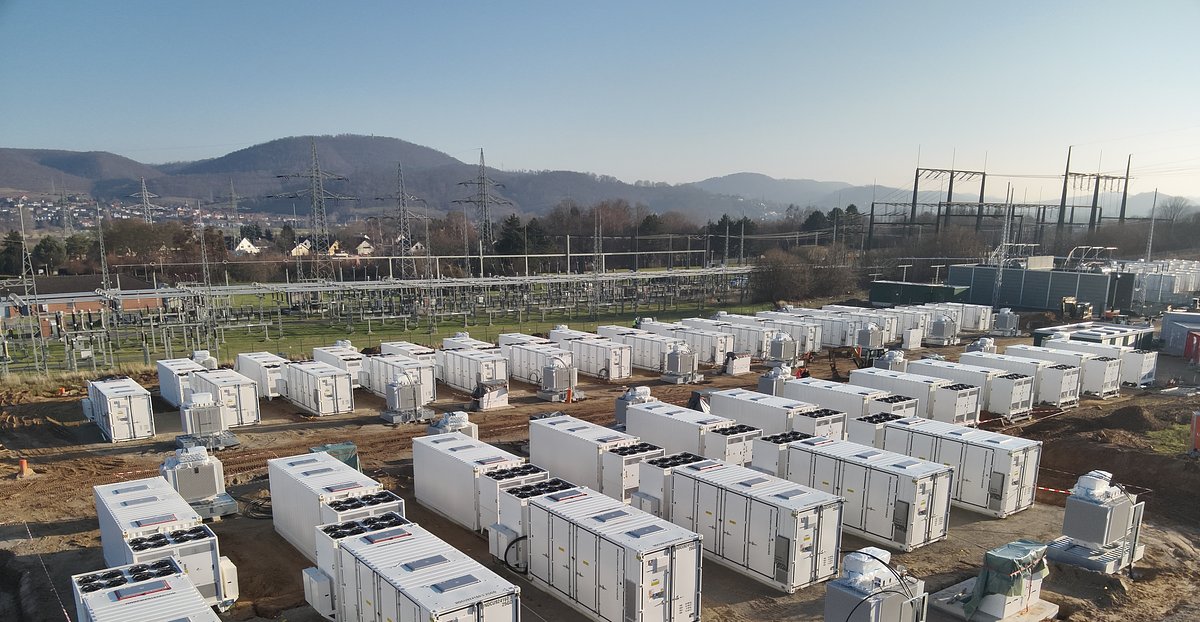
CHICAGO, IL – June 09, 2026 – In the quiet fields of Lower Saxony, Germany, a new giant is waking up. The Alfeld battery energy storage system (BESS), set to be the nation's largest upon its full commissioning, represents more than just 137.5 megawatts of power or 282 megawatt-hours of capacity. It embodies a critical evolution in the global energy transition—a shift where the intelligence managing the asset is as vital as the asset itself. A partnership announced today between analytics provider TWAICE and operations leader BayWa r.e. for the Alfeld site pulls back the curtain on this new reality, revealing that the future of the grid is being written in code.
BayWa r.e., a global renewable energy company, will serve as the third-party operations and maintenance (O&M) provider for the massive project, which is owned by the Danish investment fund Scale Fund. To do so effectively, it is integrating TWAICE's independent analytics platform, a move that signals a fundamental change in how these complex, high-value assets are managed. It’s a story not just of batteries, but of the data-driven strategy required to make a renewable-powered grid a reliable reality.
Germany's High-Stakes Energy Gamble
The Alfeld project does not exist in a vacuum. It is a cornerstone in Germany's ambitious and high-stakes energy transition, or Energiewende. The country's battery storage market is undergoing explosive growth, projected to surge from around $419 million in 2024 to over $2.2 billion by 2030. This boom is fueled by the urgent need to balance a grid increasingly saturated with intermittent wind and solar power. With the German Federal Network Agency anticipating a need for 41 GW of battery capacity by 2037, the scale of the challenge is immense.
Projects like Alfeld are the answer. With enough capacity to supply one million homes with electricity for an hour, its primary role will be to provide ancillary services like primary control reserve, acting as a shock absorber for the grid. It helps prevent blackouts, smooths out price volatility, and ensures that when the wind blows and the sun shines, that energy can be effectively integrated. Significantly, the project is designed to operate without direct subsidies, its financial viability dependent on shrewd market participation and flawless operational performance.
This is where the complexity begins. As gigawatt-hours of new storage come online, the gap between simply monitoring batteries and truly managing them widens. “Alfeld is exactly the kind of project where getting operations right from day one determines long-term value,” said Stephan Rohr, CEO at TWAICE. The sheer volume of assets, alarms, and data sources creates a cacophony that can overwhelm human operators, making it difficult to distinguish a minor hiccup from a precursor to catastrophic failure.
Beyond Monitoring: The Rise of the Digital Twin
For an O&M provider like BayWa r.e., managing a modern BESS fleet from multiple manufacturers is like conducting an orchestra where each musician has a different score. This is the problem TWAICE was built to solve. The company's platform provides a “normalized, vendor-agnostic view” of performance, acting as a universal translator and conductor for the entire system.
“Managing a growing storage fleet with large BESS like Alfeld means dealing with more assets, more alarms, and more data sources than ever before,” said Simon Slapka, Managing Director of BayWa r.e. Data Services GmbH. “The real challenge is knowing which signals actually matter before they turn into service tickets.”
By creating a sophisticated digital twin of the battery assets, TWAICE’s software moves beyond the reactive alarms of a standard Battery Management System (BMS). It employs predictive analytics to forecast battery health, identify subtle signs of degradation, and pinpoint underperforming cells or modules. This allows engineers to shift from a reactive stance—fixing what’s broken—to a proactive one—preventing breaks from ever happening. The platform provides BESS-native analytics, offering insights into cell imbalances, recoverable energy, and temperature trends that are invisible to the naked eye. Some industry experts suggest such advanced systems can provide warnings for potential thermal runaway events up to 12 months in advance, offering a crucial layer of safety and reliability.
This proactive approach is what gives operators the “head start they need to move from reactive to proactive operations,” as Slapka noted. It’s about turning a flood of data into a handful of actionable recommendations, enabling faster, more confident decisions that protect the asset and its revenue streams.
Protecting the Investment: Analytics as an Insurance Policy
A battery energy storage system is a multi-million dollar investment with a finite lifespan. Every cycle of charging and discharging causes degradation, and every moment of unexpected downtime represents lost revenue. For a 100 MWh system, that downtime can cost its owners an estimated $1 million per year. For an asset the size of Alfeld, the financial stakes are exponentially higher.
This is why the adoption of predictive analytics is less a technological luxury and more a financial necessity. It functions as a digital insurance policy, safeguarding the investment by optimizing performance and mitigating risks. Research has shown that AI-powered analytics can reduce maintenance costs by up to 50% and improve system reliability by 35%. By optimizing charging and discharging cycles based on predictive degradation models, operators can extend the battery’s useful life, pushing back the date of a costly replacement.
TWAICE’s platform directly addresses this financial imperative. Its tools help operators track warranty KPIs, providing the hard data needed to substantiate claims and avoid disputes with manufacturers. A recently added “Penalty Risk Assessment” tool helps operators navigate the complexities of grid service contracts, avoiding costly fines for failing to meet State of Charge requirements. By quantifying “Usable and Recoverable Energy,” the software ties previously hidden energy losses directly to their revenue impact, allowing for smarter asset management.
For BayWa r.e., which has an eight-year service contract for an asset it doesn't own, this level of insight is paramount. The company's performance, reputation, and profitability are tied to its ability to meet and exceed operational targets. By integrating TWAICE's analytics, BayWa r.e. is not only de-risking its own operations but also demonstrating a commitment to maximizing the long-term value of the Alfeld project for its owner, Scale Fund. The partnership marks a strategic expansion for BayWa r.e., proving its capabilities in the standalone storage market and setting a new standard for third-party O&M in the process.