
- Less than 1% of polyester is recycled back into new clothing, with most ending up in landfills or oceans.
- RheaCycle™ process achieves over 99% purity in breaking down polyester waste into reusable monomers.
- €200,000 grant from the 2026 Global Change Award to advance enzymatic recycling technology.
Experts would likely conclude that Rhea's Factory's AI-driven enzymatic recycling technology represents a significant breakthrough in sustainable materials, offering both environmental and economic advantages over traditional recycling methods.
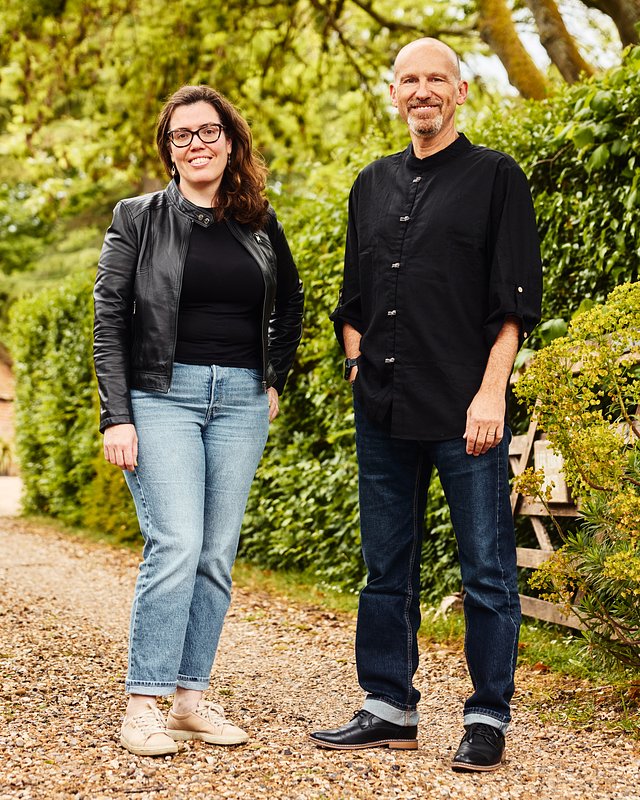
The Billion-Dollar Enzymes: AI Unlocks the True Value of Plastic Waste
BERKELEY, CA – June 08, 2026
In the world of corporate sustainability, big promises are cheap. We’ve all seen the pledges and the eco-friendly labels. But behind the marketing, the hard numbers often tell a different story. Take polyester, the workhorse of the fashion industry. It accounts for over half of all textile production, yet less than 1% of it is ever recycled back into new clothing. The rest ends up in landfills, incinerators, or oceans—a massive environmental liability. But what if we could flip the script? What if that waste wasn't a liability, but a valuable asset waiting to be unlocked?
A small biotechnology company in Berkeley, Rhea's Factory, just received a major vote of confidence that it has found the key. The company was named one of ten winners of the H&M Foundation's prestigious 2026 Global Change Award for its groundbreaking RheaCycle™ platform. The technology uses artificial intelligence to design custom enzymes that, in essence, digest plastic waste and break it down into its fundamental chemical building blocks. The result is a circular system that could fundamentally change the economics of recycling not just for fashion, but for the entire plastics industry.
Biology Meets AI: Decoding the RheaCycle™ Process
For years, recycling has been stuck between two imperfect options. Mechanical recycling, the most common method, is essentially a downcycling process. Shredding and melting plastic degrades its quality, meaning an old t-shirt might become carpet fiber or insulation, but it can rarely become a new t-shirt. Chemical recycling can produce higher-quality materials but often requires high temperatures, harsh chemicals, and significant energy inputs, eroding both its environmental and economic viability.
Rhea's Factory sidesteps this dilemma by harnessing the power of biology, supercharged by artificial intelligence. Instead of brute force, their process uses enzymes—natural proteins that catalyze chemical reactions. The challenge has always been that natural enzymes aren't optimized for breaking down modern, man-made plastics. This is where Rhea's Factory’s innovation truly shines. Using a proprietary machine learning platform they call REDAI (Rhea's Enzyme Development Artificial Intelligence), their scientists can design, model, and identify hyper-efficient enzymes in a matter of months, a process that would traditionally take years of laborious lab work.
The RheaCycle™ process runs at mild temperatures with low energy, breaking down polyester waste into its original monomers—terephthalic acid (TPA) and ethylene glycol (EG)—with over 99% purity. This is the holy grail of recycling. These building blocks are identical to those made from virgin fossil fuels, allowing them to be dropped directly back into existing manufacturing supply chains to create new, high-quality products. Critically, the process can handle the contaminated and blended materials that choke conventional recycling streams, turning previously unrecyclable waste into a reliable feedstock.
From Landfill Liability to Balance Sheet Asset
This technological leap carries profound economic implications. By creating a product that is cost-competitive with virgin plastics, Rhea's Factory aims to eliminate the so-called “sustainability premium.” They are betting that companies will choose their recycled materials not just because it’s the right thing to do, but because it makes solid financial sense.
"The race is on to see who can scale enzymatic recycling first," notes one industry analyst. "The winner won't just clean up the planet; they'll dominate a multi-billion dollar market by turning a global waste stream into a predictable, high-value commodity."
The field is heating up. Established players like France's Carbios, which is building its own commercial-scale PET recycling facility, and Australia's Samsara Eco are also making significant strides. Rhea's Factory believes its AI-first approach and its focus on creating enzyme blends that can tackle mixed plastics in a single step will give it a competitive edge in speed and cost-effectiveness.
The €200,000 grant from the Global Change Award is certainly helpful, but the true value of the prize lies elsewhere. The year-long GCA Changemaker Programme provides invaluable access to a network of experts and industry partners. Furthermore, the H&M Foundation’s policy of taking no equity or intellectual property is a strategic move designed to encourage widespread adoption, signaling a desire to transform the entire industry, not just back a single winner.
A Solution for More Than Just Your Wardrobe
While the award specifically recognizes the company's potential to revolutionize textile-to-textile recycling, the founders have their sights set on a much larger prize. The RheaCycle™ platform is “feedstock-agnostic,” meaning the same enzymes that digest polyester shirts can also break down PET plastic bottles, food packaging, and even components from the automotive industry. This positions the company not merely as a solution for fast fashion, but as a key player in the global fight against plastic pollution.
The company’s vision is ambitious, backed by a concrete plan to build a 5,000-ton demonstration plant in California. This step is crucial for proving the technology can be scaled to an industrial level, moving it from a promising lab result to a tangible part of the circular economy. Co-founder and CEO Arzu Sandıkçı’s confidence is rooted in this dual-pronged approach of environmental benefit and economic logic.
“At Rhea's Factory we show up every day for the environment and for the future we want to build, and this recognition tells us we are doing it alongside exactly the right people,” said Sandıkçı in the announcement. “We are showing that biology, designed with artificial intelligence, can give the world a genuinely circular path, and that the cleanest path can also be the one that makes economic sense.”