
- Japan aims to increase hydrogen supply to 3 million tonnes annually by 2030. - The Japanese government has committed ¥3 trillion ($20 billion) to a Contracts for Difference (CfD) scheme for clean hydrogen and ammonia. - Ammonia can be liquefied at -33°C, making it far easier to transport than hydrogen (-253°C).
Experts would likely conclude that while the Amogy-KOWA partnership presents a promising solution to hydrogen's logistical challenges, its success hinges on overcoming economic, environmental, and safety hurdles at scale.
The Ammonia Bridge: How a US-Japan Deal Aims to Fuel a Hydrogen Economy
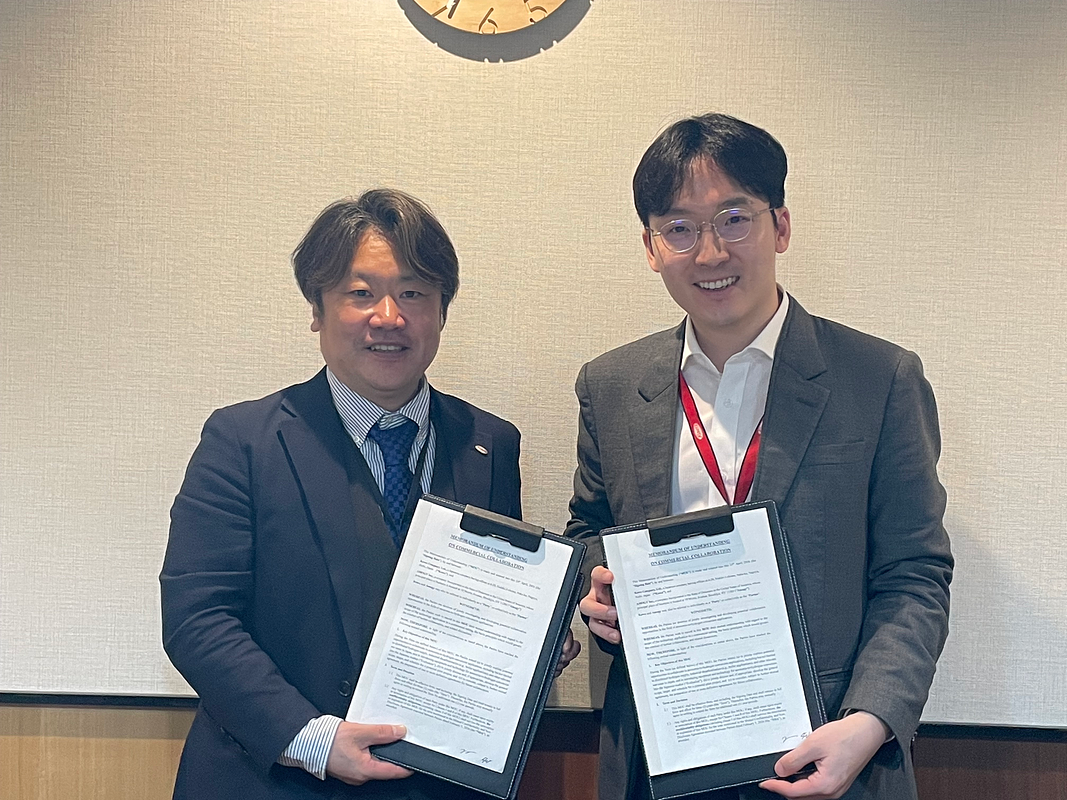
NEW YORK, NY – June 16, 2026 – In the global race to decarbonize, Japan has placed one of the world's largest bets on hydrogen. But a fundamental paradox lies at the heart of this strategy: hydrogen, the lightest element, is notoriously difficult and expensive to store and transport. Today, a new partnership signals a high-stakes maneuver to solve this very problem. Amogy, a venture-backed American technology firm, and KOWA, a 130-year-old Japanese industrial conglomerate, have announced a collaboration to build an “ammonia bridge” to Japan’s hydrogen future.
This isn't just another green energy announcement. It's a strategic transaction that reveals how the architecture of the next energy economy is being designed. The deal aims to deploy Amogy's ammonia “cracking” technology—which efficiently splits ammonia back into hydrogen at the point of use—within Japan, starting with the industrial heartland of the Chubu region. By pairing cutting-edge technology with deep-rooted industrial might, this alliance offers a compelling blueprint for overcoming the logistical chokepoints that threaten to stall the energy transition.
A National Imperative Meets a Logistical Bottleneck
To understand the significance of the Amogy-KOWA deal, one must first grasp the scale of Japan's ambition. Facing a near-total reliance on imported fossil fuels, the nation has declared a goal of carbon neutrality by 2050 and designated hydrogen and ammonia as central pillars of its strategy. The government is not just paying lip service; it's putting capital to work. Tokyo plans to increase its hydrogen supply to 3 million tonnes annually by 2030 and has committed a staggering ¥3 trillion (approximately $20 billion) to a Contracts for Difference (CfD) scheme designed to make clean hydrogen and ammonia cost-competitive with fossil fuels.
Yet, this grand vision hinges on a simple, physical reality. Transporting vast quantities of liquid hydrogen requires cryogenic temperatures of -253°C, a process so energy-intensive and costly it erodes the economic case. This is where ammonia (NH₃) enters the picture. As a stable, carbon-free molecule with a high hydrogen content, ammonia can be liquefied at a mere -33°C, similar to propane. This allows it to be transported using existing, mature infrastructure built for the global fertilizer and chemical industries. The strategy is to use ammonia as a practical and efficient shipping container for hydrogen, moving it across oceans and then “cracking” it back into hydrogen gas where it’s needed.
This partnership aims to build the final, crucial link in that supply chain: the cracker itself. By deploying this technology, the partners are betting they can unlock the hydrogen economy by making delivery feasible and scalable.
The Technology Play: From Brooklyn to the Chubu Region
The deal represents a classic symbiotic relationship between a disruptor and an incumbent. On one side is Amogy. Headquartered in Brooklyn and backed by a formidable list of investors including Amazon’s Climate Pledge Fund, Aramco Ventures, and SK Innovation, the startup has developed a proprietary technology that it claims is a mature, highly efficient method for ammonia cracking. While the chemistry is not new, Amogy’s innovation lies in its advanced catalysts, which reportedly deliver high performance at lower temperatures, reducing the energy penalty and cost associated with the conversion process.
The company has been aggressively proving its technology in real-world applications, most notably powering the world's first ammonia-fueled maritime vessel in a successful voyage and forging partnerships to develop ammonia-powered solutions for stationary power generation in South Korea and with engineering giant JGC in Japan. This track record signals a move from the lab to commercial readiness.
“As one of the world's leading markets for hydrogen and ammonia adoption, Japan is uniquely positioned to pioneer innovative energy solutions,” said Seonghoon Woo, CEO of Amogy, in the official announcement. “We believe partnerships like this can play an important role in demonstrating how ammonia cracking technology can support the development of future hydrogen supply infrastructure.”
On the other side of the partnership is KOWA Company, Ltd. Founded in 1894 and headquartered in Nagoya, the heart of the Chubu region, KOWA is the quintessential Japanese conglomerate. With a sprawling portfolio spanning trading, machinery, construction, and pharmaceuticals, its contribution is not technology but execution. KOWA brings an extensive business network, a deep understanding of Japan's complex industrial landscape, and the logistical prowess to navigate large-scale projects. This partnership is a maneuver to leverage KOWA’s market presence to create a beachhead for Amogy's technology in one of the world's most promising, yet challenging, markets.
Chubu's Test Case and the High-Stakes Gamble
The initial focus on Japan's Chubu region is a calculated move. As a major hub for manufacturing and heavy industry, the area is a significant source of carbon emissions and, therefore, a prime target for decarbonization efforts. Success here would provide a powerful model for deployment across other industrial zones in Japan and globally. KOWA's local presence provides an invaluable home-field advantage in navigating regional regulations and integrating with local industry.
However, this venture is not without significant challenges. The competitive landscape in Japan is already crowded with industrial heavyweights like JERA, IHI, and Mitsubishi Heavy Industries, all of whom are pursuing ammonia solutions, primarily focused on co-firing in existing power plants. The Amogy-KOWA partnership is carving out a niche in distributed hydrogen production, a different but complementary piece of the puzzle.
More fundamentally, the entire ammonia-to-hydrogen value chain rests on a precarious economic and environmental foundation. For the hydrogen to be “clean,” the ammonia must be “green” (produced using renewable electricity) or “blue” (produced from natural gas with carbon capture). Both are currently far more expensive than conventional “gray” ammonia, making the entire enterprise dependent on massive, long-term government subsidies.
Furthermore, while ammonia combustion is carbon-free, it is not pollution-free. It can produce emissions of nitrogen oxides (NOx), a key component of smog, and nitrous oxide (N₂O), a greenhouse gas nearly 300 times more potent than CO₂. The toxicity of ammonia also requires stringent safety protocols and infrastructure. These are not insurmountable technical hurdles, but they add layers of cost and complexity. The success of this partnership will depend not only on the efficiency of Amogy’s crackers but on the ability to manage these broader environmental and safety considerations at scale, proving that the ammonia bridge leads to a truly cleaner destination.