
- Weight: URXR One weighs just 93 grams, significantly lighter than competitors like Apple's Vision Pro.
- Display Resolution: Dual 2.5K Micro-OLED displays (2448 x 2064 pixels per eye).
- Field of View: 90-degree wide field of view for immersive mixed reality.
Experts would likely conclude that Unseen Reality's URXR One represents a significant step forward in spatial computing by prioritizing comfort and wearability without sacrificing core functionality, though its long-term success will depend on software ecosystem development and market adoption.
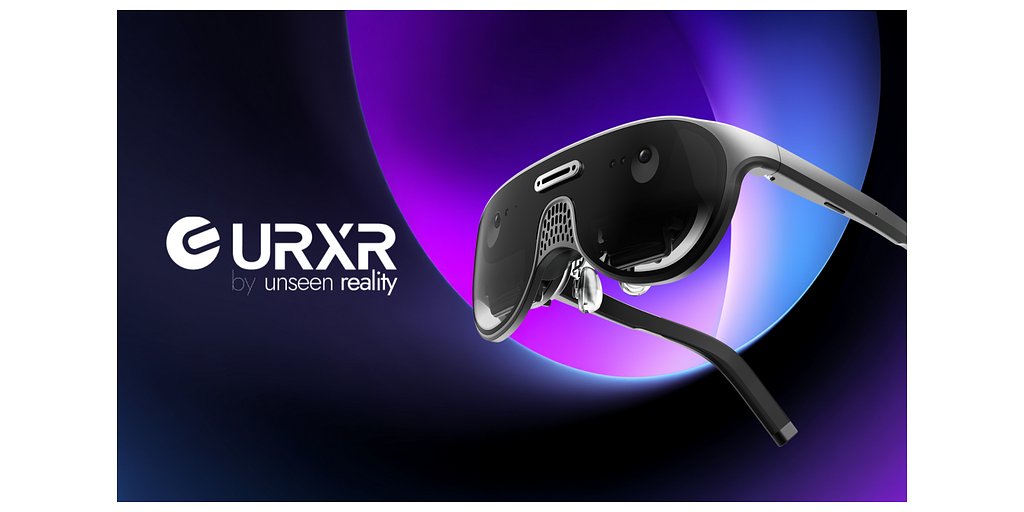
The 93-Gram Gambit: Unseen Reality's Bid to Redefine Spatial Computing
MOUNTAIN VIEW, CA – June 26, 2026
For years, the promise of spatial computing has been weighed down, quite literally, by its own hardware. The industry has been locked in a frustrating trade-off: either lightweight, socially acceptable glasses with limited functionality, or powerful mixed-reality headsets too cumbersome for anything but dedicated sessions. At this year's Augmented World Expo (AWE), a Silicon Valley startup named Unseen Reality made a bold claim to have finally broken that compromise. Their debut product, the URXR One, is a pair of 93-gram glasses that purports to deliver the full spatial computing experience many have been waiting for.
Closing the Reality Gap
The central challenge for mainstream mixed reality adoption has always been form factor. Unseen Reality’s strategy hinges on solving this with a device that prioritizes all-day wearability. "Spatial computing has lived inside headsets too long. We're putting it on a face you'd actually want to keep wearing," said Edward Zhou, Founder and CEO of Unseen Reality, in a statement that captures the company’s core mission. The design philosophy is radical in its simplicity: "can someone forget they're wearing this?"
To achieve this, the company has packed an impressive array of technology into a shockingly compact frame. The URXR One features dual 2.5K Micro-OLED displays, delivering a sharp 2448 x 2064 pixels per eye. Combined with a wide 90-degree field of view, the visual experience aims for immersion without the claustrophobia of traditional headsets. Critically, the device uses ultra-low-latency video see-through, clocked at under 10 milliseconds. This feature is the key to true mixed reality, allowing users to see their physical surroundings in real-time with digital overlays, effectively preventing the disorientation or isolation that plagues many virtual reality systems.
Powering this experience is a custom-designed Spatial Processing Unit (SPU) that handles all the complex calculations for 6DoF (Six Degrees of Freedom) spatial tracking and hand gesture recognition on-chip. This enables the device’s signature feature: anchoring digital screens and applications within a physical room. Users can create a multi-monitor workspace that stays put as they move around, or interact with floating app windows using natural hand movements, no controllers required. By offloading the battery to an external pack, the glasses themselves remain featherlight, a crucial decision in the quest for a device you can truly forget you're wearing.
A Calculated Play Against Giants
Unseen Reality is entering a market dominated by titans. Apple’s Vision Pro set a high bar for visual fidelity and user interface design, while Meta’s Quest line commands the consumer market with an extensive content library. Yet, both come with significant weight and bulk. Unseen Reality is positioning the URXR One not as a direct competitor on every front, but as a strategic alternative that nails the one metric others have struggled with: comfort.
Zhou's claim of offering a "Vision Pro experience but 1/5th of the weight" is a direct challenge to the incumbent design philosophy. It’s a bet that for daily productivity and interaction, users will prioritize a lightweight, unobtrusive form factor over the absolute highest-end specifications if the core spatial experience is compelling enough. This strategy aligns perfectly with broader market trends. Recent industry analysis from IDC indicates a significant rebound in the XR market driven not by bulky VR headsets, but by the growing category of smart glasses with displays, which are expected to surpass headset shipments by 2027.
This ambitious play has attracted savvy investors. "For AI to truly perceive and interact with the physical world, it needs a new kind of eyes," noted angel investor Xiaoxian Kong, an early backer of frontier hardware companies. "This team has produced a full spatial sensing architecture that challenges what even the largest hardware companies have shipped." This endorsement lends significant credibility to the startup's engineering claims, suggesting that the URXR One is not merely a clever packaging of existing components but a genuine technological step forward.
From Niche Gadget to Everyday Intelligence
The ultimate success of URXR One will depend on its ability to transition from a novel gadget to an indispensable tool. The company is heavily focused on productivity use cases that resonate with the current shift towards remote and hybrid work. The ability to instantly conjure a private, multi-screen setup in any location—a coffee shop, an airport lounge, a home office—is a powerful proposition.
Unlike devices that fully immerse and isolate the user, the URXR One’s low-latency passthrough is designed to augment, not replace, reality. This capability is essential for what the company calls "everyday spatial intelligence." A user can remain fully aware of their environment, able to interact with colleagues or simply walk around safely, while still engaging with their digital workspace. This seamless blend of the physical and digital worlds is the key to unlocking applications beyond static desk work, extending into fields like logistics, remote assistance, and advanced training where situational awareness is non-negotiable.
The system’s flexibility, allowing it to function as a simple head-tracked display for watching movies or as a fully anchored spatial computer, broadens its appeal. It can be a portable private theater on one flight and a sprawling workstation on the next, adapting to the user’s context.
The Software Imperative and the Road Ahead
As with any groundbreaking hardware, the URXR One's potential is inextricably linked to its software ecosystem. Acknowledging this, Unseen Reality has laid out a clear roadmap. The initial launch will be supported by the "URXR Connect" companion app for Windows and Mac, enabling the flagship virtual workspace experience. Support for phones and tablets is planned for a later date, signaling an ambition to become a platform-agnostic spatial display.
However, the larger challenge lies in cultivating a thriving developer community. Zhou has stated a clear intention to "get the platform ready for every developer," but building the tools, documentation, and support necessary to attract third-party innovation is a monumental task that has stymied many hardware startups. The path from a compelling device to a vibrant platform is fraught with peril.
With a Kickstarter campaign imminent and a shipping target of Fall 2026, the coming months will be critical for Unseen Reality. The initial hands-on reports from AWE 2026 have been overwhelmingly positive regarding the hardware's comfort and performance. The final pricing, which has yet to be announced, will be a major factor in its market reception. Ultimately, the true test will come when the URXR One moves from controlled demos to the unpredictable environments of daily life, and the world sees if 93 grams is finally light enough to carry the weight of our digital future.