
- Price: $39.99 for the GuardHouse Watch Eye camera
- User Base: Over 100,000 families using the system
- Recommendation Rate: 94% recommendation rate from users
Experts would likely conclude that GuardHouse's $39.99 camera offers a compelling, no-fee alternative to traditional home security systems, but its local storage model presents a critical trade-off between privacy and security risk.
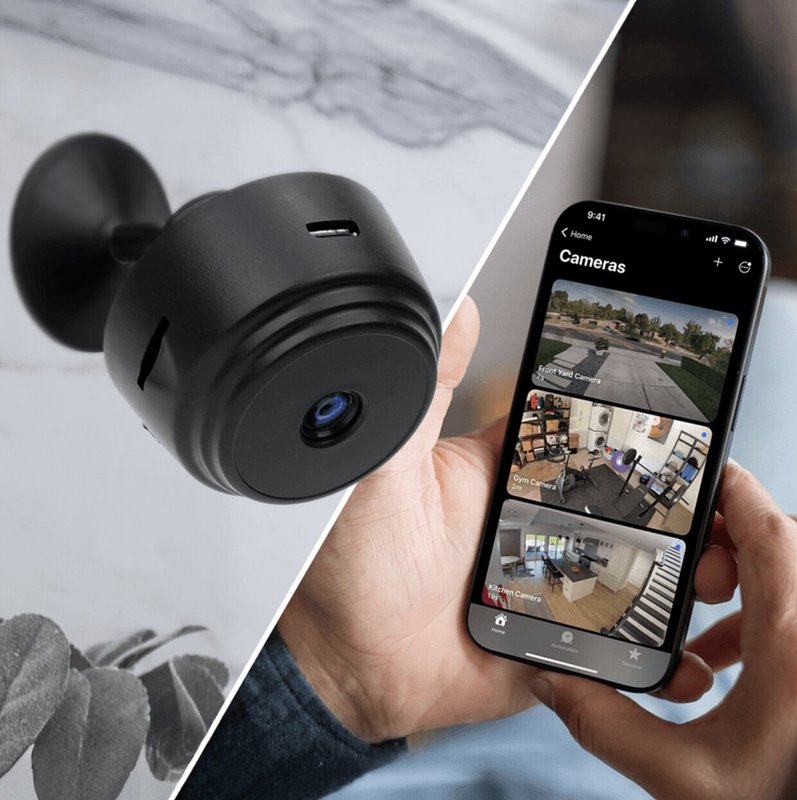
The $39 Security Camera Challenging a Billion-Dollar Industry
NEW YORK, NY – May 01, 2026 – By Timothy Bell
The home security landscape, long dominated by hefty installation costs and persistent monthly subscriptions, is facing a new, aggressively priced challenger. A company named GuardHouse has launched its Watch Eye camera, a device priced at a startlingly low $39.99, built on a singular, potent promise: robust security without the recurring fees. Tapping into a growing consumer sentiment known as 'subscription fatigue,' the company is making a direct play for homeowners weary of the endless payment cycles that define modern technology services.
According to the company's press release, the GuardHouse Watch Eye is a portable, wireless camera designed for simplicity. It boasts features commonly found in much pricier systems: 1080p HD resolution, a 150-degree wide-angle lens to eliminate blind spots, infrared night vision, and instant motion alerts sent to a smartphone via a free companion app. Its most disruptive feature, however, is its storage model. Instead of streaming footage to a proprietary cloud server for a monthly fee, the Watch Eye records directly to a local SD card, placing data—and cost—firmly in the user's control.
GuardHouse claims that for what a typical homeowner spends on monitoring and cloud storage fees in a single year—estimated between $540 and $2,580—a user could blanket their entire property with multiple GuardHouse cameras for a one-time cost. With assertions of over 100,000 families already using the system and a 94% recommendation rate, the company is positioning its product not just as an alternative, but as the new standard for accessible home surveillance.
A Crowded Field of Low-Cost Sentinels
While GuardHouse’s anti-subscription message is powerful, it enters a market where the idea of affordable, DIY security is already well-established. It faces stiff competition from brands like Wyze, Eufy, and Blink, which have built loyal followings by offering feature-rich cameras without mandatory monthly plans. These competitors have set a high bar, often providing features that the GuardHouse Watch Eye currently lacks.
For instance, many competing cameras in the same budget category include two-way audio, allowing users to speak through the camera to a delivery person or warn off an intruder. Research confirms that the current GuardHouse model does not offer this feature. Furthermore, rivals like Eufy have pushed the market forward with advanced on-device AI for distinguishing between people, pets, and vehicles to reduce false alerts, and some even offer 4K resolution for superior image clarity. While GuardHouse touts its motion detection, the specifics of its AI capabilities remain less detailed than those of its more established competitors.
GuardHouse’s primary competitive edge appears to be its aggressive pricing and singular focus on eliminating all recurring costs. It aims to be the simplest, most transparently priced option for consumers whose primary need is a clear video record and timely motion alerts, without the desire for a complex ecosystem of smart-home integrations or advanced features they may not use.
The Local Storage Dilemma: Privacy vs. Peril
The decision to forgo cloud storage in favor of a local SD card is central to the GuardHouse Watch Eye's identity, presenting a critical trade-off for consumers. On one hand, it is a significant win for privacy. With video footage stored on a physical card inside the camera, users retain complete control over their data. This eliminates the risk of corporate data breaches or unauthorized access to sensitive footage stored on a third-party server, a growing concern for many.
However, this privacy comes with a significant security vulnerability. If a burglar gains entry to a home, the first target could be the security camera itself. If the camera—and the SD card within it—is stolen or destroyed, the very evidence of the crime is lost forever. Cloud storage, for all its privacy concerns and costs, provides an off-site backup, ensuring that footage is preserved even if the recording device is compromised. This makes the choice between local and cloud storage a personal calculation of risk: Is the threat of a data breach more concerning than the risk of losing crucial evidence during an actual break-in?
For users, this means the ideal placement of a GuardHouse camera becomes a strategic exercise. Placing it in a less obvious location or high enough to be out of easy reach is essential to mitigate the risk of tampering, turning the simple 'tool-free' installation into a more considered security decision.
Scrutinizing the Hype: Can $39 Deliver Real Security?
With a price tag that undercuts most of the market, a natural skepticism arises: is the GuardHouse Watch Eye too good to be true? The company's claim of a 4.9-star average rating from over 100,000 users is a powerful marketing tool. However, these figures appear primarily within the company's own promotional materials, and independent verification on broad-based consumer review platforms like the Better Business Bureau or TrustPilot is not as readily available, suggesting the data may originate from internal surveys or curated feedback.
A significant point in the company's favor is its generous 90-day money-back guarantee. This policy effectively allows customers to become their own product testers, evaluating the camera’s performance on their own property under real-world conditions. A 90-day window is ample time to assess video quality, the reliability of motion alerts, and the durability of the weatherproof housing. A company confident in its product can afford such a guarantee, as the cost of returns would be unsustainable if the device failed to meet basic expectations.
The underlying technology itself is not revolutionary. The components for a 1080p camera with infrared night vision are standardized and have become increasingly affordable. GuardHouse's business model appears to rely on a direct-to-consumer strategy, cutting out retail markups and the immense overhead required to support a subscription-based cloud infrastructure. For the consumer who understands the limitations—no professional monitoring, no two-way audio, and the inherent risk of local storage—the GuardHouse Watch Eye presents a compelling value proposition, stripping the security camera down to its essential functions at an almost disposable price.