
- Mission Speed: 16 hours and 42 minutes from notice to launch, a 40% improvement over previous records.
- Orbital Readiness: Pioneer spacecraft commissioned in just 37 hours and 36 minutes, exceeding the 72-hour deadline by over a day.
- Vertical Integration: Rocket Lab handled design, build, test, launch, and on-orbit operations entirely in-house.
Experts would likely conclude that Rocket Lab’s VICTUS HAZE mission represents a transformative leap in tactically responsive space capabilities, setting a new global benchmark for rapid orbital readiness while raising critical ethical and strategic considerations for international space governance.
The 16-Hour Mission: How Rocket Lab Redefined Space Security
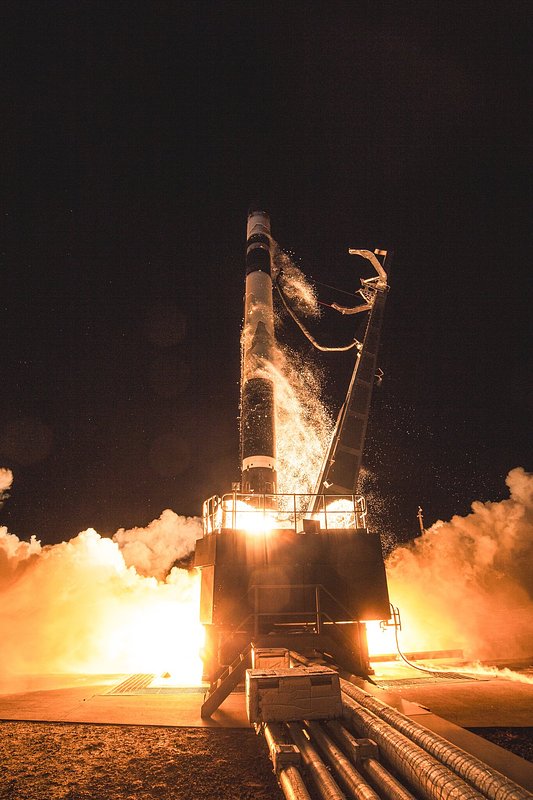
LONG BEACH, CA – June 22, 2026 – In what can only be described as a seismic shift for national security space operations, Rocket Lab has executed a mission that compresses years of defense procurement and launch preparation into a single day. The company successfully launched the U.S. Space Force’s VICTUS HAZE mission just 16 hours and 42 minutes after receiving its official notice to launch, shattering the previous responsive space record by more than 10 hours and establishing a new global standard for what it means to be “ready” in orbit.
This isn't merely about launching a rocket quickly; it's about delivering a complete, operational intelligence asset into a precise orbital position on a timeline dictated by immediate need, not by the traditional, slower cadence of space access. The mission demonstrates a transformative leap in tactically responsive space, providing the United States with a powerful new tool for deterrence and domain awareness in an increasingly contested environment.
A New Benchmark in Space Readiness
The VICTUS HAZE mission, lifting off from Rocket Lab’s complex in New Zealand, represents the culmination of the U.S. Space Force's “crawl, walk, run” strategy for developing on-demand space capabilities. The previous record, set by the VICTUS NOX mission in 2023, was an impressive 27 hours from notice to launch. Rocket Lab’s performance has now cut that time by nearly 40%.
The speed was evident at every stage. Rocket Lab’s Guidance, Navigation, and Control (GNC) team took a mere four hours to calculate final trajectories and update flight software. Once in orbit, the company’s own Pioneer spacecraft was fully commissioned and ready for its first maneuver in just 37 hours and 36 minutes, beating the stringent 72-hour mission deadline by more than a day and a half.
“Our launch-plus-spacecraft integrated mission capability is transformative for responsive space,” said Rocket Lab founder and CEO, Sir Peter Beck. “By launching on demand with spacecraft at-the-ready we've shown we can secure and defend the nation's space interests rapidly, and that’s a powerful capability for the United States and its allies.”
For the U.S. Space Force, this achievement validates years of strategic investment. “We are excited to demonstrate advanced TacRS capabilities on orbit,” stated USSF Lt. Col. Lincoln Miller, the Space Safari system program manager. He noted that the ability to commission a complex vehicle so quickly and begin operations shows that the U.S. can “field capability to deny adversaries first-mover advantage into novel orbits.”
The Integrated Advantage: From Factory to Orbit
This historic speed was not a fluke; it was the direct result of a deliberate business strategy. VICTUS HAZE marks the first time a single company has delivered an entire tactically responsive mission as an all-in-one package. Unlike previous missions that required coordinating a separate launch provider and satellite manufacturer, Rocket Lab handled everything: designing, building, and testing the spacecraft; executing the rapid launch; and now, managing 24/7 on-orbit operations.
This end-to-end control is made possible by the company's deep vertical integration. The Pioneer spacecraft at the heart of the mission is a testament to this philosophy, incorporating in-house manufactured subsystems for nearly all its critical functions, including propulsion, solar arrays, reaction wheels, radios, and flight software. By controlling its own supply chain through a combination of internal development and strategic acquisitions, Rocket Lab eliminates the third-party delays and integration challenges that have historically plagued complex space projects.
This model is proving to be a powerful differentiator. While competitors like Firefly Aerospace have demonstrated their own impressive responsive launch capabilities, Rocket Lab’s ability to offer a complete “space-as-a-service” solution provides a unique value proposition for government and commercial clients alike. It’s a strategy that is paying off, with the firm’s space systems division now generating more revenue than its well-known launch services.
Reshaping the Strategic Landscape
The true significance of VICTUS HAZE lies in its on-orbit objective: conducting complex Rendezvous and Proximity Operations (RPO). The Pioneer spacecraft is now actively maneuvering to chase down and inspect another satellite, True Anomaly's Jackal spacecraft, which is acting as a simulated non-compliant object. This exercise is a direct demonstration of Space Domain Awareness (SDA)—the ability to find, track, and characterize objects in orbit.
In an era where space is no longer a benign sanctuary, SDA is a cornerstone of national security. The ability to rapidly launch a satellite to inspect a suspicious object, monitor its behavior, and relay that intelligence back in near real-time provides a critical advantage. It allows military commanders to understand threats as they emerge and to counter an adversary’s actions with speed and precision.
According to defense strategists, this capability is a game-changer. It moves space operations from a pre-planned, strategic domain to a dynamic, tactical one. If a hostile actor attempts to place a threatening satellite in a new orbit, the U.S. no longer has to wait weeks or months to respond. It can, as VICTUS HAZE demonstrates, have “eyes on” that object in a matter of hours, fundamentally altering the calculus of orbital conflict and strengthening deterrence.
The Ethical Frontier of Rapid Response
While the technical and strategic achievements of VICTUS HAZE are undeniable, they also push us into a new and complex ethical frontier. The same RPO technology that enables peaceful satellite inspection and servicing can also be used for surveillance or disruption. The ability to “chase down” other satellites, even as a demonstration, raises important questions about international norms and the potential for miscalculation.
The Outer Space Treaty of 1967 established space as a global commons for peaceful purposes, but the line between peaceful reconnaissance and perceived aggression can be thin. As nations develop increasingly sophisticated and rapid orbital capabilities, the risk of misinterpreting another’s actions grows. A responsive launch intended as a defensive measure could be viewed by an adversary as a provocative first move, potentially leading to an escalation of tensions.
This new reality underscores the urgent need for updated international dialogue and clear rules of engagement for space operations. Organizations like the Secure World Foundation have long advocated for transparency and confidence-building measures to prevent conflict in orbit. As the technology demonstrated by VICTUS HAZE becomes more widespread, the challenge will be to harness its immense strategic value while collaboratively managing the risks to ensure the long-term sustainability of the space environment for all.