
- 15,000+ participants from 191 countries expected to attend the 2026 IMF–World Bank Group Annual Meetings in Bangkok.
- 2.8 billion baht budget allocated by the Thai government for the event, with projected revenue in the billions from conference activities.
- 200 'Team Thailand Volunteers' to be selected, providing hands-on experience and fostering civic engagement.
Experts view Thailand's hosting of the 2026 IMF–World Bank Group Annual Meetings as a strategic move to reassert its position as a core economic and financial hub in Southeast Asia, demonstrating its capacity for hosting high-stakes international events while advancing a people-centered agenda focused on sustainable development and digital innovation.
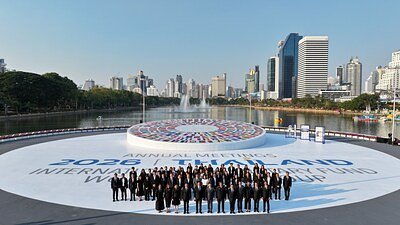
Thailand's New Horizon: A Global Finance Hub 35 Years in the Making
BANGKOK, THAILAND – March 31, 2026 – Thirty-five years after it first welcomed the world’s financial leaders, Thailand is preparing to once again take center stage. This October, Bangkok will host the 2026 IMF–World Bank Group Annual Meetings, a monumental event expected to draw over 15,000 participants from 191 countries. Dubbed the "Olympics of Finance," the meetings represent far more than a logistical feat; for Thailand, they are a declaration of its evolved economic identity and a platform to champion a forward-looking global agenda under the theme, "Thailand's New Horizons: Empowering People, Building Resilience."
A Return to the World Stage, 35 Years Later
The decision to return to Bangkok makes Thailand one of only three countries to have been selected as a host twice, a distinction that underscores its enduring role in the global economy. The 1991 meetings showcased a nation in the midst of a dramatic transformation, an emerging "tiger economy" celebrated for its rapid, export-led growth. The venue then, as it is now, was the Queen Sirikit National Convention Center (QSNCC), a facility built specifically for that occasion.
Today, the context is vastly different. While the 1991 summit grappled with Thailand's infrastructural bottlenecks and overheating growth, the 2026 meetings will highlight a nation focused on sustainable development, digital innovation, and economic resilience. The newly renovated QSNCC, which successfully hosted the APEC 2022 summit, stands as a modern symbol of this progress. Its world-class facilities are part of a broader ecosystem of robust infrastructure, seamless transportation, and renowned hospitality that organizers believe confirms the country's readiness for this global spotlight.
The return to Bangkok is a strategic move to reassert Thailand's position as a core economic and financial hub in Southeast Asia. It’s an opportunity to move beyond the narrative of a tourism-dependent economy and demonstrate its capacity for hosting complex, high-stakes international events that shape global policy.
Beyond the Balance Sheets: A People-Centered Agenda
This year, Thailand is determined to influence the substance of the global conversation. The official theme, "Empowering People, Building Resilience," signals a deliberate shift toward a more inclusive and human-centric model of development. Thai officials aim to use the platform to advance discussions on key priorities that resonate with global challenges.
Central to this agenda are in-depth seminars planned on secure and inclusive digital finance, as well as strategies for driving jobs and innovation. These topics reflect Thailand's ambition to not only participate in but also lead conversations on how economies can leverage technology for equitable growth and better prepare for future economic shocks. This people-centered approach aligns with the evolving mandates of the IMF and World Bank, which have increasingly focused on poverty reduction, climate resilience, and sustainable development.
By framing the dialogue around empowerment and resilience, Thailand is positioning itself as a thought leader, offering its own development journey as a potential model for navigating the complexities of the 21st-century global economy. The theme is a commitment to ensuring that as nations pursue growth, the benefits are broadly shared and the foundations are strong enough to withstand future crises.
The Economic Stakes and Soft Power Play
The direct economic impact of the meetings is expected to be substantial, with projections citing several billion baht in revenue from conference activities alone. The influx of 15,000 to 18,000 high-level delegates—including finance ministers, central bank governors, and private sector executives—is anticipated to provide a significant boost to the tourism, hospitality, and service sectors. The government's 2.8 billion baht budget for the event is seen as an investment expected to yield returns through enhanced trade connections and renewed investor confidence.
However, the strategy extends far beyond short-term economic gains. Thailand is mounting a sophisticated "soft power" campaign to translate the global attention into a lasting enhancement of its national brand. The event's visual identity, "Connecting at the Heart of Finance," draws inspiration from traditional Thai fabrics, while the official logo incorporates patterns from ancient Pod Duang currency, blending heritage with a modern, international aesthetic.
At the QSNCC, three cultural exhibitions titled "Sala Thai" will showcase the nation's rich arts, crafts, and history. Visiting delegates will be offered immersive cultural experiences, including potential volunteer work at historic sites. This is a concerted effort to ensure attendees experience Thailand not just as a venue, but as a vibrant cultural destination, encouraging future tourism and fostering a deeper appreciation for the Thai identity.
Investing in the Next Generation of Leaders
Perhaps the most forward-looking aspect of Thailand's hosting strategy is its deep investment in the nation's youth. The "Thailand Planning Team," composed of the Ministry of Finance and the Bank of Thailand, has launched several initiatives to ensure the event's legacy endures through the next generation.
A nationwide video contest invited university students to submit their own economic policy ideas, challenging them to outline priorities for Thailand and international financial institutions over the next 35 years. In parallel, the World Bank Thailand Young Economist Contest provides another platform for young minds to contribute to discussions on resilient and sustainable development.
Furthermore, a competitive recruitment drive is underway to select 200 "Team Thailand Volunteers." These students will not just provide support services but will be fully integrated into the event's operations, working alongside international experts in fields like media relations, security, and event services. Upon completion, they will receive an official certificate, a valuable credential for their future careers. This initiative is designed to provide hands-on experience, foster civic engagement, and empower young Thais as cultural and intellectual ambassadors.
As the countdown to October continues, preparations are intensifying. From participation in the Spring Meetings in Washington, D.C., to a major 30-day countdown event in Bangkok, every step is designed to build momentum. In doing so, Thailand is signaling that it is not merely opening its doors to the world; it is stepping confidently onto the global stage with a clear vision for its own future and a meaningful contribution to make to the world.