
- $524 million investment in the Lucy Solar Project, a 350-MW utility-scale solar farm
- Expected to generate 926 GWh of clean electricity annually, powering 65,000 Texas homes
- $5 million annual property tax revenue for Concho County once operational
Experts view this project as a model for international collaboration in renewable energy, demonstrating how strategic investments can boost local economies while advancing U.S. clean energy goals.
Texas-Korea Alliance Powers US Green Energy Boom
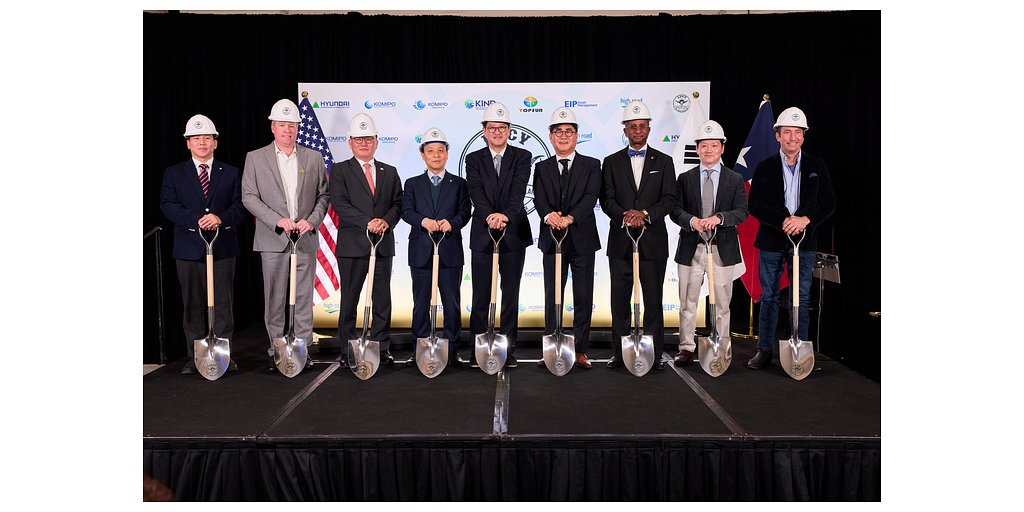
DALLAS, TX – January 28, 2026 – Amidst the sprawling ranchlands of Concho County, a new venture is taking root, symbolizing a powerful convergence of international capital and local need. The recent groundbreaking for the Lucy Solar Project marks the start of a $524 million, 350-megawatt (MW) utility-scale solar farm, one of the largest Korean-led renewable energy investments in the United States. Slated for commercial operation by mid-2027, the project is poised to inject a significant stream of clean energy into the Texas grid while delivering substantial economic benefits to the local community.
A Global Partnership for Texas Power
The Lucy Solar Project is the fruit of a formidable international consortium nicknamed “Team Korea,” which brings together South Korean industrial giants and U.S. development expertise. The group is led by prominent players including Hyundai Engineering & Construction (Hyundai E&C), Korea Midland Power (KOMIPO), the Korea Overseas Infrastructure & Urban Development Corporation (KIND), PIS Fund, Topsun, and investment manager EIP Asset Management. Their U.S. counterpart, Texas-based co-developer High Road Energy Marketing, provides crucial local knowledge and partnership.
For the Korean firms, this project represents a significant strategic expansion. The Lucy Solar Project is Hyundai E&C’s largest solar initiative outside of Asia, signaling a major push into the U.S. renewable market. For KOMIPO, a major Korean power generation company, it marks the third in a series of successful greenfield renewable development projects in the U.S., building on its previous investments in Texas's Concho Valley Solar and Elara Solar projects.
This collaboration highlights how global investment is becoming increasingly integral to developing America's energy infrastructure. “This project is a great win for Concho County – it’s bringing jobs, resources and long-term revenue that will benefit the local community,” said Darrick Eugene, CEO of High Road Energy Marketing. “By partnering with international firms, we’re showing how global energy investment can directly boost our local economy and quality of life.”
Supercharging Investment: The IRA and Korean Green Ambitions
The Lucy Solar Project is not an isolated venture but a prominent example of a much larger trend: a surge of South Korean investment into the U.S. clean energy sector. This wave of capital has been significantly accelerated by the Inflation Reduction Act (IRA) of 2022, whose tax credits and incentives have "supercharged" foreign investment in American green technology and manufacturing. Since the IRA's passage, South Korean companies have announced over $22 billion in investments across the U.S. clean energy supply chain, from electric vehicles to solar panels.
This strategic pivot is driven by South Korea's own domestic goals, including a national target for net-zero emissions by 2050. By investing in clean energy projects abroad, Korean corporations can help decarbonize their global footprint, secure energy resources, and gain a foothold in the rapidly expanding U.S. renewables market. Companies like Hyundai E&C and KOMIPO are leveraging their advanced technological capabilities and long-standing business relationships to capitalize on this opportunity. They are joined by other Korean titans, such as SK Group, which plans over $50 billion in U.S. investments, and LG Energy Solution, which is expanding its energy storage production in North America.
Meeting the Lone Star State's Soaring Energy Demand
This influx of clean energy capacity arrives at a critical moment for Texas. The state's power grid is under increasing strain from a combination of rapid population growth, widespread electrification, and the voracious energy appetite of data centers and new manufacturing facilities. The Electric Reliability Council of Texas (ERCOT) has projected a potential 14% rise in statewide electricity demand by mid-2026, creating an urgent need for new power generation.
The Lucy Solar Project is designed to help meet that challenge. Spanning nearly 2,900 acres of ranchland, the facility will utilize hundreds of thousands of advanced photovoltaic panels that track the sun to maximize output. Once fully operational, it will generate an estimated 926 gigawatt-hours (GWh) of clean electricity annually—enough to power approximately 65,000 Texas homes. This contribution will bolster Texas's position as a national leader in solar energy, where it has already installed nearly 50 GW of capacity with another 37 GW forecast over the next five years.
The plant’s output has been pre-sold through long-term virtual power purchase agreements (VPPAs) to major corporations, including Starbucks and Workday. These agreements allow companies to meet their ambitious sustainability goals, such as RE100 commitments to use 100% renewable energy, by directly supporting the generation of new clean power for the grid.
Recharging Rural Texas: Jobs, Revenue, and Community Support
Beyond its impact on the state's energy landscape, the Lucy Solar Project promises a profound economic transformation for Concho County. The construction phase is expected to create approximately 500 jobs, providing a significant, albeit temporary, boost to the local workforce. More lasting is the financial benefit: once operational, the project will contribute an estimated $5 million per year in local property tax revenue. For a rural county, this stable, long-term income stream is transformative, providing vital funds for local schools, infrastructure upgrades, and essential public services.
Further demonstrating a commitment to the community, the project includes the innovative RAIN-UP program. This initiative directs a portion of the project's revenues to support socially disadvantaged farmers, ranchers, and the broader local community, ensuring that the benefits of this green energy investment are shared equitably.
The project's lifecycle involves a host of specialized partners. Dallas-based Primoris Renewable Energy will serve as the engineering, procurement, and construction (EPC) contractor, managing the complex build-out. After construction, KOMIPO will take over the long-term operations and maintenance of the plant, establishing a lasting presence in the region. The Lucy Solar Project thus serves as a comprehensive model for how international collaboration, guided by strategic policy, can deliver clean power, support corporate sustainability, and foster sustainable economic development in the heart of American communities.