
- 2,155 hectares of land restored across Africa, Latin America, and Southeast Asia in 2025
- 5.4 million native trees planted, up from 2.3 million in 2024
- 447 distinct native species reintroduced to emphasize biodiversity
Experts would likely conclude that Terraformation’s model demonstrates a scalable, transparent, and community-driven approach to reforestation that sets a new standard for high-integrity nature-based climate solutions.
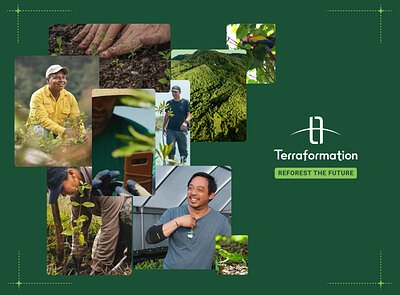
Terraformation’s Blueprint for Restoring Forests at Scale
KAILUA-KONA, HAWAIʻI – January 28, 2026 – As the world grapples with the accelerating impacts of climate change, a Hawaiʻi-based organization is demonstrating a tangible path forward for large-scale ecological healing. Terraformation announced this week that it more than doubled its active restoration footprint in 2025, scaling a model that intertwines native reforestation with local community empowerment and the burgeoning market for high-integrity nature finance.
In a year marked by record temperatures and climate-driven disasters, the company’s progress offers a counter-narrative to climate anxiety, focusing on verifiable action. Terraformation and its partners restored 2,155 hectares of land across Africa, Latin America, and Southeast Asia, planting 5.4 million native trees—a significant leap from 2.3 million in 2024. This effort involved the reintroduction of 447 distinct native species, a critical detail emphasizing the company’s focus on biodiversity and ecosystem resilience over simple tree-planting monocultures.
A Model for Verifiable Restoration
At the heart of Terraformation’s strategy is a rejection of vague promises in favor of transparent, measurable results. The company’s approach is designed to be a replicable blueprint for what effective, ethical reforestation looks like in the 21st century.
"The world doesn't need another promise about trees," said Yishan Wong, Founder and CEO of Terraformation, in a statement. "It needs proof that reforestation can be done right, at scale, and under real scrutiny. We're building that model in the open so others can follow it."
This commitment to scrutiny is most evident in the company's engagement with the voluntary carbon market. By the end of 2025, three of its projects were undergoing validation with Verra, the world's leading carbon standard certifier. This multi-year, rigorous process involves an independent, third-party audit to ensure a project's design and execution meet stringent scientific and social requirements. Successfully validated projects can issue Verified Carbon Units (VCUs), or carbon credits, that are trusted by corporations and investors seeking to offset their emissions with credible, nature-based solutions.
This milestone is not just a procedural step; it signals a crucial shift in the landscape of climate action. As the market for nature-based solutions matures, buyers are increasingly demanding higher standards of transparency, accountability, and proof of impact. Projects that can withstand the rigors of a Verra audit are positioned to command greater trust and value, helping to separate legitimate climate solutions from greenwashing.
Nature Finance Comes of Age
Terraformation’s progress reflects a broader maturation of 'nature finance,' where ecological restoration is increasingly viewed not as charity, but as essential infrastructure with tangible financial value. The growing demand for high-quality, nature-based carbon credits is creating powerful financial incentives to restore degraded lands. However, this demand has also highlighted a critical bottleneck: a shortage of high-integrity projects ready for investment.
The organization’s model directly addresses this by building a pipeline of investment-ready projects. In 2025, it secured initial funding for two active projects and received the prestigious Keeling Curve Prize for innovative finance. These achievements, coupled with new government partnerships in Ghana and Cameroon, underscore growing confidence from both public and private sectors.
This confidence is built on a foundation of risk reduction. For investors, the durability of a forest is paramount. Terraformation mitigates risk by prioritizing community partnership from the outset. "Forests persist when communities are full partners in their success," noted Jad Daley, President of Terraformation. "Community-first design isn't a nice-to-have. It's how you reduce risk and grow forests that last."
The Iroko project in Cameroon serves as a prime example. There, the company is implementing a payment-for-ecosystem-services (PES) model, which directly links forest restoration activities to income and governance participation for local communities. This approach creates durable livelihoods through seed collection, restoration training, and support for sustainable agroforestry, ensuring the community has a long-term economic stake in the forest's health. By aligning ecological outcomes with community stewardship, the model creates a resilient social foundation for the forest to thrive.
Overcoming Capacity with Technology
To transform a collection of individual projects into a global movement, Terraformation is tackling the operational constraints that have historically limited the scale of reforestation. The primary tool in this effort is Terraware, its proprietary open-source software platform for forest management.
Offered free to any restoration team worldwide, Terraware provides tools for every stage of the process, from seed collection and nursery management to survivability tracking and long-term monitoring. In 2025, the platform introduced new features designed to enhance transparency for funders, allowing them to track project implementation and oversee their investments with greater confidence. This digital infrastructure is crucial for scaling efficiently and maintaining high standards across a distributed network of projects.
Through its Accelerator program, Terraformation also shares its operational and financing playbook with other practitioners, actively encouraging the replication of its model in regions with the highest potential for reforestation. This open-source ethos—applied to both technology and methodology—is central to the organization's vision of enabling a global restoration effort far larger than what it could achieve alone.
As climate impacts intensify, the perception of reforestation is shifting. Businesses are beginning to recognize healthy forests as vital supply-chain infrastructure, and investors see verifiable restoration as a new asset class. Terraformation’s 2025 results provide a compelling case study for this new era, demonstrating that it is possible to build biodiverse, community-led forests that are also financially viable and scalable. The goal is no longer just to plant trees, but to build the operational and financial foundation for a global restoration age.