
- $154 billion: Annual cost of workplace loneliness to the U.S. economy (2022 study).
- 5 more days: Average additional absenteeism for lonely employees compared to connected colleagues.
- 2x more likely: Lonely employees are nearly twice as likely to consider quitting their jobs.
Experts agree that while digital tools like Breeze Wellbeing's 'Insights' feature can facilitate initial connections and provide valuable resources, they are not a complete solution for workplace loneliness, which ultimately requires genuine human interaction.
Tech's Answer to the $154B Workplace Loneliness Epidemic?
NICOSIA, CYPRUS – March 19, 2026 – A silent crisis is unfolding in workplaces across the globe, one that carries a health risk comparable to smoking 15 cigarettes a day and costs the American economy an estimated $154 billion annually. This crisis is workplace loneliness, an epidemic of disconnection that impacts productivity, employee retention, and individual well-being. In response, a growing number of technology companies are stepping into the breach, offering digital solutions to a deeply human problem. The latest entrant is Breeze Wellbeing, a self-discovery app from Cyprus-based Basenji Apps Limited, which launched a new feature this February called “Insights” aimed directly at fostering connection and alleviating isolation among employees.
The High Cost of an Empty Office Chair
The staggering financial and human toll of workplace loneliness has been brought into sharp focus by recent research and a landmark declaration from the U.S. Surgeon General, who labeled loneliness a public health threat in 2023. The $154 billion figure, derived from a 2022 study in the Journal of Organizational Effectiveness: People and Performance, is not an abstract number. It represents tangible losses from reduced productivity, increased absenteeism, and higher employee turnover.
According to the research, employees who feel lonely are not just less engaged; they are actively disengaging from their work. They miss, on average, five more days of work per year than their connected colleagues and are nearly twice as likely to consider quitting their jobs. This lack of connection erodes motivation, impairs cognitive functions like decision-making, and stifles the creative problem-solving essential for innovation. Beyond the balance sheet, the human cost is severe. Chronic loneliness is linked to a host of health issues, including an increased risk of depression, heart disease, sleep dysfunction, and premature mortality.
This issue has only been amplified in the era of flexible work arrangements. A 2025 study found that while hybrid models offer benefits, extensive remote work can increase feelings of isolation due to fewer spontaneous, in-person interactions. This has left companies and HR leaders scrambling for effective strategies to rebuild the social fabric of their organizations.
A Digital Handshake: How 'Insights' Aims to Connect
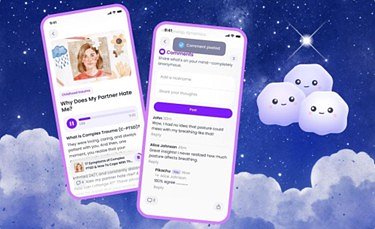
Breeze Wellbeing's "Insights" feature is a direct response to this challenge. Launched in February 2026, it is designed as a knowledge base within the existing Breeze app, which already offers a suite of tools for self-discovery and mental health management. The new feature, accessible to users on iOS in the US, Canada, and the UK, is built on a two-pronged approach: expert guidance and peer support.
The platform offers a library of articles and audio content created by mental health specialists covering topics relevant to personal and professional life, including Relationships, Emotional Awareness, ADHD & OCD, and even complex issues like Narcissism. The goal is to provide users with validated information to better understand their own experiences. This is integrated directly into the app's ecosystem; for instance, after a user completes a self-assessment on attachment styles, the app can immediately suggest relevant articles and community discussions.
The second, and perhaps more crucial, component is the community section. Here, users can anonymously share their own stories related to the topics, creating a space for shared vulnerability and validation. They can offer support and exchange tips in the comments, fostering a sense of belonging that may be absent in their physical workplace. The company frames this as a way for individuals to build "social capital"—the network of relationships and trust that, according to a 2025 study in Behavioral Sciences, is strongly linked to better job performance and lower turnover.
Can an App Cure a Human Condition?
The launch of "Insights" places Breeze Wellbeing squarely in a competitive and increasingly scrutinized market for digital mental health solutions. Established players like Calm and Headspace have already made significant inroads into the corporate world with their business-focused platforms, primarily offering tools for mindfulness and stress reduction. Breeze's specific focus on loneliness and community storytelling is a clear attempt to differentiate itself.
However, this raises a fundamental question being debated by organizational psychologists and tech critics alike: can an app truly cure loneliness? Experts caution that while digital tools offer unprecedented accessibility, they are not a panacea. "Connection requires vulnerability, it requires being seen and heard," noted one organizational behavior consultant, who spoke on the condition of anonymity. "Technology can facilitate the start of that process, but it cannot replace the depth of genuine human interaction."
There is a tangible risk that over-reliance on digital platforms could lead to "digital overload," paradoxically increasing feelings of isolation if not used to supplement, rather than supplant, real-world connections. The challenge for apps like Breeze is to ensure that the anonymous, text-based interactions they foster are meaningful and can serve as a bridge to building healthier relationships offline. Privacy and data security also remain paramount concerns as users are encouraged to share deeply personal experiences on a corporate-sponsored platform.
The New Frontier of Employee Well-being
Regardless of their limitations, platforms like Breeze Wellbeing represent a significant evolution in how companies approach employee mental health. The one-size-fits-all Employee Assistance Programs (EAPs) of the past are giving way to a more personalized, proactive, and digitally-enabled ecosystem of support. This shift acknowledges that an employee's mental state is not separate from their professional performance but is intrinsically linked to it.
By offering tools for self-discovery—including over 30 self-assessment tests, journaling prompts, and habit trackers—alongside the new "Insights" feature, Breeze empowers individuals to take a more active role in understanding and managing their own well-being. This aligns with a broader trend of employees seeking more holistic support from their employers, viewing mental health resources not as a remedial fix but as a core component of a positive workplace culture.
As organizations continue to navigate the complexities of modern work, from hybrid schedules to global teams, digital tools designed to foster connection and provide mental health support will likely become an indispensable part of the corporate toolkit. The ultimate success of features like "Insights" will depend not only on the quality of their content and the safety of their communities but also on their ability to inspire the very thing they seek to replicate: authentic human connection in a world that feels increasingly disconnected.