
- 35+ Taiwanese startups supported in entering the U.S. market in one year
- 1,000+ business connections facilitated
- 80% of startups focused on AI
- 60% of global semiconductors manufactured in Taiwan
- 90% of advanced logic chips for AI data centers produced in Taiwan
Experts view the Startup Island TAIWAN Silicon Valley Hub as a critical success in fostering U.S.-Taiwan collaboration in AI and semiconductors, reinforcing Taiwan's indispensable role in global tech innovation and supply chains.
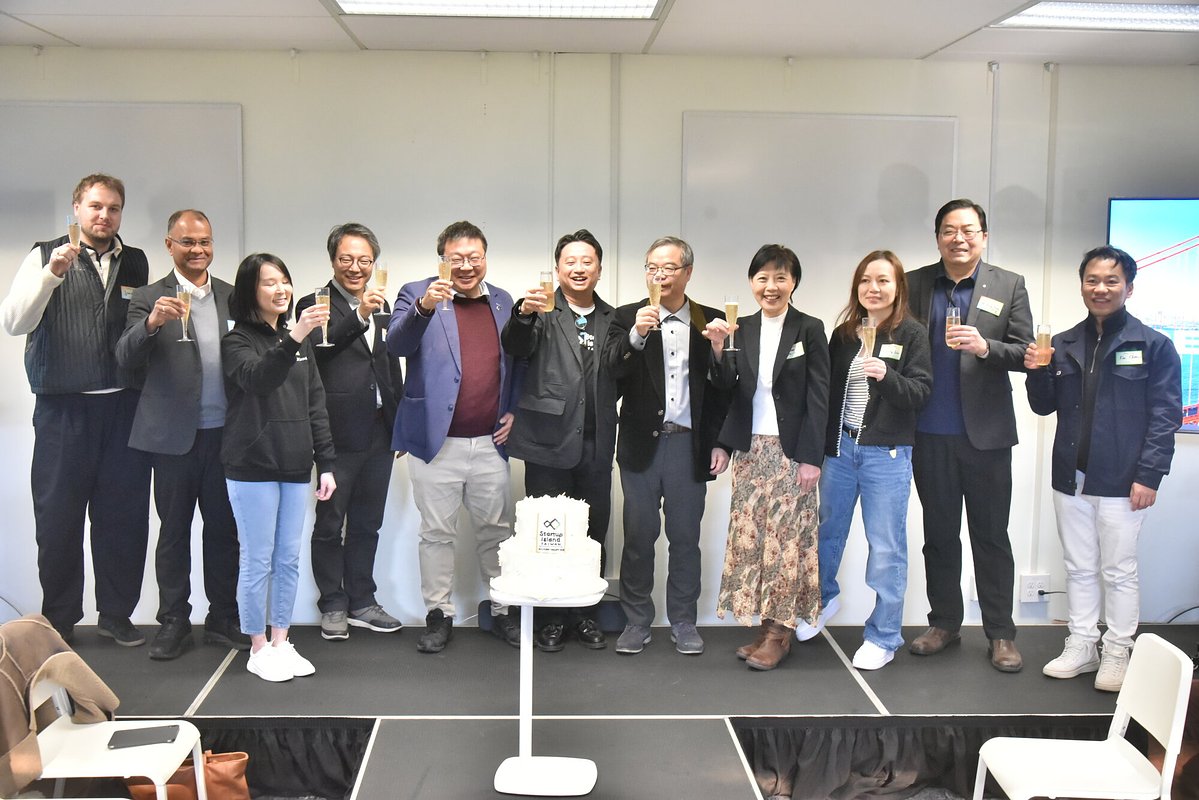
Taiwan's Tech Bridge to Silicon Valley Marks Strategic First Year
PALO ALTO, CA – January 13, 2026 – As technology leaders and startup founders gathered in Palo Alto to celebrate the first anniversary of the Startup Island TAIWAN Silicon Valley Hub, the event marked more than just a milestone. It signified the successful embedding of a strategic national initiative into the world's most competitive innovation ecosystem. In just one year, the hub, backed by Taiwan's National Development Council (NDC), has become a crucial conduit for strengthening U.S.-Taiwan collaboration in the critical fields of artificial intelligence and semiconductors.
Launched in 2025, the hub has already supported over 35 Taiwanese startup teams in their quest to enter the U.S. market. It has facilitated more than 1,000 business connections, demonstrating a tangible impact far beyond its physical co-working space. The focus is sharp: over 80 percent of these startups are concentrated in AI, from sophisticated software applications to the intricate hardware and integrated systems where Taiwan's industrial might truly shines. The anniversary on January 12 was a moment to reflect on this progress and chart a course for deeper integration.
A Strategic Foothold, Not Just a Venue
From its inception, the hub’s leadership aimed for something more profound than visibility. "At its core, this Hub was never meant to be just an event venue or a place for visibility," said Kyle Chen, Director of the Startup Island TAIWAN Silicon Valley Hub. "Our goal is to create a trusted foothold for Taiwan in Silicon Valley—one that is understood, respected, and relied upon."
This philosophy has translated into a three-pronged strategy: meticulously helping Taiwanese startups find their niche and connect with the right partners in the complex U.S. market, actively educating international collaborators on Taiwan's deep technological strengths, and fostering long-term trust through community building rather than fleeting interactions.
The success of this approach is evident in the hub's extensive network. Within twelve months, it has engaged over 30 community organizations and more than 200 ecosystem leaders. This network includes pivotal partnerships, such as a Memorandum of Understanding (MOU) with the prestigious Berkeley SkyDeck Accelerator, which has already seen over 30 Taiwanese companies pass through its program. The presence of executives from tech giants like Google and Qualcomm at hub events, with Qualcomm's Vice President of Engineering Sudeepto Roy giving a guest remark at the anniversary, underscores the growing interest from major U.S. players in tapping into Taiwan's innovation pipeline.
Powering the Next AI Wave with Hardware Prowess
While Silicon Valley has long been the epicenter of software and AI model development, the anniversary celebration highlighted an undeniable trend: the future of AI is inextricably linked to hardware. As AI moves from the cloud into real-world applications—powering everything from autonomous vehicles to energy-efficient smart devices—the demand for specialized, powerful, and efficient hardware is exploding. This is where Taiwan's role shifts from important to indispensable.
Taiwan's dominance in the global semiconductor supply chain is staggering. The island nation manufactures over 60% of the world's semiconductors and a near-monopoly of over 90% of the most advanced logic chips essential for AI data centers. Companies like TSMC are the bedrock upon which the entire digital world is built. But the country's advantage extends far beyond chip fabrication. Taiwan's ecosystem is a "one-stop shop for AI-related hardware," controlling an estimated 90% of global AI server manufacturing capacity. This integrated supply chain, encompassing everything from IC design and advanced packaging to thermal management and power systems, gives Taiwanese startups a unique edge.
The Startup Island TAIWAN hub acts as a bridge for this hardware prowess to meet Silicon Valley's software innovation. By bringing hardware-focused startups to the U.S., the initiative ensures that the next generation of AI development is built on a foundation of deep engineering and manufacturing excellence. It's a symbiotic relationship where American AI designs can be rapidly prototyped and scaled using Taiwan's unparalleled industrial capabilities.
A Geopolitical Linchpin in the U.S.-Taiwan Tech Alliance
The hub's anniversary is not just a business story; it's a geopolitical one. In an era of increasing global competition and supply chain vulnerability, the U.S.-Taiwan technology partnership has become a cornerstone of economic and national security for both. The Palo Alto hub is a tangible manifestation of this deepening alliance, serving as a form of soft power that strengthens Taiwan's strategic importance on the world stage.
This collaboration is driven by mutual interests. The U.S. relies on Taiwan's manufacturing might to realize its most advanced chip designs, a dependency highlighted by initiatives like the CHIPS and Science Act, which encourages Taiwanese giants like TSMC to build fabrication plants on American soil. Simultaneously, Taiwan leverages its technological leadership as an "AI shield," making its security and stability a matter of global concern. By embedding its most promising startups into the U.S. ecosystem, Taiwan is not just exporting technology; it is exporting influence and building resilient, interdependent relationships.
The hub functions as a de-risking mechanism, fostering a collaborative environment that transcends political tensions. It provides a stable channel for knowledge exchange, talent circulation, and joint ventures, reinforcing the narrative of Taiwan as a trusted and indispensable partner in the global race for technological supremacy.
Cultivating Innovation and Overcoming Hurdles
The Silicon Valley hub is the flagship of a much larger national vision. It is backed by a formidable government commitment, including a US$4.56 billion multi-year investment to boost Taiwan's startup ecosystem and a national goal to cultivate 450,000 AI professionals by 2028. This long-term strategy aims to transform Taiwan into a global AI hub, with the NDC planning more "Startup Island TAIWAN Hubs" in other key markets, building on the success seen in Tokyo and Silicon Valley.
For the individual startups, the hub provides critical support to navigate the notoriously difficult U.S. market. It offers free workspace, expert consultations, and curated connections to venture capital, helping entrepreneurs overcome the immense challenges of intense competition and cultural differences. The initiative also aims to create a "brain circulation" by encouraging talented individuals who gain experience in Silicon Valley to eventually return to Taiwan, enriching the domestic talent pool.
Looking ahead, the Startup Island TAIWAN Silicon Valley Hub is set to deepen its engagement with global partners. As it continues to guide more Taiwanese innovators onto the world stage, it reinforces a powerful message: Taiwan is not just a factory for the world's electronics, but a vibrant and essential source of the foundational technologies that will define the future.