
- Length: 920-meter-long structure with a 450-meter main span, the longest of its kind globally.
- Travel Time Reduction: Shortens the journey by 15 kilometers, saving commuters an estimated 25 minutes.
- Traffic Impact: Expected to cut traffic on the overburdened Guandu Bridge by up to 30 percent.
Experts would likely conclude that the Danjiang Bridge is a remarkable feat of engineering and architectural design, successfully balancing aesthetic innovation with environmental sensitivity and functional efficiency, while serving as a symbol of Taiwan's national ambition and resilience.
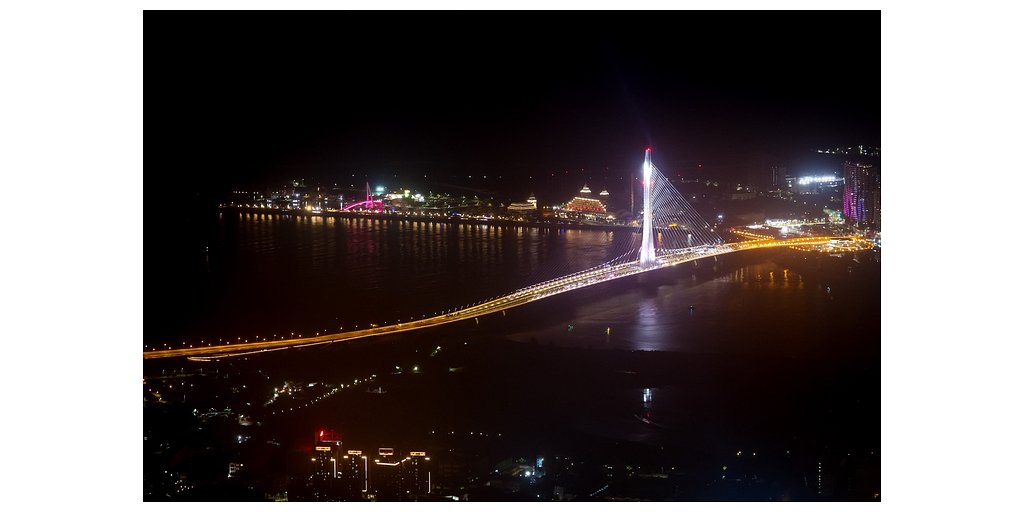
Taiwan's Bridge of Resilience: A Zaha Hadid Marvel Decades in the Making
NEW TAIPEI, Taiwan – May 10, 2026 – After nearly three decades of anticipation, delays, and formidable engineering challenges, Taiwan has unveiled a new national landmark. The Danjiang Bridge, the world’s longest single-mast asymmetric cable-stayed bridge, was inaugurated on May 9 in a ceremony attended by top officials, including President Lai Ching-te. Set to open to traffic on May 12, the structure is more than just a transport link; it is a testament to perseverance and a stunning piece of architectural art designed by the late Dame Zaha Hadid.
Spanning the mouth of the Tamsui River, the bridge connects the bustling districts of Tamsui and Bali in New Taipei. For years, residents and commuters have contended with chronic congestion on the nearby Guandu Bridge, the only other crossing in the vicinity. This new artery promises to transform daily life and regional commerce in northern Taiwan.
“This bridge is Taiwan’s pride. It will become a landmark for Taiwan and another calling card for the country on the international stage,” President Lai declared at the inauguration, highlighting the project's national significance. “If we stand united and work together, Taiwan will certainly become even better.”
An Architectural and Engineering Triumph
At the heart of the Danjiang Bridge's global acclaim is its extraordinary design, one of the final masterworks from the celebrated Pritzker Prize-winning architect Zaha Hadid. Her firm won the international design competition in 2015 with a vision that prioritized elegance and minimal environmental impact. The result is a breathtaking, 920-meter-long structure held aloft by a single, 200-meter-tall pylon that leans gracefully over the water.
This asymmetric, single-mast design was a deliberate and crucial choice. It was engineered to minimize the bridge's footprint on the sensitive riverbed ecosystem of the Tamsui estuary, a protected nature reserve. Equally important, the slender pylon ensures that the iconic, panoramic sunset views over the Taiwan Strait—a cherished local spectacle—remain unobstructed. The mast itself is a sculptural marvel, its fluid, curved form inspired by the graceful movements of dancers from Taiwan’s world-renowned Cloud Gate Dance Theatre.
The engineering behind this aesthetic is just as impressive. The main span stretches 450 meters, making it the longest of its kind globally. The design process involved intricate 3D modeling to perfectly position the mast and road deck, balancing structural integrity with the need to allow vessels to pass safely underneath. The bridge is a multi-modal corridor, featuring lanes for vehicles, a dedicated path for cyclists and pedestrians, and the capacity to accommodate a future extension of the Danhai Light Rail system, weaving it seamlessly into the region's public transport fabric.
Overcoming a 'Mission Impossible'
The bridge's serene appearance belies a tumultuous and arduous journey to completion. First proposed in 1998, the project was stalled for years by environmental reviews, design revisions, and budgetary hurdles. Between 2017 and 2018, the project tender failed seven times, leading some veteran engineers to label the construction "a mission impossible."
When construction finally began in 2019 under the direction of Kung Sing Engineering Corp., the team faced a series of daunting technical obstacles. One of the first major challenges arose deep below the river's surface. During the foundation work for the main tower, persistent underwater leaks in the cofferdam threatened to derail the project. Engineers devised a clever solution, driving a second ring of steel sheet piles around the initial structure to create a watertight seal.
Above the water, the estuary's notoriously strong winds presented another constant threat. Unfinished sections of the bridge were observed swaying by as much as 40 centimeters, posing a significant risk to the structure's stability. To counteract this, the team installed innovative underwater damping devices beneath the bridge, which act like massive shock absorbers to reduce vertical movement. For seismic protection in a region prone to earthquakes, the main tower was equipped with seven huge dampers capable of absorbing the force of a magnitude 7 quake, the highest on Taiwan's intensity scale. The very complexity of Hadid's design, with its twisting pylon and welded steel deck, required custom fabrication methods, including the construction of mobile, climate-controlled sheds on the bridge itself to allow for high-quality welding in the humid, rainy climate.
Reshaping Northern Taiwan's Landscape
Beyond its symbolic and aesthetic value, the Danjiang Bridge is a critical piece of infrastructure poised to deliver tangible benefits to the people of northern Taiwan. Its most immediate impact will be the dramatic reduction in travel time between the Tamsui and Bali districts. The new route will shorten the journey by 15 kilometers, saving commuters an estimated 25 minutes and cutting traffic on the overburdened Guandu Bridge by up to 30 percent.
This newfound connectivity is expected to ripple throughout the regional economy. By linking major roadways like Highway 2 and the West Coast Expressway, the bridge enhances access to vital economic hubs, including Taoyuan International Airport and the rapidly growing Port of Taipei. This integration strengthens the entire northern coastal traffic network, potentially spurring commercial and industrial development.
While transportation officials predict a surge in tourism, local business owners hold a more nuanced view. Some in Tamsui, a popular destination already well-served by Taipei's MRT system, expect a modest impact. However, across the river in Bali, there is greater optimism that the bridge will not just be a conduit for traffic but a destination in itself, drawing visitors who wish to see the architectural marvel up close and explore the western bank of the estuary. The inclusion of pedestrian and cycling paths further transforms the bridge into a recreational asset, offering an elevated public space with unparalleled views.
A Symbol of National Ambition
Ultimately, the Danjiang Bridge stands as a powerful statement. Its completion against formidable odds is seen as a "monument of confidence" in Taiwan's engineering capabilities and urban vision. The project's long and difficult history, particularly the careful navigation of environmental concerns, showcases a commitment to balancing progress with conservation. The final design, praised for its environmental sensitivity, successfully addressed initial concerns that delayed the project for over a decade.
The government's swift action to address a minor post-completion issue—a humming noise from guardrails caused by wind, which was mitigated with custom rubber dampers—further underscores a commitment to quality and public satisfaction. As it opens to the public, the bridge is more than concrete and steel; it represents a fusion of art, engineering, and environmental consciousness. It is a structure that not only connects two pieces of land but also links Taiwan's rich cultural heritage with its ambitious, forward-looking aspirations on the global stage.