
- Tourism Contribution: Tourism accounts for 12% of French Polynesia's GDP and supports 60% of the workforce.
- Economic Goal: The government aims to nearly double visitor numbers by 2033.
- Flight Expansion: The codeshare initially covers up to six daily flights to Bora Bora and two weekly flights to Rarotonga, with plans to add more routes.
Experts would likely conclude that Tahiti's new air bridge is a strategic move to boost tourism and economic growth, but its success depends on managing infrastructure and sustainability challenges.
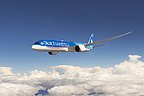
Tahiti's New Air Bridge: A Strategic Play for South Pacific Dominance
PAPEETE, French Polynesia – June 09, 2026 – This week, the skies over the South Pacific quietly shifted. The activation of a codeshare agreement between French Polynesia's international flag carrier, Air Tahiti Nui, and its domestic counterpart, Air Tahiti, marks more than just a new booking option for tourists. While the press release highlights a “more seamless travel experience,” the move represents a calculated strategic maneuver designed to fortify the region's tourism-dependent economy and reshape the competitive aviation landscape.
Effective June 3, travelers can book a single ticket under Air Tahiti Nui’s “TN” code, covering both their long-haul journey on a Boeing 787 Dreamliner and their connecting inter-island hop on an Air Tahiti ATR turboprop. What appears to be a simple logistical improvement is, in fact, the early innings of a much larger game—one that will test the region’s infrastructure, challenge low-cost competitors, and determine the future trajectory of French Polynesia’s most vital industry.
Streamlining the Journey to Paradise
For decades, the journey to French Polynesia’s idyllic outer islands involved a logistical hurdle: booking international and domestic flights separately. This fragmentation often added complexity and anxiety for travelers, creating a barrier to exploring beyond the main island of Tahiti. The new codeshare agreement dismantles this barrier. By integrating the booking process, passengers can now secure their entire itinerary—from Los Angeles, Paris, or Tokyo directly to sought-after destinations like Bora Bora or Rarotonga in the Cook Islands—in a single transaction.
This integration extends beyond the booking engine. A key benefit is the promise of seamless baggage handling, where checked luggage is automatically transferred from the international carrier to the domestic flight. This eliminates a significant point of friction for travelers arriving after a long-haul flight, smoothing the transition to their final destination. Initially, the partnership covers up to six daily flights to Bora Bora and two weekly flights to Rarotonga, with both airlines signaling their intent to add more routes in the future.
This new operational synergy leverages the distinct strengths of each carrier. Air Tahiti Nui provides the international reach with its modern fleet of four Boeing 787-9 Dreamliners, known for their comfort and efficiency on long-haul routes. Meanwhile, Air Tahiti, with its extensive network covering 48 islands and a fleet of nimble ATR aircraft, provides the crucial last-mile connectivity. The partnership effectively extends Air Tahiti Nui’s global network deep into the Polynesian archipelago, creating a unified travel product that was previously unavailable.
A Calculated Bet on Economic Revival
The timing of this agreement is critical. Tourism is the lifeblood of French Polynesia, contributing an estimated 12% to its GDP and supporting roughly 60% of the workforce. In 2023 alone, the sector generated an estimated $3 billion for the economy. The government has set an ambitious goal to nearly double visitor numbers by 2033, viewing tourism as the primary engine for future growth.
However, this optimism is tempered by challenging economic forecasts. Some analyses project a potential decline in tourism receipts over the next five years, continuing a trend of negative growth that has persisted since 2008. In this context, the codeshare is not merely an enhancement but a strategic imperative—a direct intervention aimed at reversing these trends by making the destination more attractive and accessible. By simplifying travel to the high-value outer islands, the airlines are betting they can capture a larger share of the global luxury travel market and encourage longer, more lucrative stays.
The economic impact is intended to ripple far beyond the airlines. Increased and more streamlined tourist flows to the outer islands promise to stimulate local economies that are almost entirely dependent on visitor spending. More demand for accommodations, restaurants, local tours, and artisanal goods could create much-needed jobs and support small business development. If the partnership expands as planned, it could begin to distribute tourism benefits more evenly across the archipelago, moving beyond the traditional hotspots.
Reshaping the South Pacific's Competitive Skies
This partnership is being framed as a “new step in the close commercial cooperation” between two carriers with a long history, but its implications are fiercely competitive. The South Pacific is a contested market, and Air Tahiti Nui faces significant pressure from rivals. Low-cost carrier French Bee, for instance, offers aggressive pricing on routes from the U.S. and Paris, appealing to budget-conscious travelers. Meanwhile, Hawaiian Airlines provides a key connection point through Honolulu, and a host of other global carriers like Air France and Qantas also serve the region.
The codeshare gives Air Tahiti Nui a powerful and unique competitive advantage: an integrated, end-to-end travel solution. While competitors can fly passengers to Papeete, they cannot easily offer a seamless, single-ticket journey to the outer islands. This integrated product directly addresses the “last-mile” challenge, a significant differentiator that could sway booking decisions, especially among less experienced travelers or those seeking maximum convenience. It forces competitors and online travel agencies that rely on piecing together fragmented itineraries to reconsider their value proposition.
This move is also part of a broader regional strategy for Air Tahiti Nui. The airline recently announced a similar codeshare with Air Rarotonga, further strengthening its network into the Cook Islands. These alliances suggest a deliberate effort to position itself as the central hub-and-spoke operator for the wider Polynesian region, consolidating its market power and creating a more resilient network against external competition.
Infrastructure and the Sustainability Question
While the strategic logic is sound, its success hinges on a critical variable: infrastructure. The primary airports, including Faa’a International in Papeete and the recently upgraded facility in Rarotonga, appear ready for an initial increase in traffic. However, the government’s ambition to nearly double tourist arrivals raises significant questions about the region's carrying capacity.
This policy marks a reversal from a previous pledge to limit visitor numbers, signaling a clear prioritization of economic growth. As the codeshare potentially opens up more remote and less-developed islands, the pressure on their limited infrastructure—from airport runways and ground handling to waste management and accommodation—will intensify. The ATR aircraft used by Air Tahiti are well-suited for smaller airfields, but the ground services and local communities must be prepared for the influx.
The larger question is one of sustainability. French Polynesia's primary allure is its pristine natural environment and authentic culture. A rapid increase in tourism, even if facilitated by seamless travel, risks overburdening the very assets that attract visitors in the first place. Successfully navigating this growth will require careful planning and investment not just in airports, but in the holistic infrastructure needed to protect the fragile ecosystems and ensure that the economic benefits are distributed equitably without compromising the destination's unique character.