
- $22.4M Investment: Surf Air Mobility is investing $22.4 million into its Hawaiian subsidiary, Mokulele Airlines, by the end of 2026.
- 96% Completion Factor: Mokulele Airlines reported a 96% controllable completion factor for its 36,000 departures in the past year.
- 26 Peak-Day Roundtrips: The airline will expand its Molokai-Honolulu route to 26 peak-day roundtrips, potentially making it the most frequently flown airline route in the U.S.
Experts would likely conclude that Surf Air Mobility's strategic investment in Hawaii's interisland network is a calculated bet on the future of electric aviation, leveraging existing infrastructure to de-risk entry into the Advanced Air Mobility (AAM) market while addressing immediate operational needs.
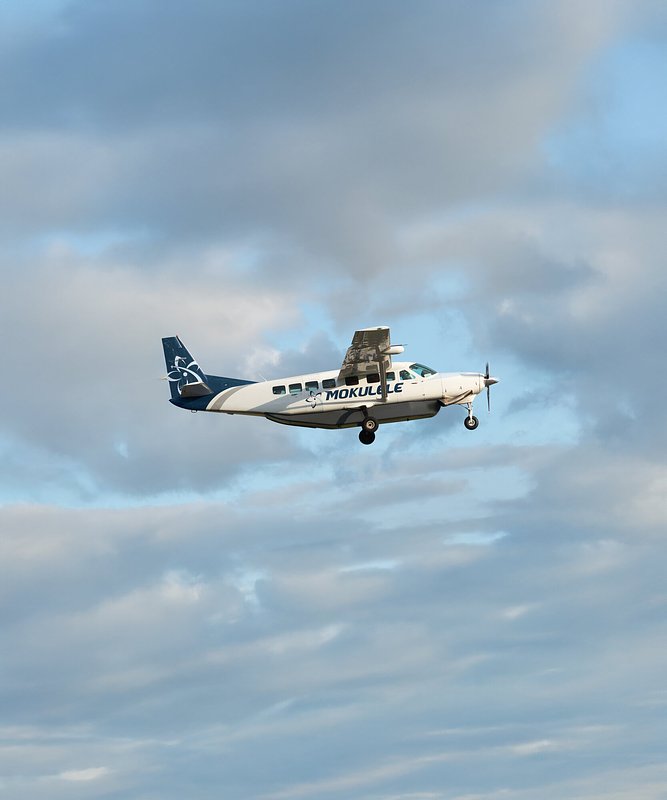
Surf Air's $22.4M Bet Aims to Make Hawaii a Proving Ground for Electric Flight
LOS ANGELES, CA – January 22, 2026 – Surf Air Mobility is channeling approximately $22.4 million into its Hawaiian subsidiary, Mokulele Airlines, in a strategic move that aims to simultaneously bolster a vital interisland transportation network and lay the groundwork for a future dominated by electric aircraft. The investment, set to be completed by the end of 2026, positions the Hawaiian archipelago as a key testbed for the nascent Advanced Air Mobility (AAM) industry.
The Los Angeles-based company, which operates one of the largest commuter airline networks in the U.S., is betting that Hawaii’s unique geography of short-haul routes and high dependency on air travel creates the perfect environment to pioneer the next generation of aviation. The initiative focuses on enhancing Mokulele's current operations while preparing its infrastructure for the eventual integration of electrified planes.
“Our investments in Hawaii strengthen our airline service today while laying the operational and infrastructure foundation for new electrified aircraft to enter the market,” said Deanna White, CEO of Surf Air Mobility, in a statement. “We believe our Hawaii network will be an ideal showcase to demonstrate how Advanced Air Mobility aircraft will improve flight-level unit economics, reduce maintenance costs, and enhance airline profitability.”
Strengthening Interisland Connections
For many residents of the Hawaiian Islands, particularly on Molokai and Lanai, Mokulele Airlines is not a luxury but a lifeline, providing essential transportation for medical appointments, business, and family connections. The investment promises immediate and tangible improvements to this crucial service. A significant portion of the funds is allocated to upgrading Mokulele's fleet, which primarily consists of Cessna Caravan aircraft.
The airline has already taken delivery of two new Cessna Caravans from Textron Aviation, with two more scheduled to arrive in 2026. These modern aircraft are expected to enhance reliability, a key concern for passengers who have previously faced disruptions. The company reported a 96% controllable completion factor for its 36,000 departures in the past year, a metric it aims to solidify with the fleet renewal.
Beyond new hardware, Surf Air is expanding Mokulele’s schedule. Starting in the first quarter of 2026, the airline will add seven new daily roundtrips to its high-demand Molokai service—five to Honolulu and two to Kahului. This expansion will boost Mokulele’s schedule to 26 peak-day roundtrips between Molokai and Honolulu, a move that the company projects will make it the most frequently flown airline route in the entire United States. To reward its frequent flyers, the company also launched “Elevate,” a new loyalty program offering tiered benefits across both Mokulele and its sister company, Southern Airways.
A Strategic Bet on Advanced Air Mobility
While the immediate benefits focus on conventional travel, the long-term vision is far more ambitious. Surf Air Mobility is strategically positioning Mokulele’s network, which serves nine airports across ten routes, as the ideal launchpad for AAM. With an average flight distance of just 51 miles, Hawaii's interisland routes fall squarely within the operational range of the first generation of electric and hybrid-electric aircraft currently under development.
The AAM market is rapidly advancing, with companies like Joby Aviation and Archer Aviation making significant strides toward FAA certification for their electric vertical takeoff and landing (eVTOL) aircraft. While widespread commercial deployment is still dependent on clearing complex regulatory hurdles and building new infrastructure like vertiports, industry analysts project initial services could begin in select markets by the late 2020s. Surf Air’s strategy is to adapt its existing airport infrastructure and operational knowledge, giving it a potential advantage over startups building networks from scratch.
By improving ground facilities and optimizing flight paths now, the company is preparing for a future where quieter, more efficient electric aircraft could drastically reduce operational costs and environmental impact. This forward-looking approach leverages Mokulele’s real-world operational data to inform the deployment of Surf Air's proprietary SurfOS software, an AI-enabled platform designed to modernize air operations for this new era of flight.
Navigating Financial Headwinds Toward a High-Tech Horizon
The $22.4 million investment represents a significant capital outlay for Surf Air Mobility, a company navigating challenging financial waters. Recent financial analysis indicates the company is burning through cash at a rapid pace and operates with a weak current ratio, suggesting potential liquidity pressures. The company is not yet profitable, and the investment in Mokulele is a high-stakes wager on future growth and market leadership in the unproven AAM sector.
This strategic pivot—leveraging a traditional commuter airline to de-risk entry into a futuristic market—is a calculated gamble. By proving the economic and operational viability of electric aircraft within an existing, high-frequency network, Surf Air aims to create a powerful model for the rest of the regional aviation industry. The success of this strategy hinges not only on the technological maturity of AAM but also on Surf Air's ability to manage its current financial obligations while funding its long-term vision.
To help steer this complex transition, the company has brought on seasoned executives with deep local experience. The recent appointments of Louis Saint-Cyr, former Vice President at Hawaiian Airlines, as COO of Airline Operations, and Gary McKoy, another Hawaiian Airlines veteran, as Vice President of Airports and Stations, signal a commitment to understanding and integrating with Hawaii's unique aviation ecosystem. Their expertise will be critical in navigating local regulations, community relations, and the operational intricacies of the islands as Mokulele evolves from a conventional commuter carrier into a pioneer of electric aviation.
Topics & Related
Artificial Intelligence
Sustainability & Climate
Revenue
Net Income
Software & SaaS
AI & Machine Learning
Financial Services
Related Company Pulse