
- $4.5 billion: Projected global market size for natural and organic sunscreens by 2031
- 21% non-nano zinc oxide: Active ingredient in Epicutis' Lipid Shield SPF 30
- 9% annual growth: Expected growth rate for the natural and organic sunscreen market
Experts would likely conclude that Epicutis' Lipid Shield SPF 30 represents a significant advancement in sunscreen technology, combining rigorous safety verification, proprietary biotech ingredients, and superior user experience to meet evolving consumer demands for transparency and performance.
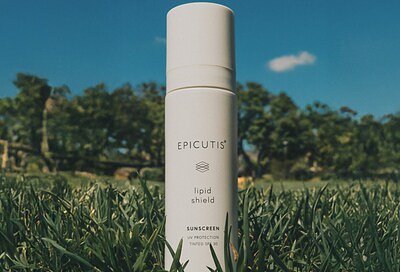
Sunscreen's New Frontier: Biotech, Transparency & Market Disruption
IRVINE, CA – December 01, 2025 – In the hyper-competitive, multi-billion-dollar personal care industry, market disruption rarely comes from a single innovation. More often, it emerges at the intersection of several powerful trends. A case in point is the recent announcement from Epicutis, a science-driven skincare brand, that its Lipid Shield SPF 30 has earned the coveted EWG Verified® mark. While a new sunscreen certification may seem incremental, a closer look reveals a sophisticated business strategy that merges deep biotechnology with the powerful consumer demand for radical transparency—a playbook with implications far beyond the beauty aisle.
The product is the first to combine non-nano zinc oxide with a patented, in-house biotech molecule called TSC (Disodium Tetramethylhexadecenyl Succinoyl Cysteine), designed not just to protect skin but to help it repair at a molecular level. By securing one of the industry's most stringent safety verifications for this high-tech formula, Epicutis is not just launching a product; it is making a calculated statement on where the premium consumer market is headed.
The Business of Trust: Decoding a New Gold Standard
In today's market, consumer trust is a currency more valuable than brand recognition alone. This is the strategic value proposition of the EWG Verified® seal. The Environmental Working Group, a non-profit advocacy organization, has established a benchmark that goes significantly beyond federal regulations. To become verified, a product must be free from EWG's extensive list of chemicals of concern, provide full ingredient transparency—including often-hidden fragrance components—and adhere to good manufacturing practices. It’s a rigorous, costly, and continuous process.
For a company like Epicutis, pursuing this certification is a deliberate business decision. It serves as an immediate, trustworthy signal to an increasingly skeptical consumer base. The global market for natural and organic sunscreens is projected to climb past $4.5 billion by 2031, growing at a brisk annual rate of over 9%. This growth isn't just fueled by a preference for “natural” ingredients, but by a demand for proof. Consumers, wary of opaque labels and “greenwashing,” are outsourcing their trust to third-party validators like EWG.
By securing this mark, Epicutis effectively bypasses the marketing noise, providing a clear answer to the question, “Is this product safe?” This move positions the Lipid Shield not merely as a luxury item, but as a validated health and wellness tool. It’s a strategy that acknowledges a fundamental shift in consumer behavior: the purchase decision process now often includes a risk-assessment of ingredients, and brands that can de-risk that choice for the consumer gain a significant competitive edge.
The Science of Protection: Biotech Enters the Sunscreen Aisle
While the EWG seal addresses safety, the product's core technological differentiator lies in its active ingredients, born from a pipeline of pharmaceutical-grade research. Epicutis is the commercial skincare arm of Signum Biosciences, a biotech firm spun out of Princeton University research led by Dr. Jeffry Stock, a renowned professor of molecular biology. This pedigree is central to the brand’s identity and its ability to innovate beyond the industry norm.
The key innovation here is TSC, a proprietary “super-lipid” molecule. Unlike traditional sunscreen filters that simply form a protective barrier, TSC is designed to actively support the skin’s own defense and repair mechanisms. According to the company's research, it helps calm redness, protect existing collagen from UV damage, and support cellular repair. The inclusion of TSC elevates the product from a simple sunblock to a multi-functional skincare treatment, tapping directly into the powerful “skinification” trend, where consumers expect every product in their routine to deliver tangible health benefits.
This is where the business model becomes particularly compelling. Signum Biosciences applies the rigor of drug discovery to the development of cosmetic ingredients. This allows Epicutis to formulate products with high concentrations of novel, patented actives while maintaining a minimalist and “clean” ingredient deck. The Lipid Shield SPF 30, for instance, pairs its high-tech TSC with 21% non-nano zinc oxide—a physical blocker widely considered safe and effective—and a soothing botanical complex. The result is a product that commands a premium price by delivering on three distinct value propositions: verified safety, scientifically advanced performance, and a clean, minimalist formula.
Redefining the Competitive Landscape
Successfully competing in the crowded sunscreen market requires solving persistent consumer pain points. For mineral sunscreens, the most significant hurdle has always been “cosmetic elegance.” Traditional zinc oxide formulas are notoriously thick, difficult to spread, and leave a chalky white cast, making them particularly undesirable for daily use and for individuals with darker skin tones. Epicutis has invested heavily in addressing this issue head-on.
The press release highlights that Lipid Shield was designed to blend seamlessly into a wide range of skin tones (Fitzpatrick I–V) without a heavy or chalky feel. This focus on user experience is a critical piece of the competitive puzzle. It broadens the product's addressable market from niche health-food store shoppers to the much larger luxury beauty segment, where feel and finish are non-negotiable.
By creating a product that is simultaneously EWG Verified®, powered by proprietary biotechnology, and cosmetically elegant, Epicutis has carved out a unique position in the market. It challenges both mainstream chemical sunscreen brands on safety and other “clean” mineral brands on technological sophistication and user experience. "Consumers deserve sun protection that truly puts their skin health first -free of questionable additives, clinically smart, and proven effective," noted Maxwell Stock, Founder and CEO of Epicutis, in the company's announcement.
This trifecta of attributes—safety, science, and user experience—creates a formidable competitive moat. It demonstrates a holistic understanding of the modern luxury consumer, who demands performance without compromising on health, and efficacy without sacrificing elegance. It’s a strategy that forces competitors to re-evaluate their own product development, marketing, and commitment to transparency, potentially raising the bar for the entire premium sunscreen category. This approach illustrates a clear path forward for brands aiming to thrive by aligning deep innovation with evolving consumer values.