
- Capacity: Holds up to 10 1KG spools simultaneously
- Material Support: Compatible with over 50 different filament types
- Release Date: Scheduled for July 1, 2026
Experts in additive manufacturing are likely to view the FilaDC i10 as a significant advancement in filament preservation, offering a more efficient, reliable, and environmentally friendly solution compared to traditional heated drying methods.
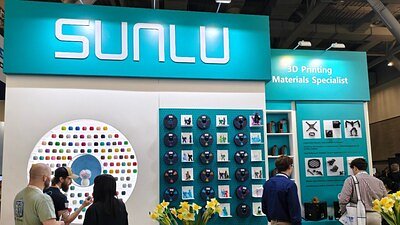
SUNLU & Inslogic Unveil Heat-Free Filament Drying Cabinet
BOSTON, MA – April 17, 2026 – Amid the bustling innovation at the Rapid + TCT conference, 3D printing material giant SUNLU, in a strategic alliance with materials science specialist Inslogic, has unveiled a product that addresses one of the most persistent challenges in additive manufacturing: filament moisture. The announcement of the FilaDC i10, a high-capacity filament dehumidifying cabinet, marks a significant entry for SUNLU into the accessory market and introduces a novel technology that could set a new standard for material preservation.
While SUNLU’s booth drew crowds with its vast array of engineering-grade filaments, aesthetic materials, and high-detail resins, the centerpiece of its presentation was the collaboration with Inslogic. The partnership aims to solve a problem that plagues hobbyists and industrial users alike, promising a more efficient, reliable, and environmentally conscious method for keeping 3D printing materials in pristine condition.
A New Solution to a Pervasive Problem
Anyone who has worked extensively with 3D printing understands the detrimental effects of humidity. Many of the most popular and functional filaments, including PETG, TPU, Nylon, and Polycarbonate, are hygroscopic, meaning they readily absorb moisture from the air. This absorbed water turns to steam in the printer's hot end, causing a host of print quality issues such as stringing, bubbling, poor layer adhesion, and dimensional inaccuracy. The resulting prints are not only aesthetically flawed but also mechanically compromised, exhibiting brittleness and reduced strength.
To combat this, the market has seen a proliferation of drying solutions. These range from simple, airtight containers with desiccant packets to active drying units that circulate heated air. While heated dryers are more effective than passive methods, they come with their own set of drawbacks. They consume a considerable amount of energy, generate fan noise, and carry the risk of degrading the filament if the temperature is too high or applied for too long, potentially altering the material's properties before it even enters the printer.
This is the gap the FilaDC i10, developed by SUNLU and Inslogic, is designed to fill. It targets the needs of 'large-scale users'—print farms, service bureaus, and R&D labs—who manage a large inventory of diverse materials and cannot afford print failures due to improper storage. With the capacity to hold up to ten 1KG spools simultaneously and support over 50 different material types, the cabinet offers a centralized solution for workshops that have long struggled with a patchwork of single-spool dryers and storage boxes.
The Science of Silent, Heat-Free Drying
The standout feature of the FilaDC i10 is its core technology. Instead of relying on traditional convection heating, the cabinet utilizes an innovative molecular sieve system to remove moisture. Molecular sieves are a class of material with microscopic pores of a precise and uniform size. These pores are engineered to be small enough to trap water molecules from the surrounding air while allowing larger molecules, like nitrogen and oxygen, to pass by. This process, known as adsorption, physically pulls moisture out of the environment and, by extension, from the filament stored within the cabinet.
This approach offers several distinct advantages over conventional heating. First and foremost, it is a non-thermal process. By drying filaments without raising their temperature, the FilaDC i10 eliminates the risk of heat-induced degradation or thermal stress. This is particularly crucial for sensitive engineering-grade materials whose mechanical properties must be preserved for functional applications. The gentle, ambient-temperature process ensures that the filament's integrity remains uncompromised from storage to print.
Secondly, this technology underpins the product's environmental and efficiency claims. By eschewing a power-hungry heating element that must run for hours, the FilaDC i10 boasts significantly lower energy consumption. The system is described as fully autonomous, managing humidity levels with minimal user intervention. This translates not only to lower operational costs for businesses running printers around the clock but also to a smaller carbon footprint. Furthermore, the absence of high-power heating elements and the associated fans for vigorous air circulation results in much lower noise levels, making it a more suitable addition to office or lab environments.
A Strategic Alliance Targeting the Pro Market
The partnership between SUNLU and Inslogic appears to be a synergistic one. SUNLU, founded in 2013, has established itself as a dominant force in 3D printing consumables, with a massive production capacity and a global distribution network. Inslogic, a Hong Kong-based company, brings deep expertise in materials science, focusing on high-performance engineering filaments and resins. Inslogic's own manufacturing process emphasizes meticulous hygroscopic control, indicating a profound understanding of the very problem the FilaDC i10 is designed to solve.
This collaboration allows SUNLU to leverage its market reach to introduce a high-tech accessory, expanding its product ecosystem beyond materials. For Inslogic, it provides a platform to apply its specialized knowledge to a hardware solution, validating its expertise and potentially opening new revenue streams. By joining forces, the two companies are positioning themselves to capture a valuable segment of the market: professional and industrial users who prioritize reliability, efficiency, and quality above all else.
While the FilaDC i10 is the flagship announcement, SUNLU’s presence at Rapid + TCT underscores its comprehensive strategy. The display of advanced engineering filaments like Nylons and Polycarbonates for high-strength applications, alongside vibrant aesthetic materials like Silk and Rainbow PLA, shows a company catering to every corner of the market, from industrial designers to hobbyist makers. The impressive resin model exhibits, printed with materials like CMYK+W color resin and 14K ABS-like resin, further cement its status as a one-stop shop for 3D printing materials.
With the FilaDC i10 scheduled for release on July 1, the 3D printing community will be watching closely. The product represents a thoughtful evolution in filament management, moving beyond brute-force heating to a more sophisticated, efficient, and sustainable method. For the large-scale users it targets, a solution that promises to enhance filament performance while reducing environmental impact could be a welcome and transformative addition to their workflow.