
- 870 GW: Sungrow's installed power electronic converters, showcasing its hardware dominance.
- Minutes, not days: iSolarDesign claims to reduce solar plant design time from days to minutes using AI.
- One-Click Quotation: Instant pricing feature to streamline project procurement.
Experts view Sungrow's AI-driven iSolarDesign platform as a transformative tool for the solar industry, with the potential to significantly reduce project timelines and costs if its AI-generated optimizations prove accurate in real-world applications.
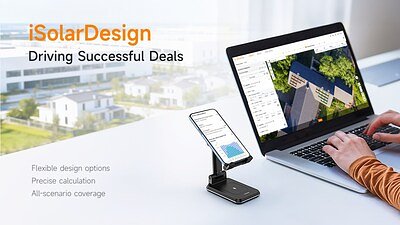
Sungrow’s AI Gambit: Redesigning the Global Solar Blueprint
MELBOURNE, Australia – November 27, 2025 – In the global race to deploy renewable energy, the primary obstacles are not always physical but digital. The complex, time-consuming process of designing, optimizing, and financing solar projects represents a significant bottleneck. It is this challenge that Sungrow, a global heavyweight in PV inverters and energy storage systems, aims to solve with the unveiling of its next-generation design platform, iSolarDesign, at All Energy Australia 2025.
The announcement signals a significant strategic move for the hardware giant. While Sungrow has built its reputation on 870 GW of installed power electronic converters, iSolarDesign is a bold foray into the competitive software-as-a-service (SaaS) market, aiming to provide a one-stop, AI-driven solution that streamlines the entire project lifecycle—from initial sketch to operational maintenance.
The AI Architect: From Days to Minutes
At the heart of iSolarDesign lies a dual-core architecture of "Scenario + Computing Power," driven by proprietary algorithms. This is not merely an upgrade to existing CAD tools but a fundamental rethinking of the design process. The platform leverages Sungrow's SIFSC swarm intelligence and SSDM (Smart System Design Matrix) algorithms to tackle multi-objective optimization problems that have long plagued solar engineers.
Traditionally, designing a solar plant involves a fragmented workflow across multiple software suites—one for layout (like AutoCAD), another for detailed performance simulation (the industry-standard PVsyst), and often spreadsheets for financial modeling. This process can take days or even weeks, requiring engineers to manually iterate designs to balance competing goals like maximizing energy yield versus minimizing capital expenditure.
iSolarDesign claims to collapse this timeline into minutes. By inputting project parameters, users can reportedly generate multiple optimized solutions simultaneously. One scenario might prioritize the optimal DC/AC ratio for peak performance, while another could target maximum economic efficiency and return on investment. This allows for rapid, side-by-side comparisons, a capability that transforms the "one-size-fits-all" approach into a data-driven decision matrix. This level of speed and automated comparison directly challenges established players like Aurora Solar and HelioScope, which have themselves made significant strides in accelerating design workflows.
An industry consultant specializing in solar software noted, “The ‘minutes, not days’ claim is the holy grail. If the platform’s AI can genuinely deliver bankable, multi-variable optimizations that quickly, it lowers soft costs and fundamentally changes how quickly an installer can move from lead to contract. The key will be validating the accuracy of those AI-generated outputs against real-world performance.”
A Strategic Pivot Beyond Hardware
The launch of iSolarDesign is more than a technological innovation; it is a calculated strategic pivot. For years, Sungrow has dominated the hardware space. Now, it is venturing into the software ecosystem that governs how its hardware is deployed. This move allows the company to expand its influence across the entire solar value chain, from project origination to long-term operation.
By offering an integrated platform, Sungrow creates a powerful ecosystem. While the company states the platform supports a flexible mix of PV systems, ESS, and Module Level Power Electronics (MLPE), there is a clear strategic advantage in ensuring its own inverters and storage solutions are seamlessly integrated and optimized within the software. This could create a subtle but compelling incentive for designers and installers to specify Sungrow hardware, thereby strengthening its core business and fostering customer loyalty.
This strategy positions Sungrow uniquely against its rivals. It is no longer just competing with other inverter manufacturers but also with pure-play software companies. This integrated hardware-software model could offer clients a single point of accountability and a more streamlined procurement and deployment process, reducing the friction that arises from managing multiple vendors and disparate systems. The platform also provides Sungrow with an invaluable stream of market intelligence, offering direct insight into project trends, customer requirements, and performance data that can inform its future hardware development.
From Blueprint to Bankability: End-to-End Integration
Beyond pure design, iSolarDesign’s most practical appeal may lie in its promise to seamlessly connect every stage of a project’s life. For installers and engineering, procurement, and construction (EPC) firms, the persistent gap between design, quoting, and construction is a major source of inefficiency and error.
The platform addresses this with several key features. A "One-Click Quotation" function aims to link design schemes directly to distributor channels, allowing users to get instant and accurate pricing without leaving the platform. This alone could save hours of administrative work. Furthermore, the system automatically generates crucial deliverables like 3D visualization reports for client proposals and detailed electrical drawings for construction crews.
Crucially, the design data is then synced for the operational phase, streamlining installation and future maintenance. This holistic approach, accessible on both web and mobile apps, caters to the reality of solar professionals who work from the office, the field, and everywhere in between. By digitizing and connecting these disparate steps, the platform aims to reduce manual data entry, minimize errors, and accelerate the entire project timeline from sale to commissioning.
Global Intelligence Meets Local Realities
A standout feature of iSolarDesign is its claimed integration of global electricity market data and the creation of "exclusive electricity consumption models." The profitability of a solar and storage project is acutely dependent on local factors: utility tariff structures, net metering policies, and regional energy usage patterns. A system optimized for a flat-rate market in one region would be inefficient in another with complex time-of-use pricing.
By building in this regional intelligence, Sungrow's platform aims to deliver system configurations that are not just technically sound but economically optimized for their specific location. However, this is also where the platform will face its greatest scrutiny. The solar industry, particularly the finance community that underwrites large projects, relies on the proven accuracy and 'bankability' of simulation tools like PVsyst. For iSolarDesign to gain widespread adoption, especially for commercial and utility-scale projects, Sungrow will need to provide transparent validation of its data sources and the accuracy of its performance and revenue models.
Potential adoption barriers remain, including the learning curve for teams invested in existing software, the need for robust integration with third-party CRM and ERP systems, and the ultimate cost of the service. Yet, if Sungrow can prove its platform is not only fast but also rigorously accurate, it could set a new industry standard. As the world races to meet ambitious climate goals, the efficiency of the digital tools used to design and deploy clean energy may prove just as critical as the efficiency of the solar panels themselves.